
Live Blogger: Rachael Baliira
Editors: Madison Fitzgerald and Ryan Schildcrout
This piece was written live during the 8th annual RNA Symposium, “Unmasking the Power of RNA: From Structure to Medicine” hosted by the University of Michigan’s Center for RNA Biomedicine. Follow MiSciWriters’ coverage of this event on Twitter with the hashtag #umichrna.
When you look back at your baby photo, first grade school picture with missing teeth, or even your prom photo, and compare them to your latest selfie, have you stopped to marvel at how you’ve developed into the person you are now? If you dive into the mechanisms that ensure normal development, cell differentiation and fate, you would be amazed at all that has to go right to make you ‘you.’ Your body achieves this through gene silencing, which is a negative feedback mechanism that regulates gene expression to define cell fate and timely gene expression. Micro-RNAs (miRNA) are the small agents that carry out gene silencing. They suppress unwanted expression of specific genes by binding to their mature transcripts, known as messenger RNA (mRNA), so that the cell only expresses proteins that are needed at the time. When this happens, the marked mRNA are destroyed instead of being translated into a protein. Thus, miRNA-dependent silencing of gene expression is essential for normal development and cell differentiation states. Over the years, scientists studying miRNA have uncovered much about miRNA-dependent gene silencing activity but there is still much to understand about how miRNAs come to be. Luckily, miRNA synthesis and regulation is a matter of great importance to the Joshua-Tor lab.
Dr. Joshua-Tor initiates her talk with an interesting question: “What makes a miRNA popular?” Dr. Joshua-Tor’s lab studies miRNA regulation and structural components through one miRNA family, let7. The let7 family is popular in developmental and cancer research fields because it is an essential regulator for terminal differentiation of many cell types throughout the body and is a fundamental tumor suppressor. During development, let7 regulates major genes such as RAS and MYC that control cell growth and division. Let7 also helps maintain the differentiation state of a cell. For example, mammalian pluripotent stem cells express low levels of mature let7, but differentiated cells exhibit increased let7 expression. Thus let7 acts as a tumor suppressor in differentiated cells by downregulating RAS and MYC gene expression. Conversely, a reduction in let7 contributes to the development of cancer via upregulation of its mRNA targets, RAS and MYC.
It turns out that regulation of let7 is very elaborate in adult mammals. Once transcribed into its first draft, pri-let7, it folds back onto itself forming a characteristic hairpin structure. Next pri-let7 encounters molecular machinery known as a microprocessor. This microprocessor is found in the nucleus and is made of one part RNA cleaving protein, RNase-3 nuclease DROSHA, and one part binding protein, DGCR8. While DGCR8 binds pri-let7, DROSHA cleaves it into a small hairpin with two nucleotides at the 3’ end, forming a new draft, pre-let7. With its new makeover, pre-let7 encounters another RNase-3 nuclease, Dicer. Dicer is attracted pre-let7 overhangs. It cuts pre-let7 into its mature form which is now capable of regulating its mRNA targets.
Later in her talk, Dr. Joshua-Tor reviewed how members of the let7 family are categorized into two groups, class 1 and class 2, based on the differences in their folds. Class 1 contains three members that fold to produce a 3′-overhang containing two nucleotides. The remaining nine members fall into class 2, which fold to create a 3′ overhanging with only one nucleotide. The single nucleotide overhang of class 2 let7 family members presents a problem for Dicer, which prefers substrates with a two nucleotide 3′ overhang. To rectify this, the cell recruits terminal uridylyl transferases (TUTases) that bind to the 3’ end to aid in the uridylation of pre-let7, thus forming an acceptable overhang for Dicer. Understanding how class 2 pri-let7 members are modified shed light on how let7 is regulated in a pluripotent cells.
Next, Dr. Joshua-Tor guides us through regulation of let7 in adult mammalian stem cells, where its downregulation is required. In this context, an RNA-binding protein called LIN28 binds to pre-let7’s hairpin loop. This binding interaction inhibits Dicer from cutting, and instead recruits TUTases to add 30 “U” nucleotides to the 3’ end. Dr. Joshua-Tor rightfully dubbed this elongation event as “the tail of destruction” since the additional Us mark pre-let7 for degradation. When this happens, pre-let7 is not made, which permits its target mRNA to be expressed. Downregulation of let7 happens continuously in stem cells, which is expensive for the cell, but essential to maintain its stemness.
Given the distinction between the two classes of let7 family members, the Joshua-Tor lab became interested in determining how microprocessors are able to handle structural differences across family members. A talented post-doctoral fellow in the lab, Dr. Ankur Garg, led a cryo-electron microscopy (cryo-EM) study to elucidate key structures of let7 that influence positioning of microprocessor machinery. Cryo-EM is an advanced imaging technique used to see three-dimensional structures of biological molecules and complexes at near atomic resolution. With this technique, they noticed class 1 and class 2 pre-let7 took different paths through the microprocessor. In complex with the microprocessor, Class 1 pre-let7 is curved while class 2 pre-let7 is straighter. They also observed that the structures differ around the cleavage site, an important site for DROSHA docking. Despite the differences, they found that DROSHA orients itself the same way around the site but the RNA binding domain for DROSHA/DGCR8 microprocessor actually “moves around” with the RNA. Remarkably, let7 has the power to move the microprocessor around and dictates how the microprocessor is sitting, which challenges the assumption that the microprocessor is limited to where it initially binds. To better understand how many cut sites are available to the microprocessor and where they are located on let7 family members, Dr. Garg used a calcium binding assay, since they determined that the calcium ion has an affinity for cut sites while allowing the pri-let7 to remain intact. They observed sites where the calcium ion sits in front of the bulge, and postulated that if the microprocessor were to cut at these locations, it would result in the canonical two nucleotide 3’ overhang in class 1 pre-let7 family members.
Lastly, Dr. Joshua-Tor credits Narry Kim and Dave Martel who found that sometimes, the microprocessor cuts the pri-let7 in an inaccurate way leading to aberrant processing. The Joshua-Tor lab found that in this scenario, adding a small splicing factor called SRSF3 can stabilize the pri-let7 to increase the fidelity of the microprocessor.
Taken together, Dr. Joshua-Tor showed that what makes let7 a popular miRNA comes down to how it is regulated within biologically specific contexts. During embryogenesis and stem cell maintenance, let7 needs to be degraded early on its processing. In differentiated cells, let7 needs to be produced to silence unnecessary gene expression of its targets. The Joshua-Tor lab’s studies have provided us with a better understanding of how let7 is upregulated and downregulated through interactions with microprocessor machinery. Furthermore, by combining single-particle cryo-EM structural studies with biochemical analyses, The Joshua-Tor lab explored how pri-let7 engages with its microprocessor. In doing so, they solved how microprocessors accommodate structural variances in a wide array of pri-let7 family members while performing with high fidelity.
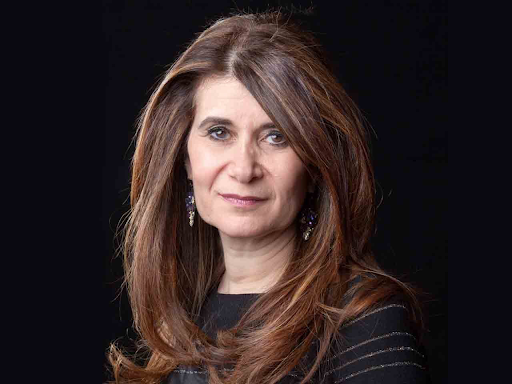
Dr. Leemor Joshua-Tor is a Howard Hughes Medical Institute Investigator and W.M. Keck Professor of Structural Biology and Chair of the Cancer and Molecular Biology Program at Cold Spring Harbor Laboratory (CSHL). She received her B.Sc. in chemistry from Tel-Aviv University and her Ph.D. in chemistry at the Weizmann Institute of Science in Rehovot. Prior to joining CSHL as faculty, she was a Jane Coffin Childs postdoctoral fellow at the California Institute of Technology (Caltech). At CSHL, she was the Director of the Undergraduate Summer Research Program before becoming Dean of the School of Biological Sciences, CSHL’s graduate school. Among many accolades, Dr. Joshua-Tor received the Mildred Cohn Award in Biological Chemistry from the ASBMB, the Dorothy Crowfoot Hodgkin Award from the Protein Society, a Beckman Young Investigator Award and is a Fellow of the Biophysical Society. She is an elected member of the National Academy of Sciences, a member of the American Academy of Arts and Sciences and a Fellow of the American Association for the Advancement of Science. She serves on several advisory committees at the National Institutes of Health and on the editorial boards of a number of peer reviewed scientific journals. In addition to studying the regulation of the miRNA let7, Dr. Joshua-Tor’s lab studies nucleic acid regulatory processes, RNA interference (RNAi), and DNA replication. They accomplish these remarkable discoveries using structural biology, biochemistry, and biophysics approaches.

 misciwriters.com