
Written by Krista Goerger
Edited by Dana Messinger and Kate Giffin
Illustrated by Jess Li

“I am small, but I am mighty. Even if no one sees me, I know I make a difference.” Pippa the Platelet repeated her affirmations as a swell of pride and nerves consumed her. Mama Meg smiled gently, knowing that the last connection between them was about to be pinched off, releasing Pippa into the bloodstream.1
Then the tether broke, and Pippa was swept away into the blood’s swift current.2 Pippa waved goodbye. Mama Meg, a magnificent megakaryocyte, would stay in the bone marrow, continuing her noble task of assembling and preparing her 3,000 platelet progeny.3 The moment was bittersweet, but Pippa was comforted knowing parts of Mama Meg would always be with her.
Mama Meg had given her all she needed to form a blood clot: feet to anchor, arms to reach for the wounds, signals to rally help, hands to grab on, and strength to pull a wound shut. Pippa understood her purpose – to protect her human by detecting injuries and forming blood clots to stop bleeding.4 Easy in theory, but timing was everything. Clot too early and she might cause a heart attack or stroke.5 Wait too long and her human could bleed out.
Clotting is a serious business, so Platelet Prep School boils it down to three golden rules to help every platelet pal make the right call in a flash!
#1: Stay alert and ready. A human can get injured anytime, anywhere. Always be on the lookout and be prepared to spring into action.
#2: Do not panic. If something looks different, take a deep breath, take in all the information, and make an informed decision. Only act when there’s real danger.
#3: Stick with a purpose and signal the squad. A cut? A scrape? That’s your time to shine. Anchor to the injury and signal for help, clotting is a team sport.
Repeating these rules, Pippa felt a spark of courage ignite. She was ready to step into the beautiful, complex dance of life in the bloodstream. She stood a little taller – well, as tall as a platelet could.
As Pippa took in her surroundings, the rushing river of red in her new world surged around her – fast, vibrant, and immense. The scale of everything was staggering, bigger than she’d imagined. Her mom had warned her she’d be small, but Pippa hadn’t expected to feel like a golf ball bobbing in a pool of beach balls.6 “I am small, but I am mighty,” she reminded herself with a determined little puff.
She looked up at the sea of bright red blood cells – so numerous and so enormous. Graceful and smooth, their doughnut-like shapes glided effortlessly through the vessel, delivering oxygen and carrying away carbon dioxide.2 Unlike Pippa and her ever-alert platelet pals, they seemed elegant and undisturbed. They moved in soft swirls, delivering oxygen from the lungs to the body and carrying carbon dioxide back to the lungs. She couldn’t help but admire them, so steady and sure. Pippa felt a tinge of envy though. They lived up to 120 days, while she only had 7 to 10 days to fulfill her destiny.1,2 Their longevity was a luxury compared to her brief existence.
She glanced around for others. White blood cells, including neutrophils and monocytes, bobbed along – big, blobby, and always on patrol. Though few in number, these immune cells came in all shapes and sizes, guarding the body from infection and invaders.7 Neutrophils were hard to miss, rushing toward inflammation and swallowing threats whole, leaving a mess behind like it was no big deal.2 Pippa found them brave and relentless –impressive, if a bit overzealous. She preferred the monocytes – the larger, slower, and smarter of the bunch – who cleaned up after the chaos, helping wounds heal once the battles ended.7
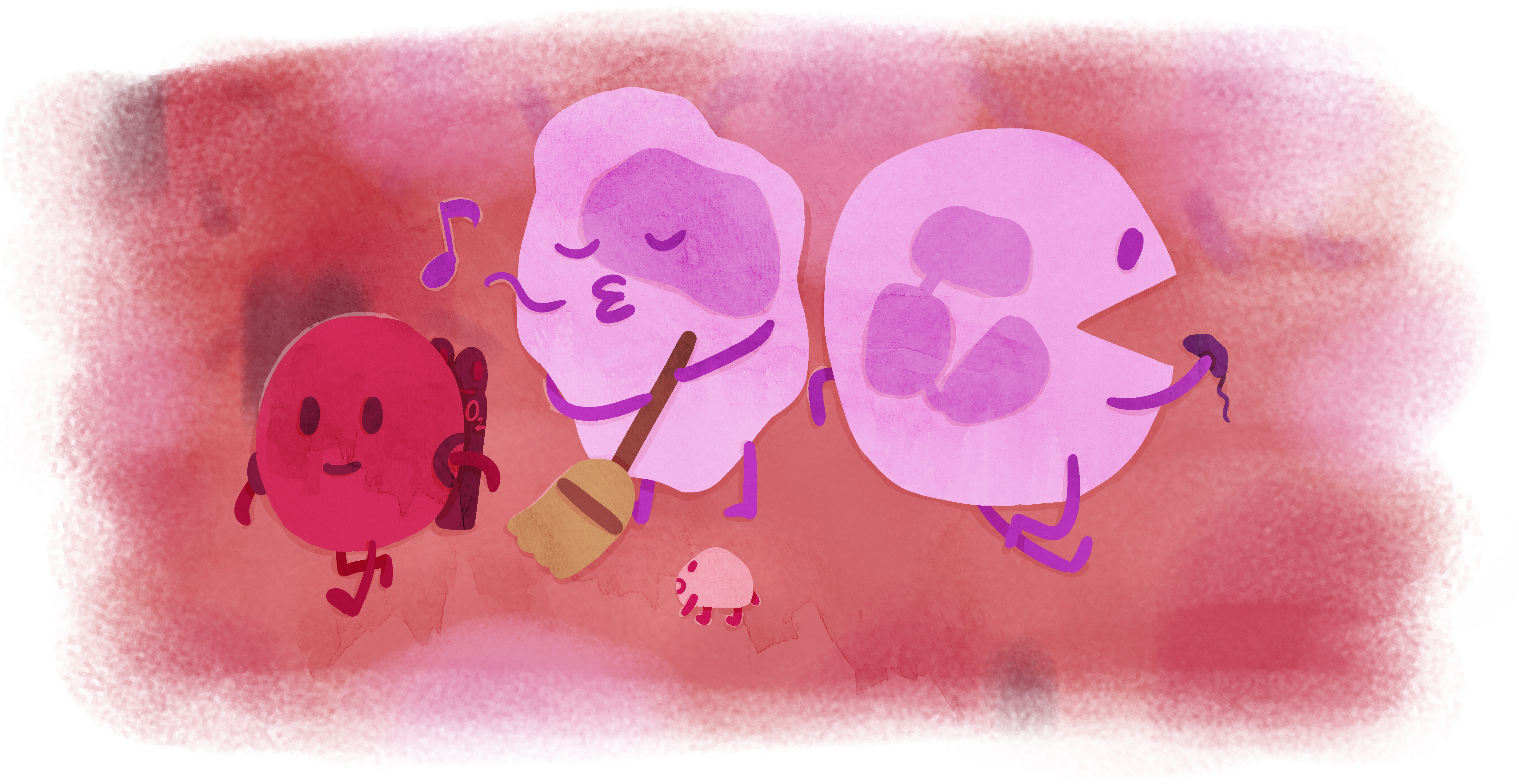
It took Pippa a while to get her bearings. At first, just moving through the bloodstream felt like a wild carnival ride. The heart churned everything – whooshing her through the heart, to the lungs, back again, and then out through the body. She felt a little queasy at first, but after cycling through the heart five to ten times per minute, she found her rhythm.8 The arteries were zippy and high pressure – just the way she liked it. The veins, on the other hand, were calmer… almost too calm for her taste.9
Pippa quickly learned it was best to drift along the periphery of the blood vessels, where she could follow Rule #1: Stay alert and ready and scout for any sign of trouble.3 Plus, staying off to the sides meant she didn’t have to wrestle with the red blood cells, who liked to hog the center lane.
Just when she started to feel comfortable and confident, Pippa noticed something peculiar in the artery. The flow had changed in a subtle, but unsettling way. The vessel’s surface wasn’t smooth like the healthy walls she was used to. It was sticky in places, bumpy, and uneven. Her instincts shouted, “Go!” She wanted to spring into action, but something held her back… Rule #2: Do not panic.

“Is this really an injury?” she wondered. She’d heard the hushed warnings about plaques back in Platelet Prep School. They weren’t like regular wounds. Plaques were gooey globs of fatty buildup that hardened over time, turning stiff and crusty.10 They just… sat there. Silent and strange. Bulging into the vessel like forgotten debris. If she acted too soon, she might spark a clot that blocks the artery entirely, starving the heart or brain of blood.5
So, she chose to wait, her tiny form tense and alert, hoping her human would get treatment to stabilize or shrink the arterial plaque, sparing platelets like her from accidentally causing harm. Pippa kept floating and drifting, the ticking of time pressing down on her. Five days in, and she had just a few left to fulfill her purpose. Doubts crept in – had she missed her moment? Shaking off the unease, she narrowed her focus, scanning the vessel walls with renewed urgency. “Come on,” she pleaded, “Give me something to fix.”
And then, it happened. A rupture. A breach in the smooth, endless tunnel of the blood vessel. Pippa felt it first, the sudden turbulence. Then she saw it – the jagged tear in the vessel exposing the collagen proteins behind it. Pippa had never seen such vulnerability before. The body, so vast and powerful, lay wounded. Her human was hurt and needed help and she, small, unassuming Pippa, was the one summoned to save the day.
“This is it! This is my moment!” Pippa squealed, her tiny body vibrating with excitement. She surged forward, driven by instinct. She reached the wound’s edge, planted her feet, and latched onto the breached vessel.12 Pippa stretched, strained, and reached out with all her might to anchor herself as the current pushed hard against her.1 Briefly, she thought she might be in over her head, but then she remembered Rule #3: Signal the squad! With a burst of energy, she released her signals and called her platelet pals for backup: “Help, over here!”
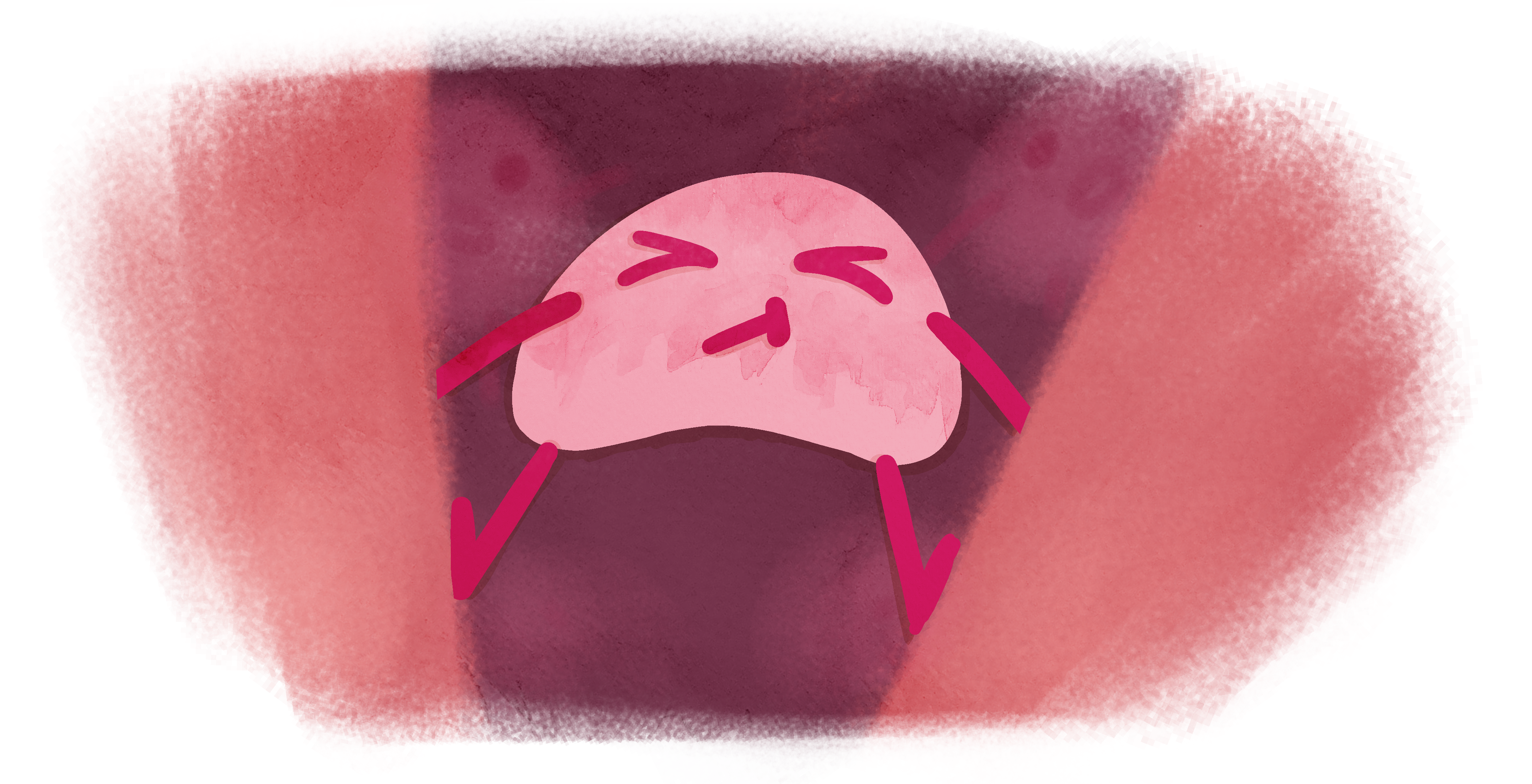
And they came. Dozens. Hundreds. Thousands. Together they spread to cover as much area as possible. They grabbed hands, linking together, layer after layer.1 A delicate patch began to form – thin, but strong enough to withstand the force of the flow. Pulling together, they started knitting the wound shut with their tiny bodies.12 For a moment, there was triumph. The bleeding slowed. Safety was restored. “This is why I exist,” Pippa’s inner voice whispered with pride.
But balance is everything. More platelets arrived, sticking, stacking, growing beyond the wound itself. The lattice thickened, creeping out like ivy on a wall, and with it, doubt crept in. Pippa, buried beneath them, thought, “Stop! That’s enough!” The weight of the mass was overwhelming. What began as a delicate patch now threatened to become an obstruction. Had she saved her human’s life, or doomed it? Pippa, buried beneath the new arrivals, could only hope that balance would return. And it did.
The clot began to stabilize, and the process turned from frantic patchwork into careful construction. Fibrin mesh started to form, weaving around the platelets like scaffolding, solidifying the structure. The soft clot transformed into a firm, fibrous net – a long-term seal.11 The architecture of safety.
“I did it,” Pippa sighed with relief, “I saved the day and fulfilled my destiny.”
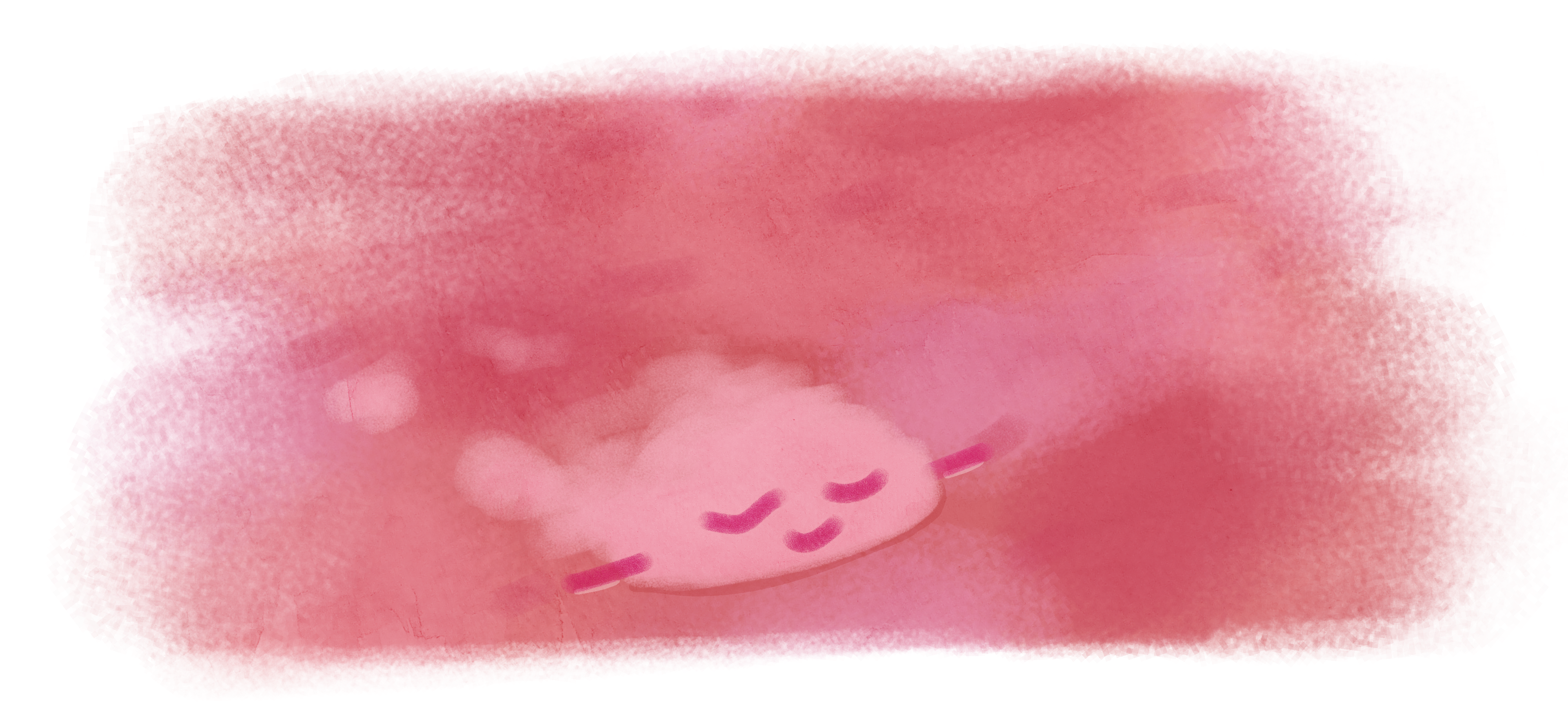
Pippa savored the triumph. Her mission was fulfilled, and the wound was sealed. But as healing took over, the clot began to soften, the structure loosening bit by bit. Enzymes moved in, gently dissolving the clot.13 One by one, her platelet pals were broken apart and swept away by the current. Pippa felt the tension release as her anchoring points loosen. Her body fragmented too, pieces drifting away in a peaceful surrender.14
Her human would never know of Pippa’s sacrifice. But because of her, they could continue living life to fulfill their own destiny. She remembered Mama Meg’s words, “Even if no one sees you, you make a difference.” And with that, Pippa found peace.

Krista is a pharmacology graduate student at UM, where she focuses on developing innovative diagnostics and therapies targeting platelets to prevent and treat blood clots. She is passionate about making science accessible to broader audiences and inspiring the next generation of scientists by breaking down barriers to STEM education and careers.

 misciwriters.com