
Live Blogger: Paola Medina-Cabrera
Editors: Camila Gonzalez Curbelo, Ryan Schildcrout
This piece was written live during the 10th annual RNA Symposium, “RNA Frontiers: From Mechanisms to Medicine” hosted by the University of Michigan’s Center for RNA Biomedicine.
What if doctors could fix a genetic disease the same way we fix a typo? All cells in our bodies contain DNA–an instruction manual that tells our cells how to function. But that manual contains mistakes. For decades, scientists could read these instructions but struggled to change them effectively. This changed with the discovery of CRISPR, a revolutionary gene-editing technology that allows researchers to identify and edit specific DNA sequences. At the 10th Annual 2026 RNA Symposium at the University of Michigan, Dr. Erik Sontheimer, a biomedical researcher at the University of Massachusetts Chan Medical School, discusses an exciting new step forward in this field: a technique called Prime Assembly, which allows scientists to insert large pieces of DNA into the genome more efficiently.
“All of the revolution in CRISPR came from curiosity-driven scientists”, he said–and it’s completely true! Dr. Sontheimer took us back in time with how scientists discovered CRISPR in bacteria. In order to survive, bacteria constantly face attacks from viruses, and CRISPR acts as a defense mechanism that allows them to recognize and cut up invading genetic material. With this discovery, scientists realized that they can harness this defense mechanism as a powerful tool to edit DNA. In 2008, the modern CRISPR field truly took off after a landmark paper was published. Fifteen years later, the technology has rapidly advanced. From the lab to patient care, Dr. Sontheimer highlights the great accomplishment of using CRISPR to treat genetic diseases, including the first FDA-approved CRISPR-based therapy for sickle cell disease, an exciting achievement to the scientific community.
Although modern CRISPR is already powerful, scientists, along with Dr. Sontheimer’s group, are still working to make gene editing more precise and versatile. New tools such as prime editors–an advanced CRISPR technology that helps avoid DNA double-strand breaks–have been developed to improve accuracy. Think of CRISPR editing like cutting a page out of a book to fix a typo. It works, but cutting both sides of the page can sometimes cause unwanted changes. However, the way prime editing works is more like carefully correcting a sentence without the need to tear the page from the book.
Prime editing uses a special molecule called prime editing guide RNA (pegRNA), which acts like a GPS and an instruction manual combined. First, it guides the editing machinery to the exact location in the DNA where the change needs to happen. Then, it carries the instructions for what the corrected DNA sequence should look like. Once the machinery arrives at the right spot, it makes a small flap in the DNA, similar to opening a zipper to fix the problem. The cell then uses a process called reverse transcription, which works like copying the correct sentence directly into the RNA, replacing the mistake. Even with multiple improvements, prime editing still faces challenges, including variation in editing efficiency and the potential for guide molecules to become very large and complicated to produce.
To address these obstacles, Dr. Sontheimer’s research team at the University of Massachusetts Chan Medical School took the challenge to explore a new strategy called Prime Assembly. Instead of placing all the editing instructions into a single large molecule, this method splits the DNA template into smaller pieces. These pieces contain overlapping sequences that can assemble once inside the cell. You can think of it like putting together puzzle pieces that form the final DNA sequences. This approach is similar to the Gibson assembly technique commonly used in laboratories to join DNA fragments. Thanks to this strategy, his team found that complementary DNA fragments could accurately insert larger pieces of genetic material into the genome. This is particularly important because a single mutation does not cause many genetic disorders. Instead, mutations may be spread across different parts of a gene and editing one mutation at a time would be slow, expensive, and inefficient. New and improved technologies, such as Prime Assembly, could allow scientists to replace or repair larger sections of DNA at once, making future treatments more practical.
Despite all the pros, the Prime Assembly still raises important questions, such as: how are the host’s cellular proteins involved in this mechanism? How can engineered DNA donors improve efficiency? Will this method work effectively in living organisms? Early experiments from Dr. Sontheimer’s lab suggest that certain design parameters may improve results. For example, donor DNA fragments with overlapping sequences of about 35 base pairs appear to work efficiently in vitro. Although the technology is still being refined, Dr. Sontheimer’s work with Prime Assembly represents another step towards long-term treatments for genetic diseases that currently have few options. As Dr. Sontheimer emphasized during his talk, breakthroughs like these often start with curiosity-driven science, the kind of research that asks fundamental questions about how biology works, which leads to a better quality of life.
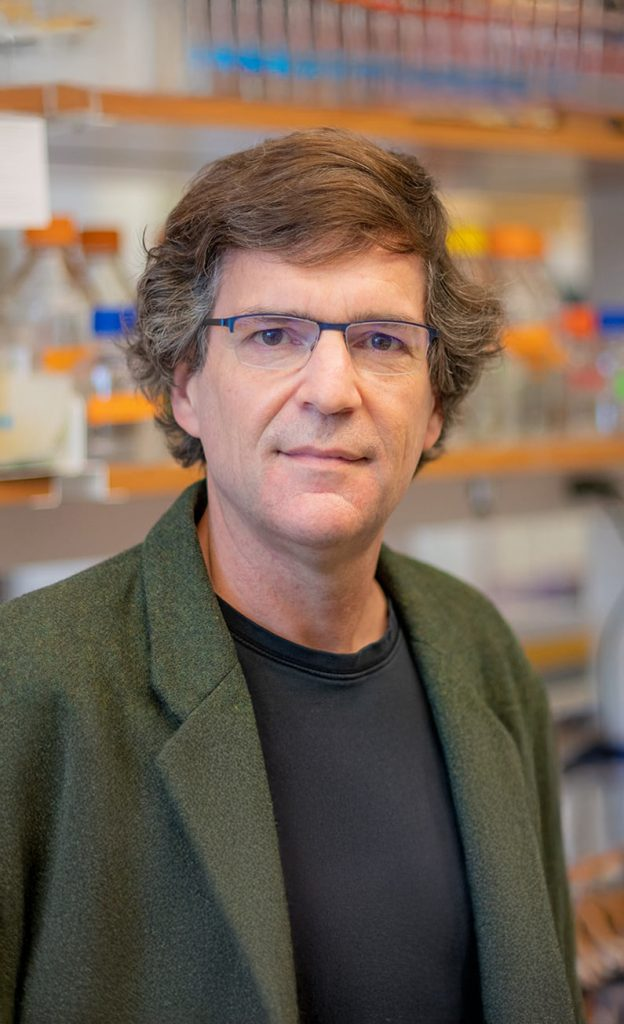
Erik J. Sontheimer, Ph.D., is the Pillar Chair in Biomedical Research and Professor at the University of Massachusetts Chan Medical School, where he is also Vice Chair of the RNA Therapeutics Institute (RTI). He earned his Ph.D. from Yale University in 1992, having completed his thesis in the laboratory of Joan Steitz. He conducted postdoctoral research as a Jane Coffin Childs Fund Fellow with Joe Piccirilli at the University of Chicago. He then joined the faculty at Northwestern University where he continued his work on the roles of RNA molecules in gene expression, including pre-mRNA splicing mechanisms, RNA interference pathways, and CRISPR immune systems in pathogenic bacteria. Among other advances, in 2008 his group reported that CRISPR systems can function via DNA destruction, and they first described CRISPR’s potential for RNA-guided genome engineering. He has received a CAREER Award from the National Science Foundation, a New Investigator Award in the Basic Pharmacological Sciences from the Burroughs Wellcome Fund, a Basil O’Conner Award from the March of Dimes, a Scholar Award from the American Cancer Society, a Distinguished Teaching Award from the Weinberg College of Arts and Sciences at Northwestern, the Nestlé Award from the American Society for Microbiology, the Mid-Career Award from the RNA Society, and election to the American Academy of Microbiology. In 2014 he co-founded Intellia Therapeutics, Inc. for the development of clinical applications of CRISPR gene editing. That same year he also moved to the RTI at UMass Chan Medical School, where he is continuing his research on the uses of RNA molecules in biomedical research and the treatment of human disease. From 2021-2023 he co-chaired the Board of Scientific Counselors at the National Cancer Institute, and he currently serves as a member of the Scientific Advisory Board at Tessera Therapeutics.

Paola Isabel Medina-Cabrera is a fourth-year Cancer Biology Ph.D. student from Yabucoa, Puerto Rico. In the labs of Dr. Marina Pasca di Magliano and Dr. Benjamin Allen, Paola studies how cells communicate in the pancreatic cancer microenvironment to develop new potent therapeutic strategies for patients. Paola has been involved in MiSciWriters since 2022 as part of our Illustration team, where she enjoys turning scientific concepts into engaging visuals.
Besides drawing and making science more interactive, she enjoys reading, exploring new cities, and enjoying a new restaurant!

 misciwriters.com