
Live Blogger: Lauren Heinzinger
Editors: Ryan Schildcrout, Brenna Saladin
This piece was written live during the 10th annual RNA Symposium, “RNA Frontiers: From Mechanisms to Medicine” hosted by the University of Michigan’s Center for RNA Biomedicine.
The flow of genetic information is a fundamental concept in biology, and it’s one of the first major topics that most biologists learn in school. DNA is first transcribed into RNA and then RNA is translated into protein. However, the process is far more complicated than this simple framework suggests. Dr. Karla Neugebauer begins her talk by diving into the hidden complexities of this process. She asks us to recall that the average human gene contains 30,000 base pairs and each gene typically takes 30 minutes to transcribe. As RNA transcripts become longer, more RNA-binding proteins (RBPs) can bind and other activities (e.g., RNA editing, RNA splicing) can occur. This means there is roughly a 30-minute window of opportunity to influence nascent RNA, or the newly synthesized immature RNA transcripts, making them dynamic moving targets for regulation. This is an important step in translation, as RNA processing can have far-reaching biological consequences.
The Neugebauer group has correlated the free 3’ end of nascent RNA with the eventual fate of that RNA molecule. In other words, they can determine which processing events such as alternative splicing, RNA cleavage, or RNA folding have taken place simply by looking at the 3’ end of the RNA molecule. A large part of Dr. Neugebauer’s talk focuses on the “all-or-nothing RNA processing” model, which describes how transcripts are either efficiently processed or are inefficiently processed. Some nascent RNA transcripts are efficiently co-transcriptionally spliced, which is associated with proper 3’ cleavage, RNA maturation, and a productive gene product. Other transcripts, in contrast, are inefficiently spliced and retain their introns, resulting in transcriptional readthrough. This means that the RNA polymerase does not stop where it should at the end of a gene and continues to transcribe downstream regions. RNA transcripts with transcriptional readthrough are longer than they should be, can include components of other genes, and can even interfere with proper RNA maturation and folding.
Dr. Neugebauer next explains how nascent RNA folding can act as a regulatory switch, influencing subsequent RNA biogenesis as soon as the transcript is produced by the polymerase. Localized folding near the branch sites and 5’ splice sites was found to fine-tune gene output, which is exciting because this adds another layer of gene regulation beyond the sequence motifs themselves. Then, the talk pivots in a more clinical direction, as Dr. Neugebauer discusses how nascent RNA responds to cancer therapy. The Neugebauer group wants to identify the immediate transcriptional responses to common cancer therapeutics to better understand the mechanisms underlying treatment resistance and cancer recurrence.
It is well known that chromosomal rearrangements can cause cancer. For example, patients with chronic myelogenous leukemia (CML) often have the Philadelphia chromosome, which is an abnormal and shortened version of chromosome 22. The Philadelphia chromosome is caused by a translocation event between chromosomes 9 and 22, creating a fusion gene called the BCR-ABL1, which encodes a constitutively active tyrosine kinase. The expression of this fusion gene then drives uncontrolled white blood cell proliferation, ultimately resulting in CML. Since the vast majority of CML patients (90-98%) have the Philadelphia Chromosome, it is important to understand the mechanisms underlying both fusion gene expression and RNA processing.
Imatinib, a BCR-ABL1 inhibitor, is used to treat CML; however, many bone marrow stem cells become resistant to imatinib. These resistant bone marrow stem cells are then responsible for resistance to BCR-ABL1 inhibitors and cancer relapse. Because of this, the Neugebauer group wants to understand what changes occur in these stem cells after immediate exposure to imatinib. Just one hour after imatinib treatment, transcriptional readthrough increased while broader gene expression changes and alternative splicing occurred later. This was one of the most striking parts of the talk because it suggests that RNA processing changes are one of the earliest responses to imatinib therapy.
The talk ends on the topic of RNA chimeras, which are formed from the alternative splicing of upstream genes and downstream genes coupled with transcriptional readthrough. Importantly, these readthrough RNA chimeras can be abundant during CML. Dr. Neugebauer ends her talk by discussing how the early changes in RNA processing events after imatinib treatment might involve the formation and expression of these RNA chimeras. These findings are exciting as they indicate imatinib treatment dramatically reshapes the nascent RNA landscape, producing many unproductive gene products and unusual chimeric transcripts. The function of these chimeras has yet to be fully identified, but that’s a topic of future research in the Neugebauer Lab.
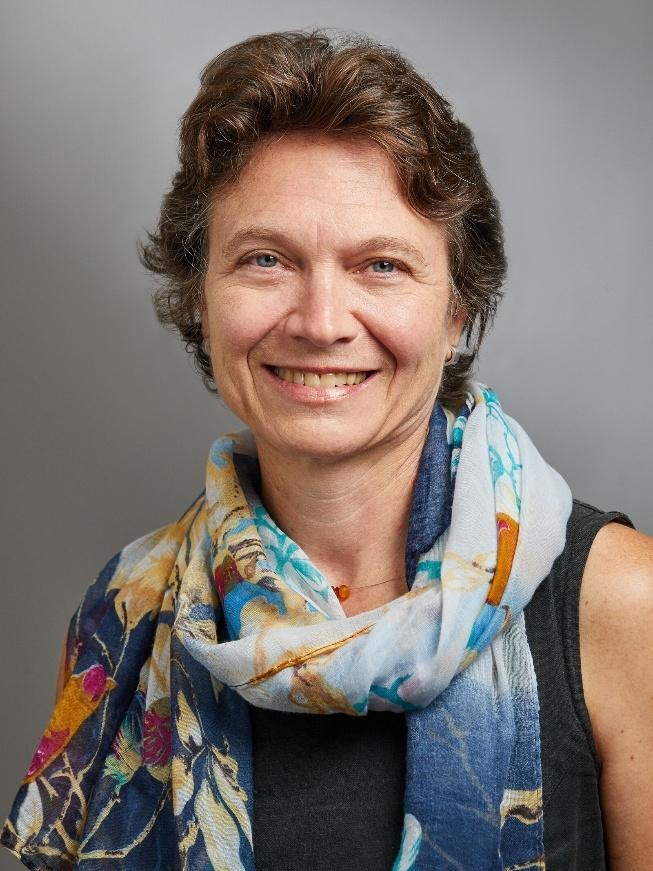
Karla M. Neugebauer is a R. Selden Rose Professor of Molecular Biophysics and Biochemistry at Yale School of Medicine. She is also a professor of Cell Biology and the Director of the Yale Center for RNA Science and Medicine. Dr. Neugebauer received her BS in Biology from Cornell University and her PhD in Neuroscience from UCSF. She switched her research focus to RNA biology as a postdoc at the Fred Hutchinson Cancer Research Center. Dr. Neugebauer now investigates the links between transcription and splicing and the role of cellular sub-compartments in RNA biogenesis. The Neugebauer Lab employs a range of model organisms to study these topics and RNA-protein interactions, including yeast, mammalian cell culture, zebrafish, and green algae. In 2017, Dr. Neugebauer was recognized internationally for her work in RNA biology by the RNA Society.
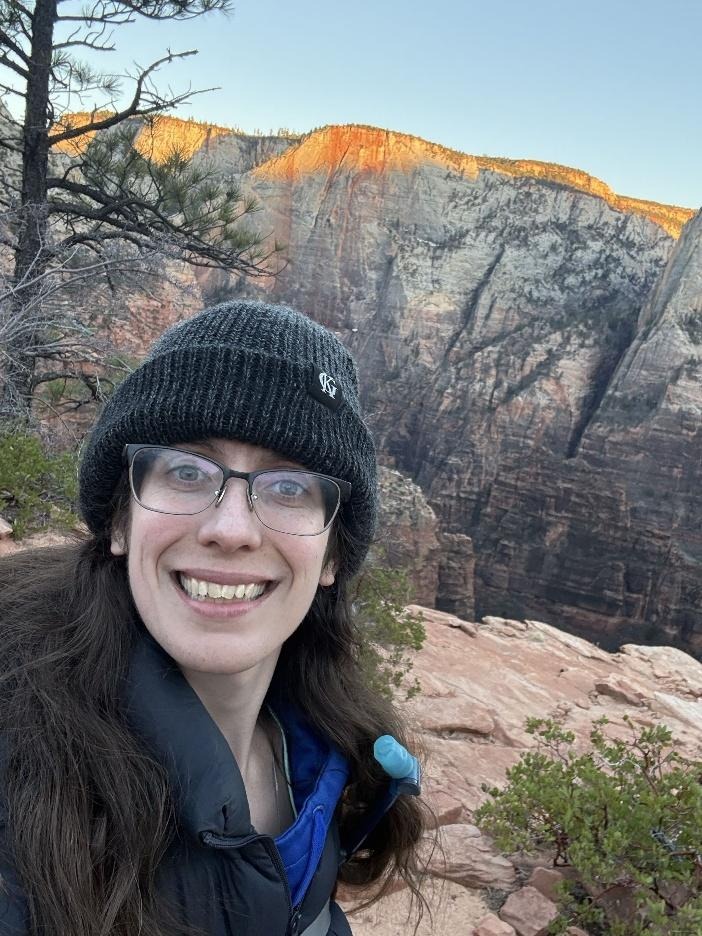
Lauren Heinzinger is a second-year PhD candidate in the Department of Microbiology and Immunology. She is also pursuing a concurrent MS in Bioinformatics through the Department of Computational Medicine and Bioinformatics (DCMB). Lauren works in Dr. Robert Dickson’s lab where she studies the ecological determinants of pathogen overgrowth and pneumonia during acute lung injury. In her free time, Lauren enjoys visiting national parks, hiking mountains, reading and writing, and playing video games.

 misciwriters.com