
Live Blogger: Brenna Saladin
Editor: Ryan Schildcrout
This piece was written live during the 10th annual RNA Symposium, “RNA Frontiers: From Mechanisms to Medicine” hosted by the University of Michigan’s Center for RNA Biomedicine.
Michelle Hasting introduces the third Keynote Speaker at the RNA symposium by saying Madeleine Oudin has an incredible story to tell. While Dr. Oudin is well known for tumor resistance and tumor microenvironment research, her lab recently switched gears to an entirely new subject matter. Michelle concludes her introduction noting that she believes Oudin qualifies as one of the strongest scientists she knows in terms of the rigor she exercises within her research.
Oudin begins her presentation by describing the spring of 2021. She had started her lab at Tufts in 2018, so they had been established for some time, and she felt good about the direction things were going. She was happy with the lab and her work, and she was on track for tenure. During this time, she had a baby girl named Margot. Everything seemed to be going great.
Oudin shares that she started to notice something going on with Margot during her infancy. She showed a video on screen where Margot was having noticeable seizures. They took Margot to the hospital, where she was diagnosed with epilepsy. Oudin showed a diagram of the use of next-gen sequencing for epilepsy diagnoses, describing how the next step for Margot was genetic sequencing to determine the cause of her epilepsy. Margot’s results showed she had two variants within the SCN8A gene. Oudin actually joked that this result was odd enough the doctors asked if the father was actually the father (which she confirmed he was and the whole audience laughed).
The SCN8A gene encodes a voltage-gated sodium ion channel, which moves molecules across membranes. Voltage-gated sodium channels are particularly important in the brain, as neurons have these channels all along their axons that create the action potential to signal to their neighbors (called synaptic signaling). One model for epilepsy is the “overactivation” of this signaling, resulting in disease. Therefore, variants in these channels (like SCN8A) that result in overexcitation of these neurons within the brain lead to epilepsy.
Margot’s variant in SCN8A led to a severe phenotype. Oudin shows how, as the scientist she is, she tracked every single one of Margot’s’s seizures. Some days she would have over 100. Oudin displayed a graph showing which drugs Margot was being treated with at the time, hoping to find a drug combination that was effective in reducing her seizures. Her disease came with more than just seizures; it also had comorbidities–she was non-ambulatory and had to be tube-fed.
Oudin and her husband looked back towards the genetic report to learn more. They learned Margot likely had a pathogenic variant of SCN8A in the region of exon 5, which is the voltage sensing domain of the channel (the domain that senses when the channel should open or close).
Genes are traditionally thought of as a singular sequence that encodes one protein. However, genes are actually more complicated than that. While the DNA or gene of an individual is a set sequence, before it is made into a protein, it is transcribed into a messenger molecule called mRNA.mRNA is then translated into a protein. However, there are a lot of processes between transcribing RNA to translating it into a protein. After RNAs are transcribed, they undergo an editing process, where sections of the RNA can be removed. These regions are referred to as intronic sequences, as they are not included in the final mRNA and therefore not translated into proteins. Sequences that remain within the mRNA are referred to as exonic sequences, or exons. This process is called splicing, and it can lead to a diversity of end RNA products from the same gene, giving rise to different final mRNAs and protein sequences of the same gene within the same individual. These different RNAs resulting from differential splicing are called splice variants, and the resulting products are referred to as different isoforms of the gene.
Within the SCN8A gene, there can be a splicing isoform with exon 5N or a splicing isoform with exon 5A. Since only either 5N or 5A is included in the final mRNA, these exons are mutually exclusive exon pairs. There are only two amino acid changes between 5N and 5A, so overall these regions are very similar. One of the main differences for these isoforms is that 5N is abundant before and after birth until about 1 year, and then splicing switches to promote the 5A isoform. Therefore, both of these isoforms can function similarly, and the differences mainly come from changes over development. This is good news, because if a patient has a mutation in either 5N or 5A, this opens up the potential of changing expression from the mutated form to the one that does not have the mutation in their genome.
This is when Oudin introduces the idea that ASOs could be used as a therapeutic option. Antisense oligonucleotides (ASOs) are sections of RNA or DNA that are complementary to their target and therefore bind to specific sites on the target. ASOs can be designed to result in different effects after binding. For example, some ASOs are designed to bind a target and result in degradation of the target RNA. In the specific case of SCN8A, an ASO can be designed to promote splicing for either including 5A or including 5N, depending on which pathogenic variant a patient has.
Margot has a variant located in 5N, so her potential ASO treatment would be to cause splice switching where only 5A was included. However, Margot’s case was uniqe–she had a second variant. On the slide, Oudin displayed two questions: Are Margot’s 2 mutations on the same chromosome? Which one is pathogenic? Oudin and her husband looked back to their genetic test results for Margot, but the company performing the test didn’t include this information in the results. So she and her husband went to work to figure it out themselves.
Oudin then plays a video of her, her husband, and baby Margot in Oudin’s lab. They are all swabbing their cheeks to get their DNA, Margot included. They then show a PCR machine, which is a machine that aims to amplify the specific DNA sequence of interest. From there, the video shows them working on a computer, analyzing the results. This work confirmed where Margot’s variants were. Margot had T144S and S217P variants, and the pathogenic one was S217P.
Oudin goes on to describe how this is an important but overlooked factor when patients undergo genetic testing. Many companies do not include the chromosomal locations in the report, but in cases like SCN8A, the location of the mutation, either on 5N or 5A, changes the outcome of the treatment completely.
Patients with variants in exon 5 have seizure onset at four to five months old. Interestingly, patients with variants in 5N have more seizure control than 5A. When the splice switch happens at about one year old, the body switches from primarily using 5N to primarily using 5A, and so these patients begin to see some improvement. Could an ASO replicate what the body does naturally by changing which variant is used?
Oudin describes how ASOs can be difficult to design. They are difficult to make, the testing takes a while, and splicing regulation can be different for different genes. Oudin and her husband looked towards conservation at exon 5 to better understand how this splice switching event happens. The results of their conservation analysis showed that the regulatory mechanism for 5N and 5A splicing event occurs within exon 5 itself. But that is also where the variants are located. This led to the question, can the variants themselves impact splicing?
Oudin showed data where some variants induced the splice switching event to 5A faster, while the variant in 5N could cause a delay. This would lead to 5N being expressed for longer, and therefore the pathogenic variant on 5N being maintained when it should normally switch to 5A. Margot’s pathogenic variant S217P on 5N was shown to prevent the switching to 5A. She was going to keep expressing her disease causing variant.
With little hope that her body would switch to the 5A variant, Oudin sought to understand if an ASO could accomplish this. First, they designed many ASOs and tested them to determine if any could promote a splice-switching event, and they were able to get some that could. Next, they took fibroblasts, or skin cells, from Margot and derived them into induced pluripotent stem cells, which are cells that contain her unique variant but can turn into any cell in the body. They turned these cells into neurons to recapitulate where the disease happens. These neurons had the same epilepsy phenotype. When the ASO was tested in these cells, it was able to promote the switching to 5A.
After testing in cells, they then moved to mouse work. A mouse was created with the same genetic mutation as Margot, which displayed a very severe phenotype. Oudin shows a video of the mice having seizures. Since the mice were young, they could only be away from their mother for ten minutes at a time. During this ten minute time period, the mice would have an average of five seizures. Eventually, the mice would have difficulty eating and moving, which was shown in another video. The end of this video showed a mouse laying on its side, still. These mice would die at about 20 days old. The cause of death was not the seizures, but it was the inability to eat or move. This mouse phenotype was similar to humans. Oudin shared that the leading cause of death in children with epilepsy is not seizures, but low muscle tone, which impacts respiratory function.
When the mice were treated with the ASO, they were able to rescue about 30% of the mice. Those that were rescued acted like the mice without the disease. One of the biggest challenges for using the ASO that Oudin discussed is that just a mere 10% expression of the disease causing variant is enough to induce seizures. Therefore, to correct the disease, you need to ensure that on a molecular level the splice switching event is very effective. For an ASO, both the delivery and effects may not be enough to reach this level for every individual. This can explain why only 30% of the mice recovered after treatment.
Oudin concludes her talk by discussing the importance of N-of-1 trials, where a drug is specifically designed and used to treat one patient, often patients with rare diseases. This is a newer initiative that the FDA is allowing. While the downside of an N-of-1 trial is that there is no control arm, they use symptom tracking before and after treatment to determine efficacy. Margot applied as a patient for an N-of-1 trial with a company in August 2022. In January 2025, they were able to find a hospital to work with for this trial. Unfortunately, Margot was not able to receive her ASO in time. She passed away in December 2025.
Oudin ended by thanking her lab, her collaborators, and the supportive community that she is a part of.
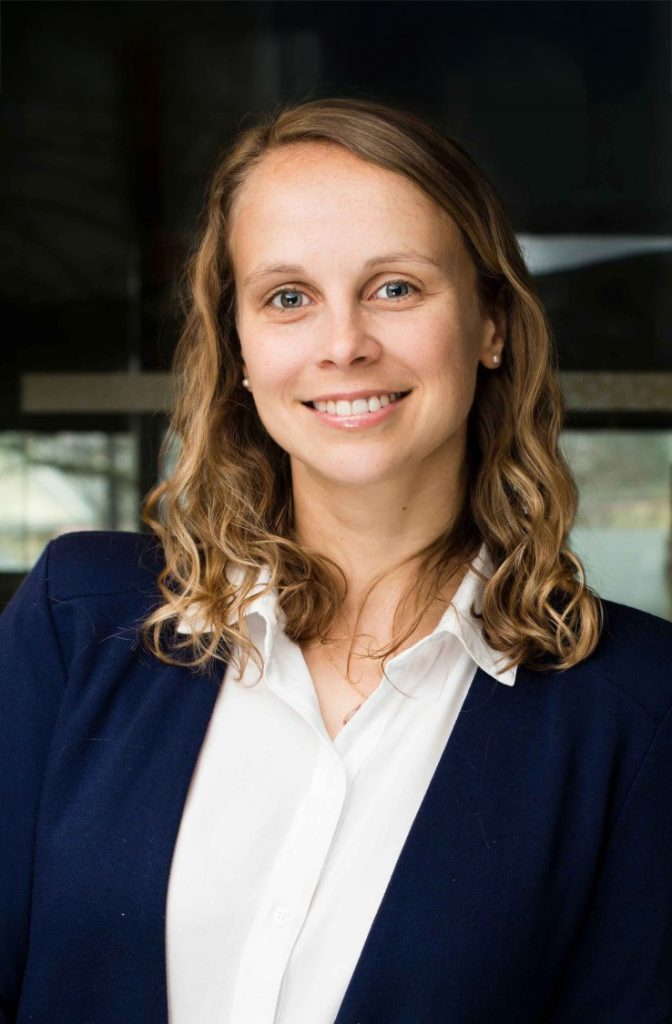
Madeleine is the Tiampo Family Associate Professor of Biomedical Engineering at Tufts University, after completing a PhD in Neuroscience from King’s College London on adult neurogenesis and post-doctoral research at MIT on cancer metastasis. Her independent lab focuses on understanding the mechanisms by which the tumor microenvironment contributes to cancer metastasis and resistance to drugs. She has received numerous awards for her research such as a K99/R00 Pathway to Independence Award in 2016 and a DP2 New sInnovator Award in 2021 and was voted Exemplary Engineer by the graduate students in her department 3 years in a row for her commitment to promoting diversity, equity and inclusion in biomedical engineering. In 2021, the diagnosis of her daughter Margot with mutations in the SCN8A gene led to her to start research on SCN8A in her own lab, work to develop an ASO for patients with SCN8A, and become an advocate for individuals with epilepsy and other disabilities.
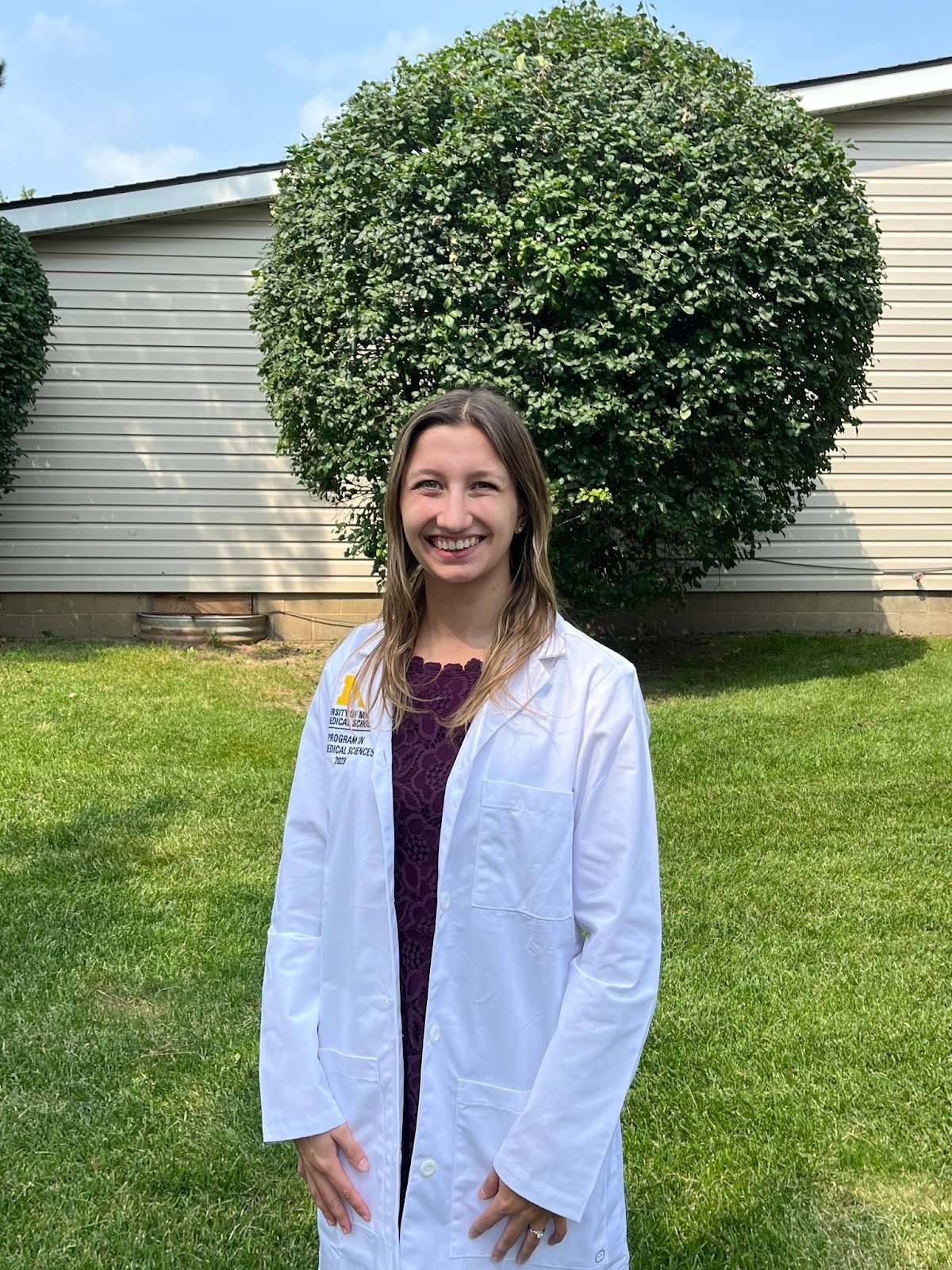
Brenna Saladin is currently a 3rd year PhD graduate student in the Biological Chemistry program. She performs research in the lab of Dr. Jailson Brito Querido, where she uses cryo-em to study the process of translation initiation. Outside of the lab she is the Communications Chair for the Biomedical Graduate Student Government (BGSG) and enjoys writing and editing for MiSciWriters. Brenna is originally from Minnesota, where she attended the University of Minnesota – Twin Cities and received her bachelors in science for a double major in Biochemistry and Neuroscience. In her (sparse) free time Brenna enjoys playing soccer, watching medical TV dramas, and going out for food and drinks with her lab mates.

 misciwriters.com