Written and Illustrated by Jess Li Edited by Emily Januck and Dana Messinger
Jess is a Ph.D. student in the Department of Microbiology & Immunology. Though their research interests have evolved toward an environmental microbiology focus, they remain fascinated by the gut microbiome and the many ways microbes affect human health. They aim to make science more engaging through fun illustrations.
Written by Ian McCue Edited by Paris Riggle and Jeremy Chen Illustrated by Satabdi Mohanty
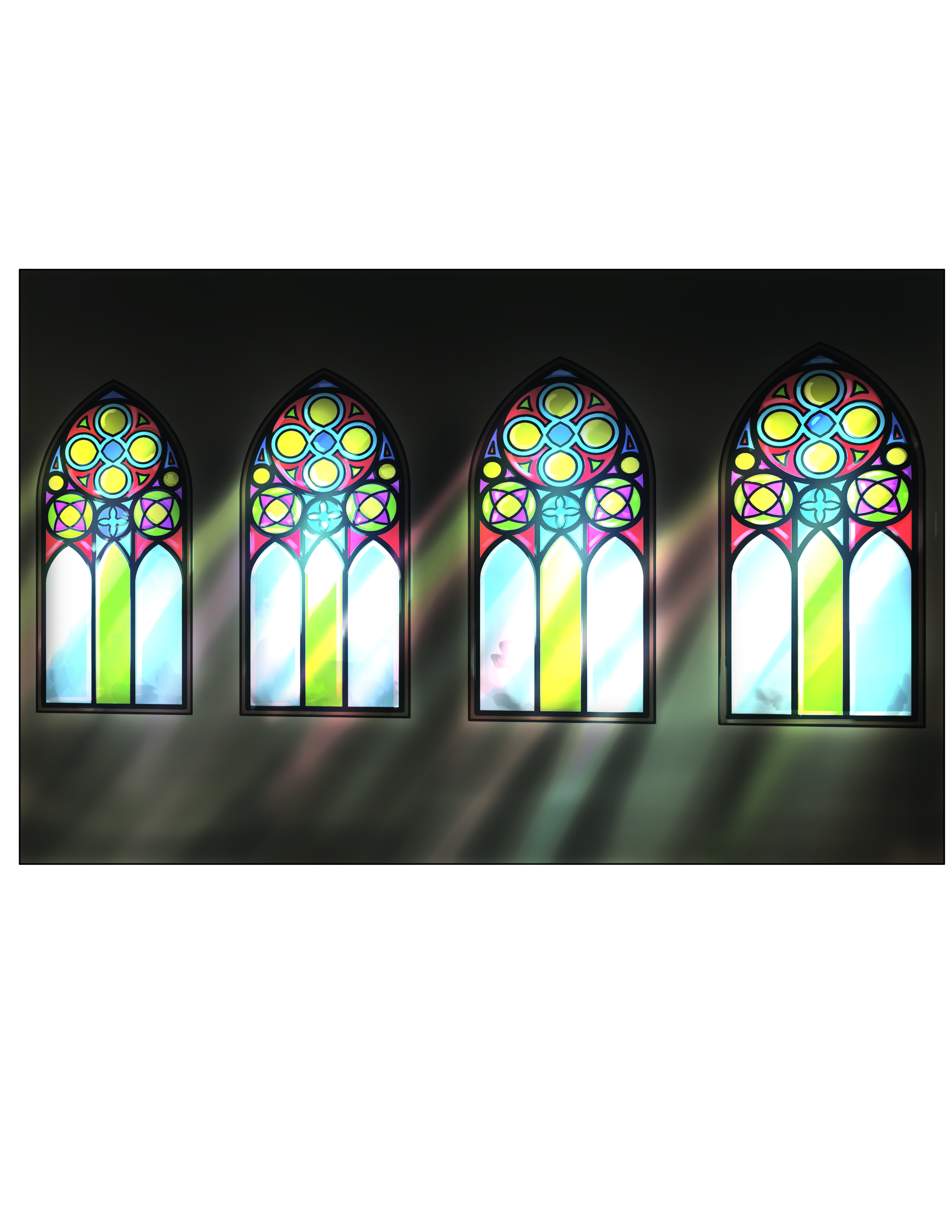
We are surrounded by glass. From eye glasses to computer screens to church windows, the world is projected through its transparent panes. The projection of life that glass informs, either through windows or screens, profoundly shapes our perception of reality as a whole. While we have transformed our lives with this powerful transparency, the world we shaped with glass was first shaped out of quartz. To become glass, the predictably ordered molecules of quartz fall away and become locked in a state of frozen chaos, unlocking new properties in the process. This new disorganized arrangement creates space for light to pass through, turning an opaque geode into a transparent jewel. Transparency is how we have improved our lives with glass, bending light to illuminate what we cannot see. First bringing light into our homes, we then turned the clarifying power of glass upward and brought closer the light of our once hidden planetary neighbors. By turning our magnified gaze downward, a new universe emerged, much closer than any heavenly body, and boiling with life.
Beyond its modern conveniences, glass has facilitated our view of life for hundreds of years. Magnifying the secrets of biology, glass transformed microscopic life from a miasmic fog into a clarified ecosystem. Over the centuries, as we came to understand the simpler forms of life swirling around us, our perspective on the origins of life evolved in parallel. Glass, as it turns out, would be more than a mere lens for that understanding. In fact, as we crystallize our understanding of life and its origins, glass may have been shaping that journey far longer than we have been shaping it.
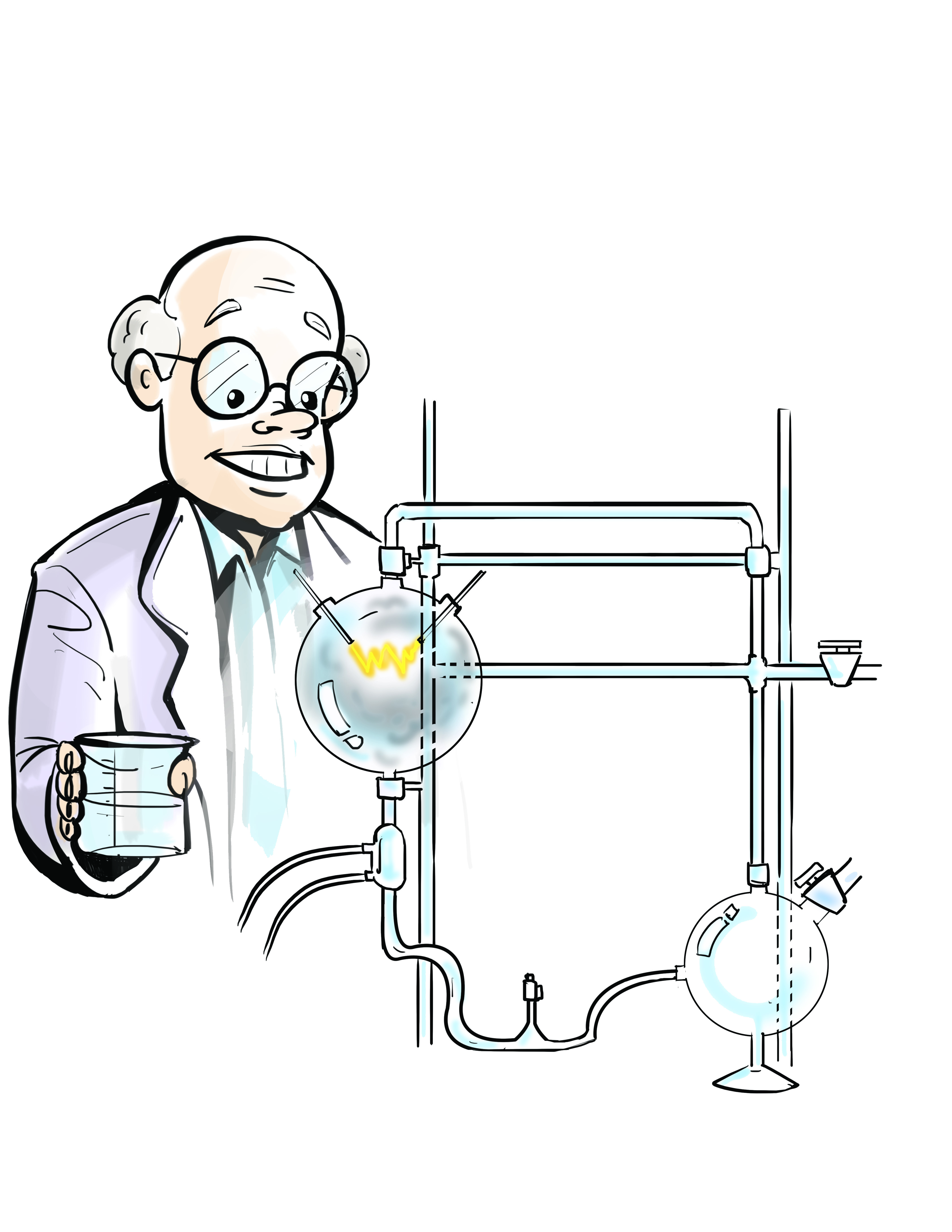
The history of life’s beginning was first written about 70 years ago. It begins with Stanley Miller, a chemistry graduate student. Stanley wondered about life’s origins after a seminar from Harold Urey about the “primordial soup” hypothesis, which suggested that the molecules of life may have emerged from simpler precursors. While the fossil record provided the ingredients for this idea, the recipe for converting molecules like ammonia into amino acids was unknown. Stanley thought he was the chef for the job, and convinced Harold to pursue this question. To simulate the conditions of an early Earth, Stanley needed a vessel that could contain an ancient atmosphere. He also needed something that would not influence the reaction by reacting with the ingredients. Ultimately, glass was the ideal material, being mostly inert to the components of the reaction and highly malleable when melted. From molten quartz, Stanley molded a chamber that could circulate the precursor gaseous, introduce the electric catalyst, and retain the potentially life-forming products. After several days, the translucent walls of his device revealed the colorless gas began to grow a brown residue in his collection flask. That somewhat underwhelming film, he would later learn, was made of amino acids, among other molecules of life.
In a glass bottle, Stanley Miller had turned non-living soup into the ingredients of life and provided a missing link between us and a lifeless universe. The versatility of transparency that glass provides, inert to both light and reactants, was the bedrock from which this discovery grew. Curiously though, this was not the first time in history that a new vision of life would peek out from behind a glass wall. It would have been difficult for Stanley to justify this experiment if he did not know life could exist on a simpler scale. What basis could he have that a primordial brew could lead to something more than the sum of its parts? It would have to be something simpler, and much, much smaller.
Stanley knew life came in a variety of sizes, the smallest of which happened to be the simplest. These simpler creatures were the most likely candidates to emerge from the chemicals pooling in Stanley’s flask, and presumably, our ancient Earth. His awareness of these creatures came from a similar revelation, insofar as it was dependent on glass. Roughly 300 years prior, Antonie van Leeweunheok, a fabric trader, took an interest in the magnifying power of glass to build a tool capable of viewing individual fibers of fabric. Antonie looked at more than textiles, however, and set his magnifying lens on pond scum and his own blood. Across the English Channel, Robert Hooke, a titan of scientific discovery, was doing the very same thing using a magnifying microscope of his own design to look at living materials like cork. Despite the similarity of their approach, history would remember them differently for what they revealed through their microscopes. Van Leeuwenhoek looked at pond scum and within it saw creatures whirling and colliding with each other. The dynamism he saw launched the study of microbiology to understand how this tiny life operates. Hooke, meanwhile, saw the periodic and identical ordering of holes in cork, and coined the term we still use today to describe the structure of life: cells. Through a glass lens two different kinds of scientists observed the same phenomenon yet saw something different in the images. This duality of Hooke’s and van Leeuwenhoek’s observations mirrors the fluidity of glass. Like the chaotic yet rigid arrangement of atoms in a glass lens, there is chaos and rigidity in life, both equally true. These parallels extend beyond the physical, for in the same way that Robert and Antonie saw different visions of life through a glass wall, Miller’s own view of life’s origins would also draw different perspectives. In fact, it was by looking through the glass walls of his flask that he missed their influence.
When Miller designed his flask, there were compromises he had to make by using glass as a material. Specifically, glass was not perfectly inert to the chemicals it would house. The high pH of reaction, he reasoned, would be capable of leaching silica from the glass into the reaction mixture, a contamination concern that did not hold his gaze for much longer after his first publication. In 2021 however, Joaquín Criado-Reyes and his colleagues wondered how much this played a role in Miller’s findings. This is because if life emerged from a primordial soup on our ancient planet, it would have done so from a bowl with ample quartz, which would also leech silica into the reaction. To test if silica derived from glass was important for turning gases like ammonia and methane into amino acids, Criado-Reyes et al. recreated Miller’s experiment in a vessel made of Teflon. This allowed them to isolate the effect of glass on the product. The results were clear: Teflon made a poor substitute for glass when it came to recreating the origins of life. Not only was glass more effective, adding chunks of glass to a Teflon container improved yields compared to no glass at all, isolating glass as a critical ingredient for Miller’s primordial recipe. These experiments revealed the possibility that the abundant quartz covering our planet had a role to play in the potential origins of life. That same quartz, refined billions of years later into a Miller’s flask, may have been influencing his results long before he dreamed of them. While Stanley saw glass as the set piece in a larger story, Joaquín and his colleagues saw the star of the show. Like the work of their predecessors, Hooke and van Leeuwenhoek, glass provides perspectives that require more than one pair of eyes to see. Throughout these histories, glass has been a means to an end. Whether it’s magnifying a hidden universe or illuminating the history of life, it’s just an ingredient in a much bigger recipe. The history of glass from this perspective is one that values transparency, and indeed is the quality we seek from glass as a tool for viewing. But Criado-Reyes et al. reveals another history of glass, one that illuminates its essentiality in that history. Miller’s flask is a product of his design and influence, while his results are a product of the design and influence of glass. There is no primordial soup experiment without the right vessel, shaped in the right way. This is the grand irony of Miller’s experiment: he both shaped, and was shaped by, his glass tools. He is not alone in that experience. We are all shaped by the glass around us. It connects our homes to the outside world, our palms to the virtual world, and our inquisitive gaze upon new horizons, be they heavenly bodies or hidden universes. The transparency of glass is both inert and active; it facilitates viewing through its passivity. In transforming quartz into glass tools, we are transformed by the insights glass reveals. Born out of quartz, we are nurtured by an invisible cradle of mutual design.
Ian McCue is a first year Ph.D. student in the Cell and Developmental Biology program. He is a member of the Jillian Pearring lab where his research is focused on uncovering protein trafficking dysfunction in rod photoreceptors, using a variety of microscopy techniques. Ian received his Bachelor’s and Master’s degrees in Biochemistry from the University of Nebraska – Lincoln, where his thesis work investigated the potential of ultrasound as a mechano-therapy for heart disease. Outside of the lab, Ian enjoys cooking all manner of cuisines, going for long walks, and dancing!
Written by Krista Goerger Edited by Dana Messinger and Kate Giffin Illustrated by Jess Li
“I am small, but I am mighty. Even if no one sees me, I know I make a difference.” Pippa the Platelet repeated her affirmations as a swell of pride and nerves consumed her. Mama Meg smiled gently, knowing that the last connection between them was about to be pinched off, releasing Pippa into the bloodstream.1
Then the tether broke, and Pippa was swept away into the blood’s swift current.2 Pippa waved goodbye. Mama Meg, a magnificent megakaryocyte, would stay in the bone marrow, continuing her noble task of assembling and preparing her 3,000 platelet progeny.3 The moment was bittersweet, but Pippa was comforted knowing parts of Mama Meg would always be with her.
Mama Meg had given her all she needed to form a blood clot: feet to anchor, arms to reach for the wounds, signals to rally help, hands to grab on, and strength to pull a wound shut. Pippa understood her purpose – to protect her human by detecting injuries and forming blood clots to stop bleeding.4 Easy in theory, but timing was everything. Clot too early and she might cause a heart attack or stroke.5 Wait too long and her human could bleed out.
Clotting is a serious business, so Platelet Prep School boils it down to three golden rules to help every platelet pal make the right call in a flash!
#1: Stay alert and ready. A human can get injured anytime, anywhere. Always be on the lookout and be prepared to spring into action.
#2: Do not panic. If something looks different, take a deep breath, take in all the information, and make an informed decision. Only act when there’s real danger.
#3: Stick with a purpose and signal the squad. A cut? A scrape? That’s your time to shine. Anchor to the injury and signal for help, clotting is a team sport.
Repeating these rules, Pippa felt a spark of courage ignite. She was ready to step into the beautiful, complex dance of life in the bloodstream. She stood a little taller – well, as tall as a platelet could.
As Pippa took in her surroundings, the rushing river of red in her new world surged around her – fast, vibrant, and immense. The scale of everything was staggering, bigger than she’d imagined. Her mom had warned her she’d be small, but Pippa hadn’t expected to feel like a golf ball bobbing in a pool of beach balls.6 “I am small, but I am mighty,” she reminded herself with a determined little puff.
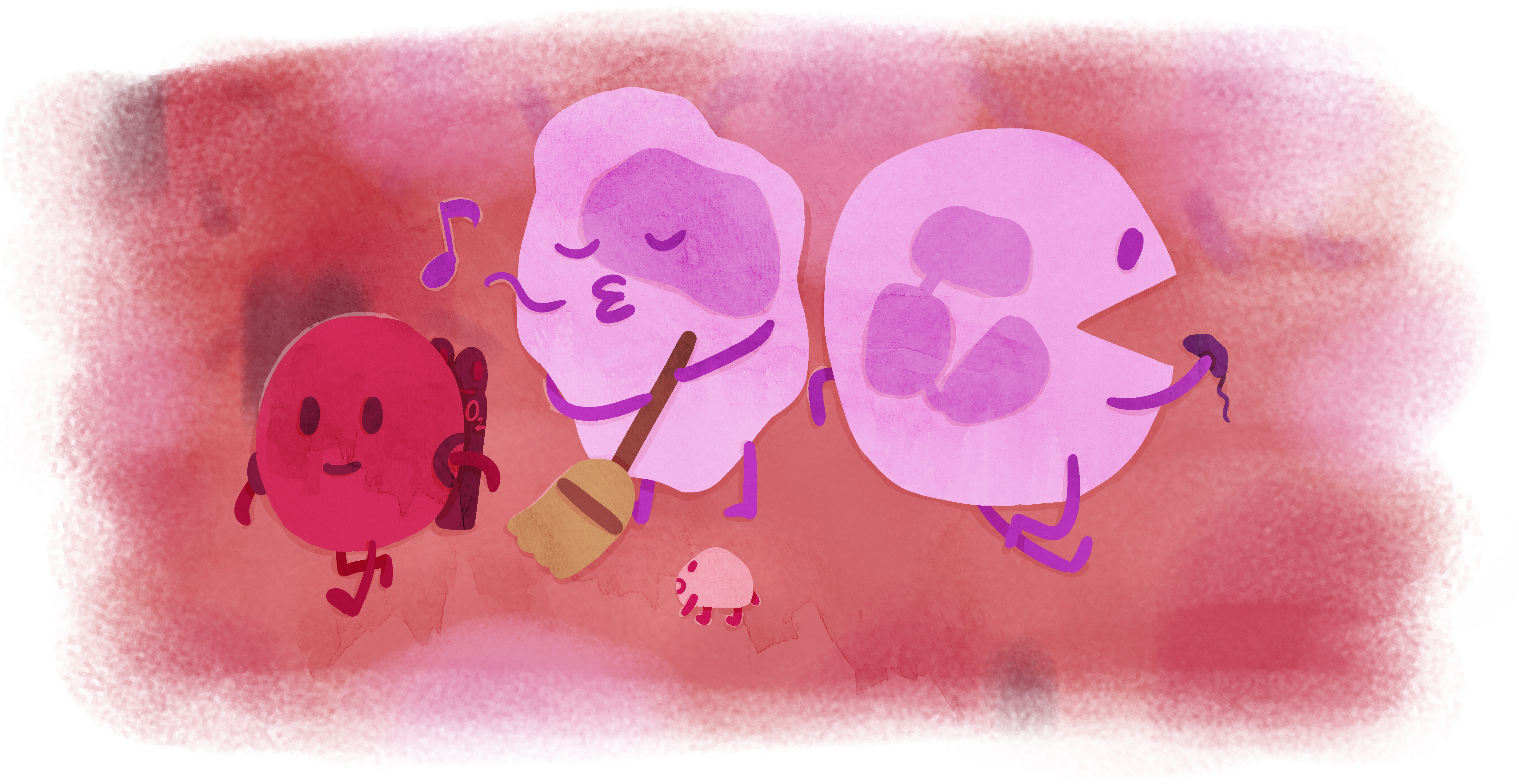
She looked up at the sea of bright red blood cells – so numerous and so enormous. Graceful and smooth, their doughnut-like shapes glided effortlessly through the vessel, delivering oxygen and carrying away carbon dioxide.2 Unlike Pippa and her ever-alert platelet pals, they seemed elegant and undisturbed. They moved in soft swirls, delivering oxygen from the lungs to the body and carrying carbon dioxide back to the lungs. She couldn’t help but admire them, so steady and sure. Pippa felt a tinge of envy though. They lived up to 120 days, while she only had 7 to 10 days to fulfill her destiny.1,2 Their longevity was a luxury compared to her brief existence.
She glanced around for others. White blood cells, including neutrophils and monocytes, bobbed along – big, blobby, and always on patrol. Though few in number, these immune cells came in all shapes and sizes, guarding the body from infection and invaders.7 Neutrophils were hard to miss, rushing toward inflammation and swallowing threats whole, leaving a mess behind like it was no big deal.2 Pippa found them brave and relentless –impressive, if a bit overzealous. She preferred the monocytes – the larger, slower, and smarter of the bunch – who cleaned up after the chaos, helping wounds heal once the battles ended.7
It took Pippa a while to get her bearings. At first, just moving through the bloodstream felt like a wild carnival ride. The heart churned everything – whooshing her through the heart, to the lungs, back again, and then out through the body. She felt a little queasy at first, but after cycling through the heart five to ten times per minute, she found her rhythm.8 The arteries were zippy and high pressure – just the way she liked it. The veins, on the other hand, were calmer… almost too calm for her taste.9
Pippa quickly learned it was best to drift along the periphery of the blood vessels, where she could follow Rule #1: Stay alert and ready and scout for any sign of trouble.3 Plus, staying off to the sides meant she didn’t have to wrestle with the red blood cells, who liked to hog the center lane.
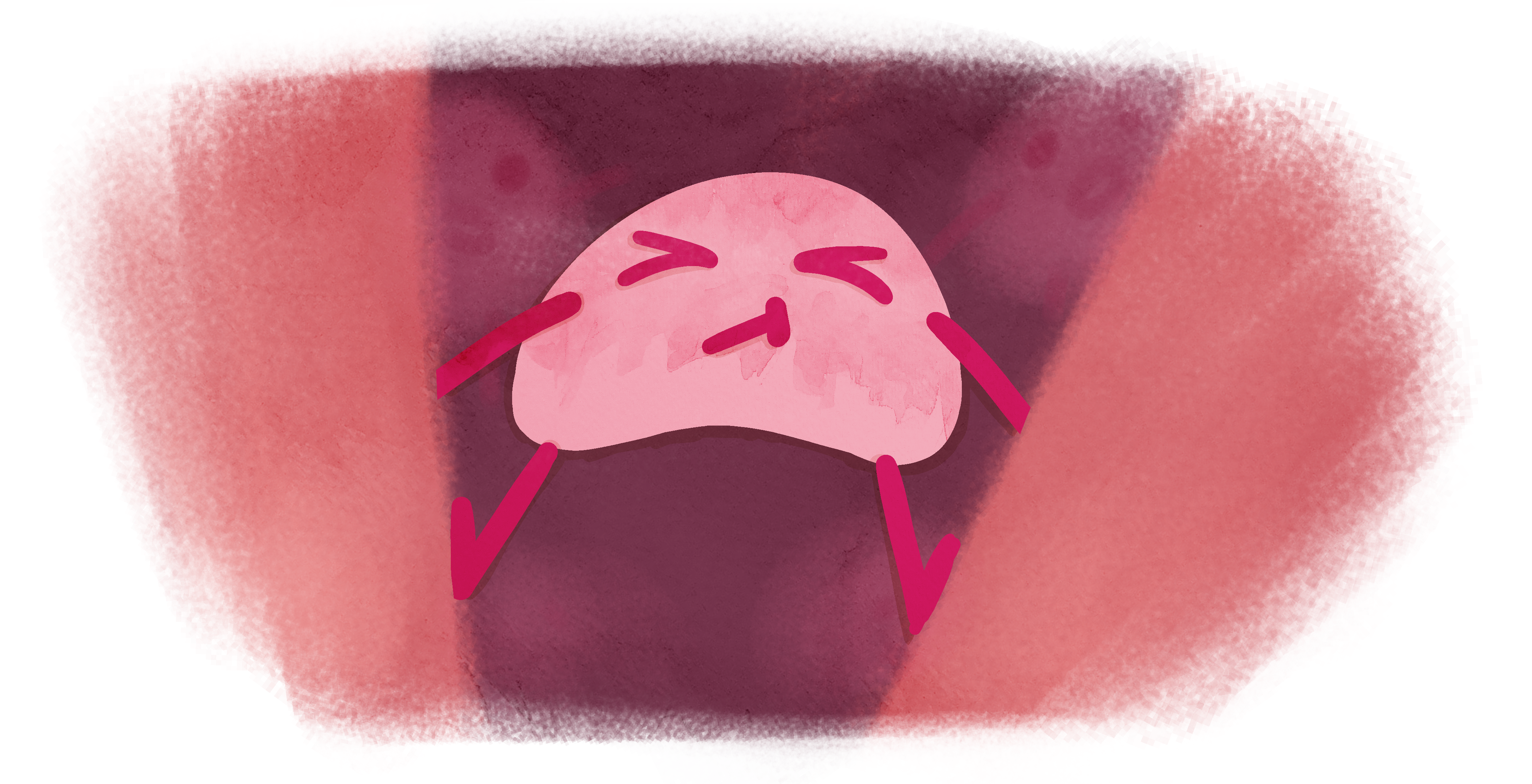
Just when she started to feel comfortable and confident, Pippa noticed something peculiar in the artery. The flow had changed in a subtle, but unsettling way. The vessel’s surface wasn’t smooth like the healthy walls she was used to. It was sticky in places, bumpy, and uneven. Her instincts shouted, “Go!” She wanted to spring into action, but something held her back… Rule #2: Do not panic.
“Is this really an injury?” she wondered. She’d heard the hushed warnings about plaques back in Platelet Prep School. They weren’t like regular wounds. Plaques were gooey globs of fatty buildup that hardened over time, turning stiff and crusty.10 They just… sat there. Silent and strange. Bulging into the vessel like forgotten debris. If she acted too soon, she might spark a clot that blocks the artery entirely, starving the heart or brain of blood.5
So, she chose to wait, her tiny form tense and alert, hoping her human would get treatment to stabilize or shrink the arterial plaque, sparing platelets like her from accidentally causing harm. Pippa kept floating and drifting, the ticking of time pressing down on her. Five days in, and she had just a few left to fulfill her purpose. Doubts crept in – had she missed her moment? Shaking off the unease, she narrowed her focus, scanning the vessel walls with renewed urgency. “Come on,” she pleaded, “Give me something to fix.”
And then, it happened. A rupture. A breach in the smooth, endless tunnel of the blood vessel. Pippa felt it first, the sudden turbulence. Then she saw it – the jagged tear in the vessel exposing the collagen proteins behind it. Pippa had never seen such vulnerability before. The body, so vast and powerful, lay wounded. Her human was hurt and needed help and she, small, unassuming Pippa, was the one summoned to save the day.
“This is it! This is my moment!” Pippa squealed, her tiny body vibrating with excitement. She surged forward, driven by instinct. She reached the wound’s edge, planted her feet, and latched onto the breached vessel.12 Pippa stretched, strained, and reached out with all her might to anchor herself as the current pushed hard against her.1 Briefly, she thought she might be in over her head, but then she remembered Rule #3: Signal the squad! With a burst of energy, she released her signals and called her platelet pals for backup: “Help, over here!”
And they came. Dozens. Hundreds. Thousands. Together they spread to cover as much area as possible. They grabbed hands, linking together, layer after layer.1 A delicate patch began to form – thin, but strong enough to withstand the force of the flow. Pulling together, they started knitting the wound shut with their tiny bodies.12 For a moment, there was triumph. The bleeding slowed. Safety was restored. “This is why I exist,” Pippa’s inner voice whispered with pride.
But balance is everything. More platelets arrived, sticking, stacking, growing beyond the wound itself. The lattice thickened, creeping out like ivy on a wall, and with it, doubt crept in. Pippa, buried beneath them, thought, “Stop! That’s enough!” The weight of the mass was overwhelming. What began as a delicate patch now threatened to become an obstruction. Had she saved her human’s life, or doomed it? Pippa, buried beneath the new arrivals, could only hope that balance would return. And it did.
The clot began to stabilize, and the process turned from frantic patchwork into careful construction. Fibrin mesh started to form, weaving around the platelets like scaffolding, solidifying the structure. The soft clot transformed into a firm, fibrous net – a long-term seal.11 The architecture of safety.
“I did it,” Pippa sighed with relief, “I saved the day and fulfilled my destiny.”
Pippa savored the triumph. Her mission was fulfilled, and the wound was sealed. But as healing took over, the clot began to soften, the structure loosening bit by bit. Enzymes moved in, gently dissolving the clot.13 One by one, her platelet pals were broken apart and swept away by the current. Pippa felt the tension release as her anchoring points loosen. Her body fragmented too, pieces drifting away in a peaceful surrender.14
Her human would never know of Pippa’s sacrifice. But because of her, they could continue living life to fulfill their own destiny. She remembered Mama Meg’s words, “Even if no one sees you, you make a difference.” And with that, Pippa found peace.
Krista is a pharmacology graduate student at UM, where she focuses on developing innovative diagnostics and therapies targeting platelets to prevent and treat blood clots. She is passionate about making science accessible to broader audiences and inspiring the next generation of scientists by breaking down barriers to STEM education and careers.
Written by Hyunwoo Jang Edited by Jeremy Chen and Alex Ford Illustrated by Naomi Raicu
Introduction
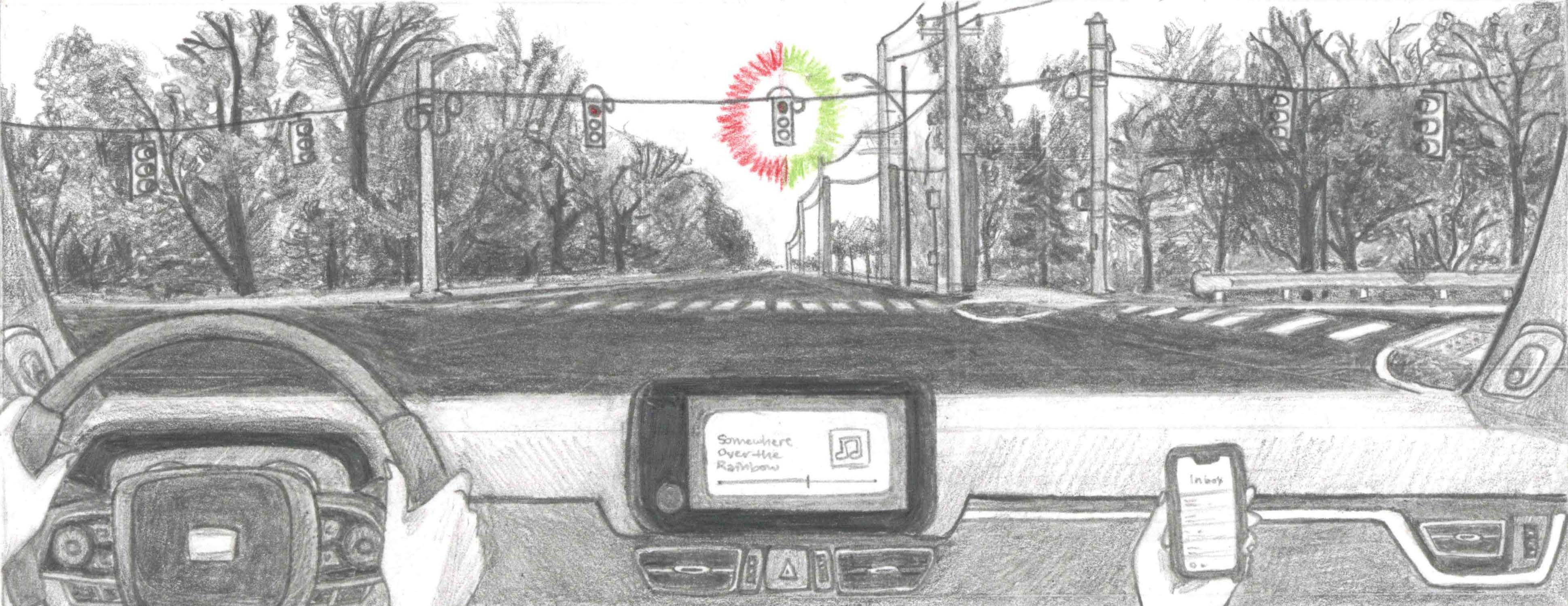
Imagine yourself in the driver’s seat, approaching an intersection. The traffic light ahead shifts from green to yellow, then quickly to red. Almost without thinking, your foot moves to the brake, and your car rolls to a stop. It’s a routine gesture – an automatic response when you perceive a red light. But consider: what exactly are you experiencing when you see that red light? We all learn to stop at red, yet can we be sure that the “redness” you perceive is the same as someone else’s? On the surface, everyone seems to agree on what “red” means, but perhaps your experience of red differs from mine, even if we both call it by the same name.
This seemingly trivial question opens a fascinating doorway into one of science’s deepest mysteries: consciousness. Each of us lives within our own first-person perspective. We are aware of our surroundings, feelings, and thoughts. We often take this for granted – a notion captured by Descartes’ “I think, therefore I am.” Yet consciousness remains remarkably elusive and poorly understood by today’s science.1 Despite the ability to measure and describe the brain’s physical processes, the subjective quality of experience – what it feels like to see red – remains fundamentally mysterious.2 How do neurons firing electrical signals translate into the rich tapestry of perception that fills our waking moments?
Known facts of color perception
To explore the mystery of subjective color experience, it’s helpful to first understand how color perception works from a scientific perspective. Color begins with light – specifically, electromagnetic waves of different wavelengths.3 The visible spectrum spans roughly 400 to 740 nanometers (nm): waves near the lower end (~400nm) are perceived as violet to blue, while those toward the upper end (~740nm) appear orange to red. When light waves reflect off an object and enter your eye, they strike the retina at the back, where specialized photoreceptor cells called cones are activated.4 Humans typically have three types of cones, each most sensitive to a different part of the light spectrum: one for blue, one for green, and one for red – and like a painter mixing primary colors to create their palette – all the colors you will ever see arise from different combinations of these three cones activating That’s why color blindness occurs when one or more types of these cones are missing or malfunctioning – leading to difficulties in distinguishing certain colors – most commonly red and green.5
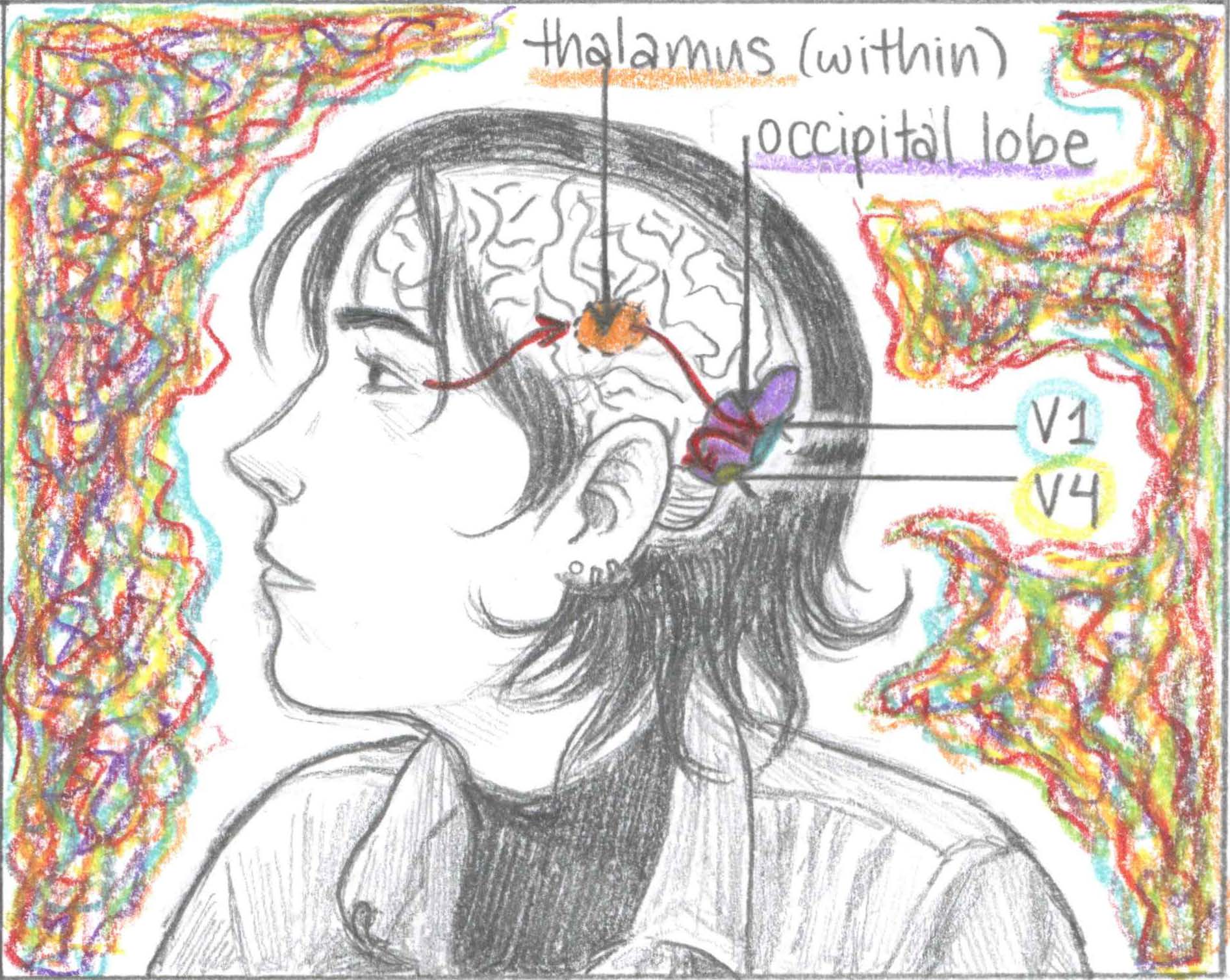
Once these cones detect light of their preferred wavelength, they convert it into electrical signals that travel back along the optic nerve.6 These signals are routed through the thalamus to the primary visual cortex (V1) at the back of your brain,7 before then passing onto regions like the 4th visual area (V4), which play a critical role in shaping our perception of color8 Other brain regions integrate color signals with context, memory, attention, and even emotion, enriching the raw sensory input into the vivid experiences we recognize as a “color”.9–11
The Inverted Spectrum
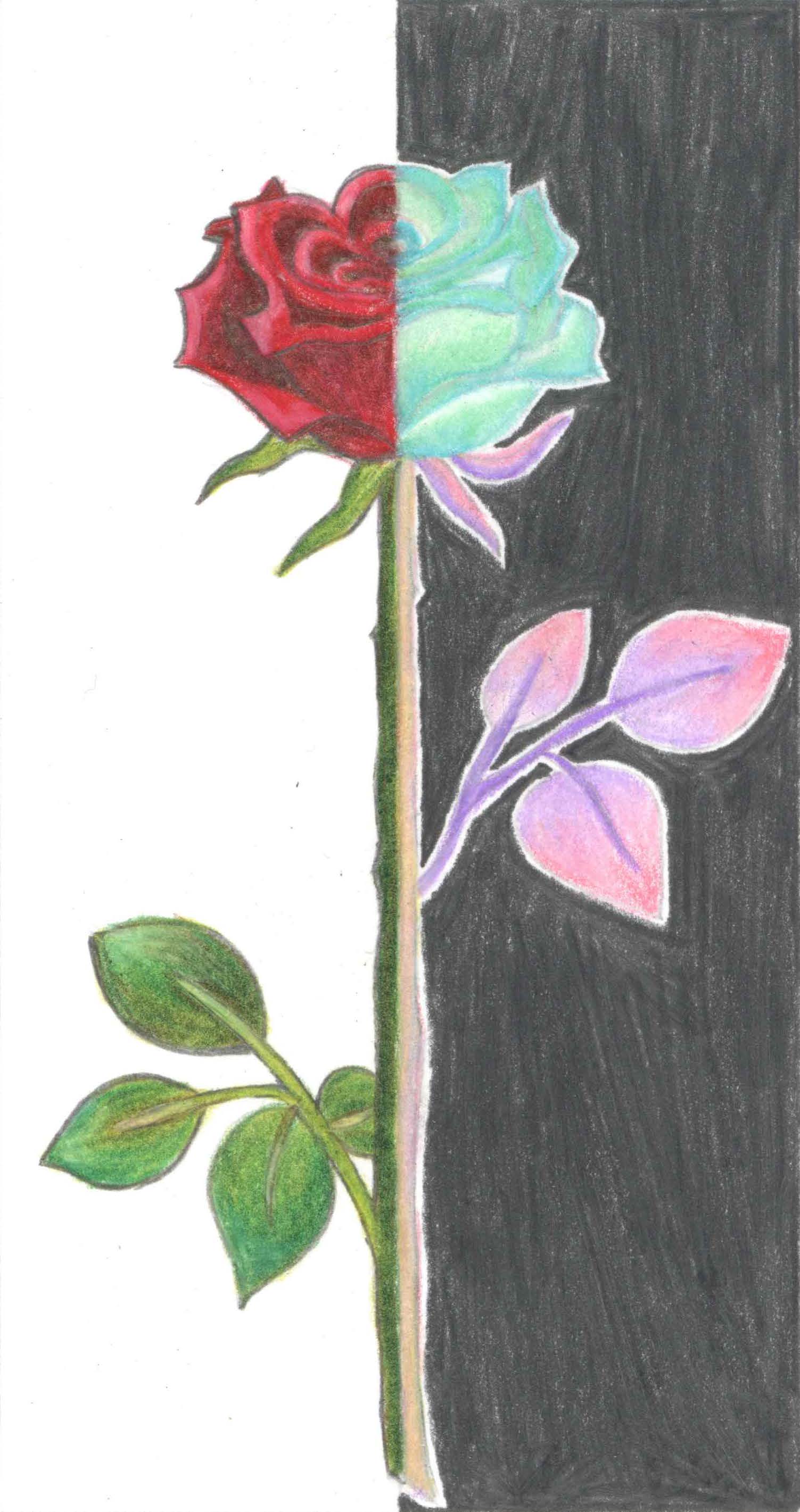
However, today’s science has no direct way to access the subjective contents of another person’s mind. This is what philosopher Joseph Levine called the “explanatory gap”: the disconnect between our understanding of the brain’s structure and physical processes, and the internal experiences that arise from it12,13. In theory, we cannot logically rule out the possibility that two people experience light with the same wavelength differently. To illustrate this, philosopher John Locke first proposed the inverted spectrum thought experiment in the 17th century14. In essence, your experience of “red” might correspond in your friend’s mind to what you would call “green”.15 Yet, you both learn to label that wavelength “red” by associating it with stoplights, apples, or roses, never by comparing internal experiences directly. As a result, any such inversion would go completely undetected.
What makes the inverted spectrum especially intriguing is that, unlike color blindness – which results from physical deficiency in cone cells – this thought experiment asks whether two people with fully functional visual systems might still have different subjective experiences. It’s like wondering if we’re all walking around with a secret, personalized color filter in our heads – a thought that might make you look at the next person wearing a “hideous” color combination with a bit more sympathy.
Definition of qualia
This hidden, first-person quality of perception is captured by the concept of qualia.2 Qualia are the subjective “what-it-is-like” of seeing red, feeling pain, or tasting sweetness. They are the internal units of conscious experience. While some may argue that qualia are illusory16–18, or just byproducts of neural processes limited by our current understanding of the brain19 – it is apparent that they are more than simply informational outputs of neural circuits; they are the lived sensations that only the experiencing subject can access.
Since the 1990s, the concept of subjective experience as a vital feature of consciousness has gained momentum20. Although precise definitions remain elusive, qualia pose a core challenge for any comprehensive theory of mind. This trend has driven researchers to confront the so-called “hard problem” of linking first-person experiences with third-person measurements of brain activity, bringing the debate about qualia from the philosophical margins to the forefront of scientific inquiry21–23.
Qualia space
Recently, a research team led by Dr. Naotsugu Tsuchiya explored a concept called “qualia space24.” It is a framework that treats qualia as if they were points in a kind of mental map, where the spatial distances between them reflect how similar or different they feel25. For example, is your experience of “orange” somehow “located” between your experiences of “red” and “yellow”? By asking participants to rank the similarity between color combinations, a personalized map of color experiences forms.
In a recent study, Tsuchiya’s team collected color similarity judgments from children of various ages and cultures26. Their findings revealed a striking consistency in the structure of color qualia space across all groups. This suggests that while your personal experience of “red” might differ from someone else’s, the relationships between colors – the way orange feels between red and yellow – are remarkably stable across humans. In other words, even if my “red” is your “green,” my “orange” would likely be your “blue-green”: the relational pattern stays intact.
Excitingly, this method isn’t limited to color: similar approaches are being used to map qualia spaces for sounds, smells, and even complex emotional or bodily experiences27,28. Ultimately, researchers hope these local qualia spaces can be integrated to better understand how diverse sensory experiences merge into a unified conscious experience29. The qualia space concept can also be applied to brain imaging. By visualizing brain activity with magnetic resonance imaging (MRI) scans, and combining that with similarity rankings, scientists can construct a “neural qualia space,” mapping brain patterns that correspond to specific qualia30. This allows researchers to directly relate subjective experiences to measurable neural activity – progress toward uncovering the elusive “neural correlates of consciousness”31. Thus, the combination of qualia space with neuroimaging may allow us to “translate” between the language of neurons and the language of experience.
Additional questions about consciousness and qualia
Inquiry into consciousness and qualia has practical relevance in today’s world of advanced artificial intelligence. Most experts believe that current AI systems like ChatGPT do not truly experience qualia, since they merely manipulate symbols and patterns to mimic human-like reasoning32. However, at the core of ChatGPT’s architecture, language is represented in an abstract space where relationships between words are mapped – this is what the system learns during training33,34. For example, it learns that the relationship between “king” and “queen” is similar to that between “prince” and “princess,” forming something akin to a languagequalia space. Now, emerging multi-modal AI systems integrate sensory inputs such as vision, speech, and tactile feedback, mirroring the multidimensional nature of human perception35–37. If such an AI system builds its own structured representation – similar to a qualia space – across multiple modalities, could we confidently say it remains non-conscious? These questions push the boundaries of our understanding of consciousness, ethics, and what it might mean in the future to coexist with entities that may one day claim sentience.
Conclusion
The concept of qualia reminds us that consciousness remains one of the final frontiers of human knowledge. While we’ve made remarkable progress in understanding the brain’s physical processes, the subjective nature of experience – why there is “something it is like” to see red or feel pain – continues to elude scientific explanation38. Interestingly, most of us (even neuroscientists!) rarely reflect on this profound mystery, even though it is the foundation of every waking moment39. So the next time you’re waiting at a red light, take a moment to marvel not just at the color, but at the astonishing fact that you can experience it at all: the dance of sunlight through leaves, the layered scent of a forest, the emotional pull of music. Each represents a miracle of consciousness that science is only beginning to understand.
Hyunwoo Jang is a Ph.D. candidate in the Neuroscience Graduate Program at the University of Michigan and a researcher with the university’s Center for Consciousness Science. He is also the founder and current president of the Korea Association for Consciousness Sciences. His work focuses on how large-scale brain networks reorganize across different states of consciousness. Beyond the lab, he is an active freelance translator and author.
References
The Science of Consciousness. (Routledge, London, 2003). doi:10.4324/9780203360019.
Kanai, R. & Tsuchiya, N. Qualia. Current Biology 22, R392–R396 (2012).
Waldman, G. Introduction to Light: The Physics of Light, Vision, and Color. (Courier Corporation, 2002).
Nathans, J. The Evolution and Physiology of Human Color Vision: Insights from Molecular Genetic Studies of Visual Pigments. Neuron 24, 299–312 (1999).
Hunt, D. M. & Carvalho, L. S. The Genetics of Color Vision and Congenital Color Deficiencies. in Human Color Vision (eds. Kremers, J., Baraas, R. C. & Marshall, N. J.) 1–32 (Springer International Publishing, Cham, 2016). doi:10.1007/978-3-319-44978-4_1.
Meister, M. & Berry, M. J. The Neural Code of the Retina. Neuron 22, 435–450 (1999).
Kandel, E. R., Schwartz, J. H. & Jessell, T. Principles of Neural Science, Fourth Edition. (McGraw-Hill Companies,Incorporated, 2000).
Heywood, C. A., Gadotti, A. & Cowey, A. Cortical area V4 and its role in the perception of color. Journal of Neuroscience 12, 4056–4065 (1992).
Zeki, S. & Marini, L. Three cortical stages of colour processing in the human brain. Brain: a journal of neurology 121, 1669–1685 (1998).
Tootell, R. B., Nelissen, K., Vanduffel, W. & Orban, G. A. Search for color ‘center (s)’in macaque visual cortex. Cerebral Cortex 14, 353–363 (2004).
Parra, M. A., Della Sala, S., Logie, R. H. & Morcom, A. M. Neural correlates of shape–color binding in visual working memory. Neuropsychologia 52, 27–36 (2014).
Levine, J. Materialism and qualia: The explanatory gap. Pacific philosophical quarterly 64, 354–361 (1983).
Humphrey, N. Seeing Red: A Study in Consciousness. (Harvard University Press, 2006). doi:10.4159/9780674038905.
Locke, J. An Essay Concerning Human Understanding. (Samuel Marks, 1825).
Shoemaker, S. The inverted spectrum. The Journal of Philosophy 79, 357–381 (1982).
Dennett, D. C. Consciousness Explained. (Hachette+ORM, 2018).
Sarıhan, I. Deflating the hard problem of consciousness by multiplying explanatory gaps. Ratio 37, 1–13 (2024).
Frankish, K. Illusionism: As a Theory of Consciousness. (Andrews UK Limited, 2017).
Churchland, P. M. Reduction, qualia, and the direct introspection of brain states. The journal of philosophy 82, 8–28 (1985).
Seth, A. K. Consciousness: The last 50 years (and the next). Brain and Neuroscience Advances 2, 2398212818816019 (2018).
Chalmers, D. The Hard Problem of Consciousness. in The Blackwell Companion to Consciousness (eds. Schneider, S. & Velmans, M.) 32–42 (Wiley, 2017). doi:10.1002/9781119132363.ch3.
Seth, A. K. & Bayne, T. Theories of consciousness. Nat Rev Neurosci 23, 439–452 (2022).
Dennett, D. C. Sweet Dreams: Philosophical Obstacles to a Science of Consciousness. (MIT Press, 2005).
Tsuchiya, N., Phillips, S. & Saigo, H. Enriched category as a model of qualia structure based on similarity judgements. Consciousness and Cognition 101, 103319 (2022).
Kawakita, G., Zeleznikow-Johnston, A., Takeda, K., Tsuchiya, N. & Oizumi, M. Is my “red” your “red”?: Evaluating structural correspondences between color similarity judgments using unsupervised alignment. iScience 28, (2025).
Moriguchi, Y. et al. Comparing color qualia structures through a similarity task in young children versus adults. Proc. Natl. Acad. Sci. U.S.A. 122, e2415346122 (2025).
Welch, D. et al. Assessment of qualia and affect in urban and natural soundscapes. Applied Acoustics 180, 108142 (2021).
Castro, J. B., Ramanathan, A. & Chennubhotla, C. S. Categorical dimensions of human odor descriptor space revealed by non-negative matrix factorization. PloS one 8, e73289 (2013).
Edelman, G. M. & Tononi, G. A Universe Of Consciousness: How Matter Becomes Imagination. (Basic Books, 2008).
Hirao, T. et al. A neuroimaging dataset during sequential color qualia similarity judgments with and without reports. Scientific Data 12, 389 (2025).
Koch, C., Massimini, M., Boly, M. & Tononi, G. Neural correlates of consciousness: progress and problems. Nat Rev Neurosci 17, 307–321 (2016).
Gouveia, S. S. & Morujão, C. Phenomenology and artificial intelligence: introductory notes. Phenom Cogn Sci 23, 1009–1015 (2024).
Sharma, P., Jyotiyana, M. & Kumar, A. V. Applications, Challenges, and the Future of ChatGPT. (IGI Global, 2024).
Wu, T. et al. A brief overview of ChatGPT: The history, status quo and potential future development. IEEE/CAA Journal of Automatica Sinica 10, 1122–1136 (2023).
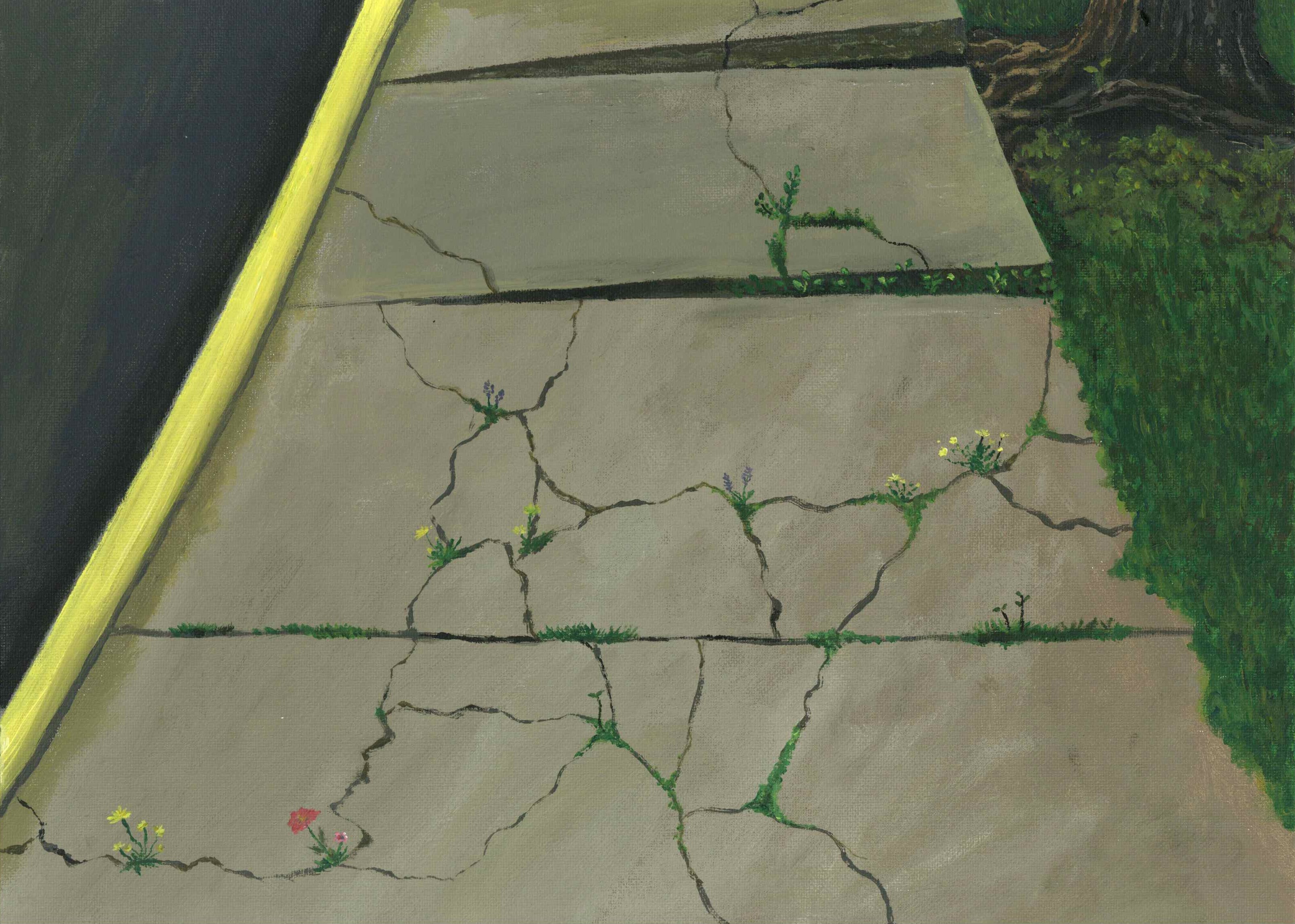
Despite human interference, nature can and will push through. If we slab a concrete path down, over time the strength of surrounding tree roots will overpower the path and break through. Little yellow flowers will find themselves pressing up through the cracks, reaching toward the sun. And while I may trip over those cracks, I’m always in awe of how resilient nature is. I wanted to capture that quiet, persistent power in this piece. In the top right corner, an old-growth tree reclaims its territory, uprooting the sidewalk as it stretches outward. You’ll find the grass and moss inching its way through the cracks in the path. Despite the concrete’s water-leeching properties, you’ll see colorful flowers sprinkled throughout.
I hope this piece inspires people to look down as they walk to class or work and notice what’s growing in the cracks. Nature’s resilience is not only beautiful, it’s instructive. I hope it encourages viewers to support efforts to help our planet thrive and to take climate action seriously. Sustainability isn’t limited to one discipline. It’s a mindset, a value, and a responsibility we can all carry, no matter what field we’re in.
EquilibriUM 4 Cover Art
Shreya Mishra is a second-year master’s student in Environment and Sustainability at the University of Michigan, with a focus on climate resiliency and adaptation. She is passionate about the intersection of art and science, using painting as a medium to spark inspiration and create space for optimism and hope in the face of environmental challenges.
In our fourth edition of EquilibriUM, we asked our contributors to explore their everyday wonders – commonplace experiences in life that, despite being so regular, provoke curiosity, examination, and awe.
The beauty of an everyday wonder extends far beyond itself. It is an opportunity to learn something new, to share a story, or to create with what has already been created. Most surprising in this edition of our magazine is the degree to which the everyday wonders presented are both wholly disconnected from one another in subject and form, but unified in turning a small experience into something beautifully enormous. The creators found wonders in the most everyday experiences, from the sidewalks we walk upon (Sidewalk Cracks) to our perception of colors (Invisible Rainbow) and the glass that splits the rainbow (Invisible Cradle), then tied it all together with both science and art (Natural Lines of Fracture). They explored our food, from the battle to keep crops healthy (Fighting in the Fields) to cultural and sensory neuroscience (Science of Spice) to the journey of food through the body (The Marvelous Gastrointestinal Tract). They dived deep into protecting our bodies, both our internal defenses (Life on the Edge) and cutting-edge biomedical advances (Unlikely Allies). To add to this year’s magazine, each contributor had to do three distinct things: wonder, create, and share. We would like to take this opportunity to expand on the process of all three.
Wondering is a human impulse, something that is fundamentally designed for and performed by everybody – of all ages and walks of life. Some may wonder more than others, some may have internalized that they don’t wonder at all, or that wondering isn’t “for them,” but we all experienced the immersive joy of being curious.
Many wonders are left unanswered, but many too, sprout a drive for artistic, academic, or whimsical creation. You will find a wide variety of mediums and formats in this magazine that highlight our authors and illustrators’ unique methods of creation – paintings, comics, short stories, explainers, and more. To create is to turn an idea into your idea. But know this: the ownership and pride that comes with creation is in the choice of getting started, not the medium you use.
Some people choose to share their creations with the world, and others don’t. Either way is fine by us, but we all three can attest to the delight of enjoying the works of others. It is precisely why we are so committed to this magazine as members of the editorial staff. Sharing your work with the world is akin to the gentle touch of “I like this, and I thought you might, too.” It is an invitation to see the wonders of the world through another person’s eyes. And what a beautiful thing that is if we can hold onto it.
Wonder, create, and share.These three behaviors are not special to us because they fit the requirements of our magazine this year, rather, they underpin a vast majority of what connects us to one another. Importantly, they also stand as the reasons why many pursue scientific research – at least before the year 2025. More and more, we are watching the foundation of science in the United States be shattered by a sledgehammer in the name of efficiency.
We cannot have Nobel laureates and Fields medalists without little astronauts and paleontologists searching for extraterrestrial or prehistoric life in the backyard with the dog. We cannot have life-saving medications, world-saving climate solutions, or peaceful communities if science is denied and scientists are silenced. Research funding, immigrants, and support for scientists from all backgrounds enables the scientific advancements that come from wondering, creating, and sharing. We cannot stand on the world stage as curious, impactful researchers devoted to the common good once “curious,” “common,” and “good” have been stripped from the script. These words are being pried loose by billionaires and lawmakers still struggling to muster the wonder required to understand the very science they threaten. Safety, including physical, mental, and financial security, is required to be able to wonder and explore science to the fullest. While this edition is overwhelmingly joyful, we want to take a moment to emphasize the existential threats facing our work as scientists and community members. There is much work to be done to defend these wonders.
We hope that by reading our contributors’ work, you exercise the courage to participate. We believe that wondering, creating, and sharing, is and should be for everybody, as it always has been. If you find an idea in our magazine, on your trip home from work or school tomorrow, or anywhere else that you may be, ask yourself the following: where did this come from? What could I do with it? Who could I tell this to? Results to all three will be surprising. We also hope that as you encounter science in the news, you think back to us and how the bright minds of tomorrow are reliant on the policy of today.
Thank you for reading and supporting our magazine. As long as we are able to, we will continue to pour fuel on the beautiful curiosities of others in the pursuit of wondering, creating, and sharing.
Among other things, Kate Giffin (center) is a PhD candidate in neuroscience. In the lab, she studies how severe infections can lead to long-term brain issues like dementia. She is passionate about telling scientific stories through unexpected genres, particularly poetry, to expand the way people think about science and the world. When Kate is not marveling at the everyday wonder of the brain, she is probably outside marveling at some strange plant.
Claire Shudde (right) is a Ph.D. candidate in pharmacology studying the everyday wonder of the immune system and how it can fight cancer and autoimmune disease. Outside of the lab, she enjoys dancing, reading, and editing a friend’s novel. She hopes people leave this magazine with more awe for the world around them.
Nick Jänne (left) is a PhD student in Robotics, researching how robots can improve their scope of capabilities in the real world by learning from humans. He also hopes to one day build human habitats on the Moon and Mars using a team of robots and humans. Nick received his Bachelors of Computer Engineering degree from the University of Michigan in 2023, and has a passion for reading and writing on the next generation of artificial intelligence.
Among other things, Kate Giffin is a PhD candidate in neuroscience. In the lab, she studies how severe infections can lead to long-term brain issues like dementia. She is passionate about telling scientific stories through unexpected genres, particularly poetry, to expand the way people think about science and the world. When Kate is not marveling at the everyday wonder of the brain, she is probably outside marveling at some strange plant.
Claire Shudde is a Ph.D. candidate in pharmacology studying the everyday wonder of the immune system and how it can fight cancer and autoimmune disease. Outside of the lab, she enjoys dancing, reading, and editing a friend’s novel. She hopes people leave this magazine with more awe for the world around them.
Nick Jänne is a PhD student in Robotics, researching how robots can improve their scope of capabilities in the real world by learning from humans. He also hopes to one day build human habitats on the Moon and Mars using a team of robots and humans. Nick received his Bachelors of Computer Engineering degree from the University of Michigan in 2023, and has a passion for reading and writing on the next generation of artificial intelligence.
Layout Designer
Julia Kravchenko is a neuroscience graduate student studying the relationship between sleep and Alzheimer’s disease. She is passionate about making academia accessible to the general public. Outside the lab she can be found reading fantasy novels amidst her growing collection of gnomes.
Editors
Emily Januck is a PhD candidate in the Neuroscience Graduate Program at the University of Michigan, where she studies neurodegeneration. Outside the lab, she enjoys attending trivia, playing Euchre, and traveling with her friends. Connect with her on LinkedIn.
Ye Han (Jeremy) Chenis a PhD candidate in Bioinformatics at the University of Michigan. Jeremy has a primary research interest in quantitative methods for precision medicine. Outside the lab, he enjoys cooking new recipes,cheering on Philadelphia sports teams, and learning about East Asian languages and history. Connect with him on LinkedIn.
Dana Messinger is a PhD candidate in the Cancer Biology graduate program at the University of Michigan, where she studies epigenetic dysregulation in high-grade pediatric brain tumors. When she’s not doing science, Dana is a big fan of spending time outdoors, reading, and going to concerts. Connect with her on Linkedin.
Amanda Bekkala is a PhD candidate in the Immunology graduate program at the University of Michigan, where she studies how microRNAs alter the tumor-immune microenvironment in high-grade ovarian cancer tumors. When she’s not doing science, Amanda loves exploring the outdoors in all ways possible, whether it be running, mountain biking, or skiing/snowboarding. Additionally, she enjoys getting creative by drawing or painting when she finds the time. Connect with her on LinkedIn.
Paris Riggle is a PhD student in the Neuroscience Graduate Program at the University of Michigan, where she studies the molecular mechanisms of brain development in the context of neurodevelopmental disorders and evolution. Outside the lab, Paris likes to play cello, experiment with recipes in the kitchen, and spend time in nature. She also enjoys creative arts and writing. It was a joy to work with everyone on the magazine and see the ideas come to life! Connect with her on LinkedIn.
Alex Ford is a student and neuroscientist who researches how the brain processes sensory information in the visual system. He has a tendency to seek out the absurd, and frequently attempts to create art. In his free time, he is with friends, family, or a good book under a tree.
Deanna Cannizzaro is an avid reader, writer, and tap dancer. As a neuroscientist, she studies how sensory neurons detect and influence the glands that produce saliva. When Deanna is not daydreaming about fantastical worlds and cool science, she’s going on adventures with her husband and two pups.
Illustrators
Satabdi Mohanty is an international Master’s candidate in Human Genetics, proudly hailing from India. Outside the lab, you’ll find her smashing ping pong balls, sketching in dramatic shades, scribbling in her journal, or diving into audiobooks and horoscopes (because the stars deserve some attention too).Her creative streak in digital illustration was sparked by her brother, Sambit Mohanty—a professional concept artist—who also introduced her to the magic of Adobe Illustrator and Photoshop. She believes art is a better way to scream your thoughts without disturbing your neighbours. Connect with her on LinkedIn.
Adriana Brown is a 3rd year PhD candidate in the Earth department studying ancient climates of North America through the chemistry of fossil sea shells. She can often be found biking, reading all sorts of fiction/fantasy, and trying out new recipes with her friends.
Jessica (Jess) Li is a Ph.D. candidate in the Department of Microbiology & Immunology at the University of Michigan. In Dr. Xiaoxia (Nina) Lin’s lab, they are developing novel microfluidic methods to grow biofilms and test them for properties of interest. They aim to use these tools to better understand how community membership influences disinfection resistance in drinking water biofilms. Outside of lab, they enjoy multiple artistic hobbies including digital art, crochet, knitting, and cross stitch. They also love video games and board games. You can find them on LinkedIn as well as various social media platforms.
Danny Cruz is a PhD student in the Cellular and Molecular Biology graduate program at the University of Michigan, where he studies blood development through CRISPR genetic screens in the Khoriaty lab. Outside of the lab, he enjoys eating out with friends, going on long walks, and trying out new pens in his sketchbook. His interest in illustration was inspired by a childhood love of Pokemon.
Naomi Raicu is a third-year Applied Physics Ph.D. candidate at UM, where, as a member of the Z Laboratory in the Nuclear Engineering and Radiological Sciences Department, she studies the transport properties of high-entropy liquids through atomic-scale simulations. When she’s not in lab or out on a walk, you’ll likely find Naomi in a boba shop downtown.
Edited by: Nick Janne, Hector Mendoza, Jessica Li, and Ryan Schildcrout
Illustrated by: Caroline Harms
Like many students, I enjoy trivia nights at my local university bar. This past winter, during a Family Feud-style event, I found myself intrigued by a stirring bonus question round. The task was to name the most underestimated technologies regularly used by students. Among the top five answers displayed on the projector was the printer–an unassuming contender overshadowed by the likes of the laptop–yet a worthy candidate whose evolution has been critical for scientific discovery.
Edited by: Olivia Pifer Alge, Jessica Li, Jeremy Chen, and Ryan Schildcrout
Illustrated by: Paola Medina-Cabrera
“Vaccines are full of chemicals! Wait… so are apples?” While scrolling through social media the other day, I came across an old meme where a cheeky individual attempts to pass off the chemical makeup of an apple as that of a vaccine. While looking at the list of hyphenated, long-winded names, I fact-checked the chemical composition of an apple, expecting to find a simple source. Instead, I discovered decades of research dedicated to thousands of species of apples and their chemical complexities. Surprisingly, the study of apples happens to be a (don’t mind the pun) fruitful field of study.