EquilibriUM Edition 4 – Editorial Team

Co-Editors in Chief

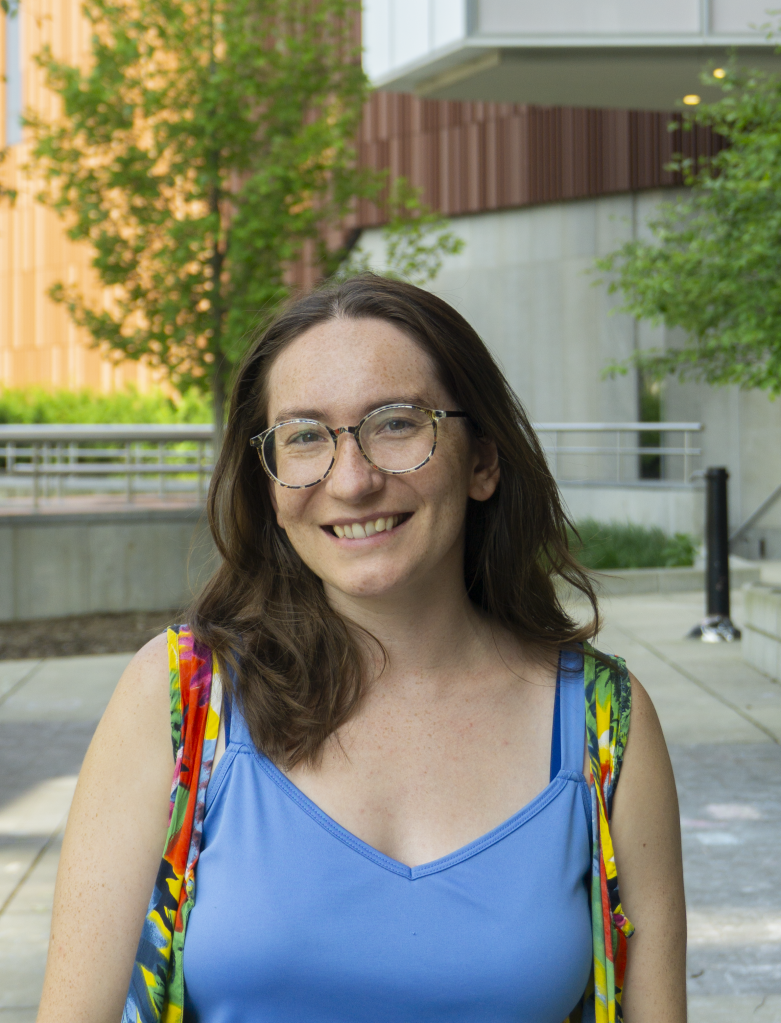
Among other things, Kate Giffin is a PhD candidate in neuroscience. In the lab, she studies how severe infections can lead to long-term brain issues like dementia. She is passionate about telling scientific stories through unexpected genres, particularly poetry, to expand the way people think about science and the world. When Kate is not marveling at the everyday wonder of the brain, she is probably outside marveling at some strange plant.

Claire Shudde is a Ph.D. candidate in pharmacology studying the everyday wonder of the immune system and how it can fight cancer and autoimmune disease. Outside of the lab, she enjoys dancing, reading, and editing a friend’s novel. She hopes people leave this magazine with more awe for the world around them.

Nick Jänne is a PhD student in Robotics, researching how robots can improve their scope of capabilities in the real world by learning from humans. He also hopes to one day build human habitats on the Moon and Mars using a team of robots and humans. Nick received his Bachelors of Computer Engineering degree from the University of Michigan in 2023, and has a passion for reading and writing on the next generation of artificial intelligence.

Layout Designer
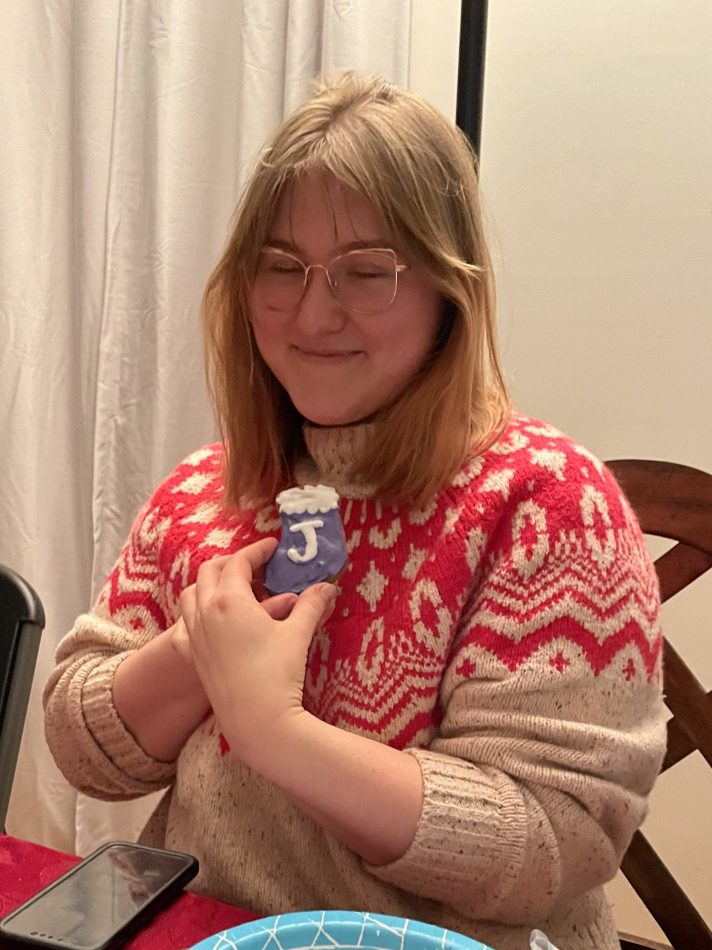
Julia Kravchenko is a neuroscience graduate student studying the relationship between sleep and Alzheimer’s disease. She is passionate about making academia accessible
to the general public. Outside the lab she can be found reading fantasy novels amidst her growing collection of gnomes.

Editors

Emily Januck is a PhD candidate in the Neuroscience Graduate Program at the University of Michigan, where she studies neurodegeneration. Outside the lab, she enjoys attending trivia, playing Euchre, and traveling with her friends. Connect with her on LinkedIn.
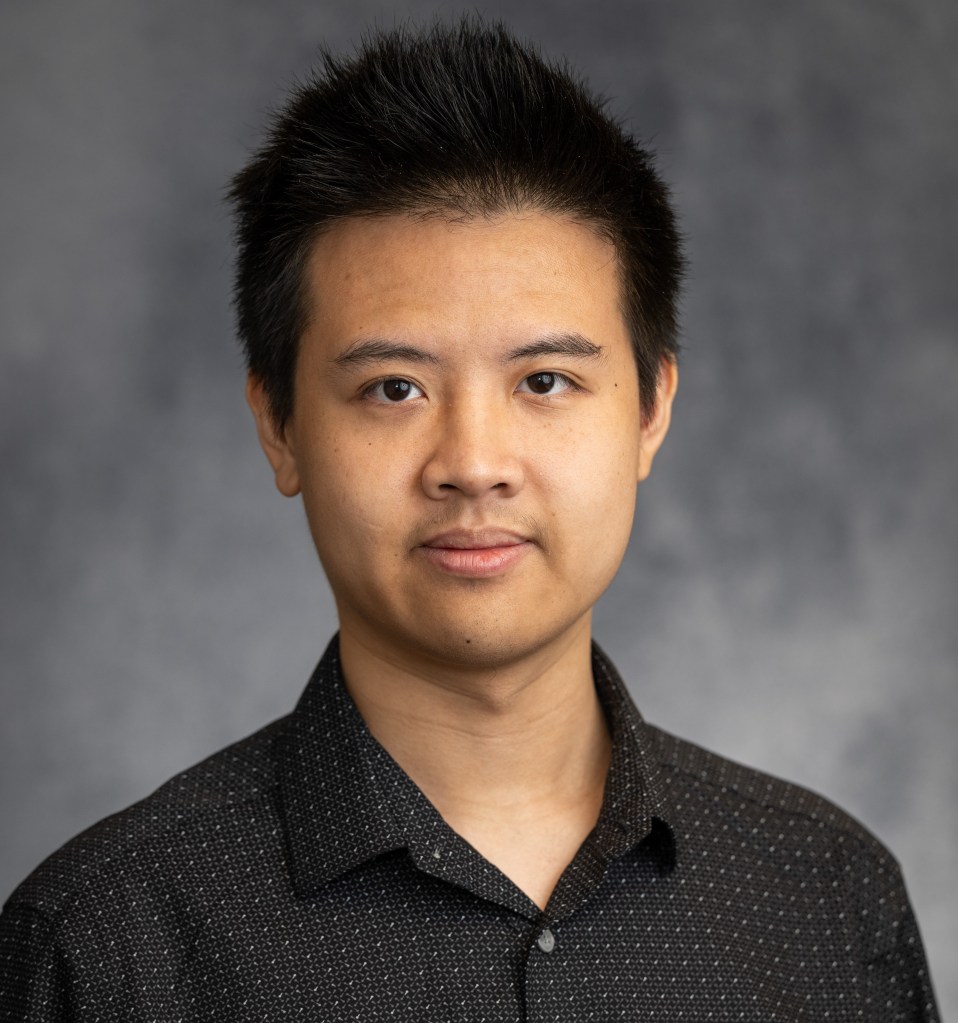
Ye Han (Jeremy) Chen is a PhD candidate in Bioinformatics at the University of Michigan. Jeremy has a primary research interest in quantitative methods for precision medicine. Outside the lab, he enjoys cooking new recipes,cheering on Philadelphia sports teams, and learning about East Asian languages and history. Connect with him on LinkedIn.
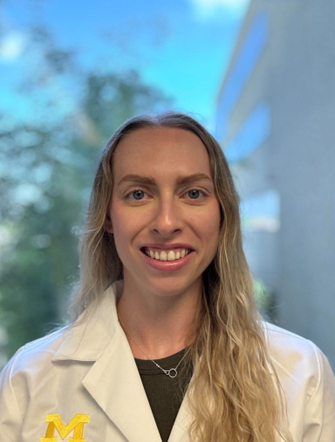
Dana Messinger is a PhD candidate in the Cancer Biology graduate program at the University of Michigan, where she studies epigenetic dysregulation in high-grade pediatric brain tumors. When she’s not doing science, Dana is a big fan of spending time outdoors, reading, and going to concerts. Connect with her on Linkedin.

Amanda Bekkala is a PhD candidate in the Immunology graduate program at the University of Michigan, where she studies how microRNAs alter the tumor-immune microenvironment in high-grade ovarian cancer tumors. When she’s not doing science, Amanda loves exploring the outdoors in all ways possible, whether it be running, mountain biking, or skiing/snowboarding. Additionally, she enjoys getting creative by drawing or painting when she finds the time. Connect with her on LinkedIn.
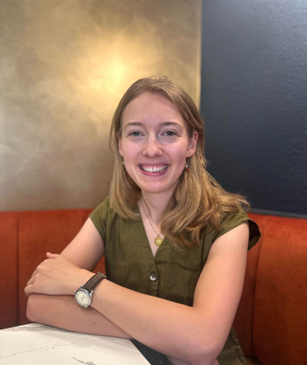
Paris Riggle is a PhD student in the Neuroscience Graduate Program at the University of Michigan, where she studies the molecular mechanisms of brain development in the context of neurodevelopmental disorders and evolution. Outside the lab, Paris likes to play cello, experiment with recipes in the kitchen, and spend time in nature. She also enjoys creative arts and writing. It was a joy to work with everyone on the magazine and see the ideas come to life! Connect with her on LinkedIn.
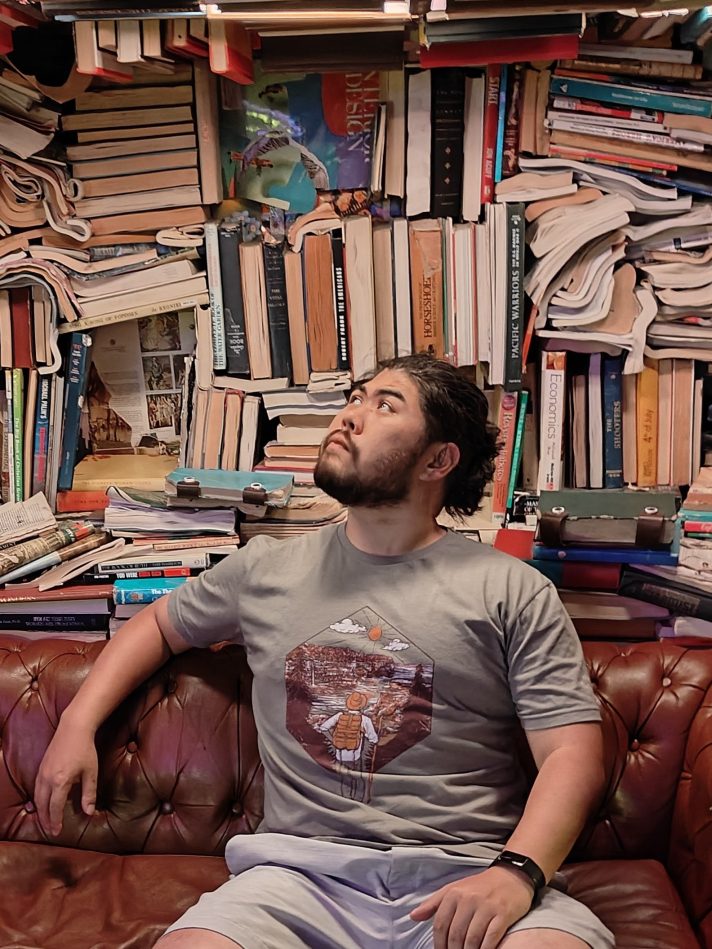
Alex Ford is a student and neuroscientist who researches how the brain processes sensory information in the visual system. He has a tendency to seek out the absurd, and frequently attempts to create art. In his free time, he is with friends, family, or a good book under a tree.

Deanna Cannizzaro is an avid reader, writer, and tap dancer. As a neuroscientist, she studies how sensory neurons detect and influence the glands that produce saliva. When Deanna is not daydreaming about fantastical worlds and cool science, she’s going on adventures with her husband and two pups.

Illustrators
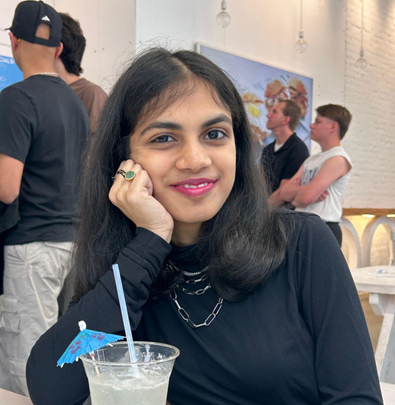
Satabdi Mohanty is an international Master’s candidate in Human Genetics, proudly hailing from India. Outside the lab, you’ll find her smashing ping pong balls, sketching in dramatic shades, scribbling in her journal, or diving into audiobooks and horoscopes (because the stars deserve some attention too).Her creative streak in digital illustration was sparked by her brother, Sambit Mohanty—a professional concept artist—who also introduced her to the magic of Adobe Illustrator and Photoshop. She believes art is a better way to scream your thoughts without disturbing your neighbours. Connect with her on LinkedIn.

Adriana Brown is a 3rd year PhD candidate in the Earth department studying ancient climates of North America through the chemistry of fossil sea shells. She can often be found biking, reading all sorts of fiction/fantasy, and trying out new recipes with her friends.

Jessica (Jess) Li is a Ph.D. candidate in the Department of Microbiology & Immunology at the University of Michigan. In Dr. Xiaoxia (Nina) Lin’s lab, they are developing novel microfluidic methods to grow biofilms and test them for properties of interest. They aim to use these tools to better understand how community membership influences disinfection resistance in drinking water biofilms. Outside of lab, they enjoy multiple artistic hobbies including digital art, crochet, knitting, and cross stitch. They also love video games and board games. You can find them on LinkedIn as well as various social media platforms.

Danny Cruz is a PhD student in the Cellular and Molecular Biology graduate program at the University of Michigan, where he studies blood development through CRISPR genetic screens in the Khoriaty lab. Outside of the lab, he enjoys eating out with friends, going on long walks, and trying out new pens in his sketchbook. His interest in illustration was inspired by a childhood love of Pokemon.

Naomi Raicu is a third-year Applied Physics Ph.D. candidate at UM, where, as a member of the Z Laboratory in the Nuclear Engineering and Radiological Sciences Department, she studies the transport properties of high-entropy liquids through atomic-scale simulations. When she’s not in lab or out on a walk, you’ll likely find Naomi in a boba shop downtown.

Cytotropolis: Life at the Cellular Level

Cover Concept and Art: Zoe Yeoh and Jessica Li

We believe that in the future, we will have an intimate understanding of what the inside of  a cell looks like on a molecular – perhaps even atomic – level. This has been enabled by recent advancements in structural biology through artificial intelligence and machine learning. In combination with virtual reality technology, we envision that one day we’ll be able to “step inside” a cell to observe these molecular details, reimagined as a thriving city neighborhood. The Golgi Luxury Apartment complex features incredible amenities such as a mitochondria gym, a vacuole pool, and endoplasmic reticulum meeting rooms. Located steps away is The Nucleus, a Michelin Star establishment known for its four course dNTP mystery menu. Actin and tubulin filaments crisscross above, forming sky bridge walkways and a convenient high-speed metro line to get around the cell with ease. Neatly manicured ribosome trees dot the public park below. 

Continue reading “Cytotropolis: Life at the Cellular Level”

Protein Folding In The Hands Of AI

Written and illustrated by: Jacquelyn Roberts

Edited by: Jennifer Baker and Christina Del Greco

“Structure implies function” is a phrase often repeated by biochemists to describe how molecular machines work in the body. For a protein, structure is formed as its string of amino acids twists and folds into a globular final form. If amino acids are beads on a string, then the folded protein is the final necklace or finished work. This “final form” lends clues to the protein’s role in the cell. Often, like a lock and key, proteins and their chemical partners ft together perfectly. But for a long time, we had absolutely no idea how or why proteins reproducibly twist and fold in the same way every time to adopt a consistent final form.

Continue reading “Protein Folding In The Hands Of AI”

Science and Society: Building the Trust of Our Benefactors

Written by: Austin Shannon

Edited by: Henry Ertl and Kate Giffin

In a democracy, government money is public money and should ideally be accountable to the interests of the public as negotiated through the political process. However, if the stewards of that money (i.e., elected officials or citizens) know little about what they are paying for, then how do they know that public interests are being upheld?

Continue reading “Science and Society: Building the Trust of Our Benefactors”

Could artificial intelligence replace doctors in the future? A case study with ChatGPT

Written by: Peijin Han

Edited by: Frances Gu and Henry Ertl

Imagine you had the misfortune of waking up one day with a crippling headache. You have been experiencing neck pains and headaches for a couple of years, but doctors always told you this was a neck strain and prescribed a muscle relaxer. However, today is your third day of suffering from this headache, which doesn’t seem to be alleviated by anything you have at home. In the past, you would have navigated the outside world to go to a clinic. But today, instead of dragging yourself out of bed and enduring onerous wait times, you opt to receive medical attention from the comfort of your home.

Continue reading “Could artificial intelligence replace doctors in the future? A case study with ChatGPT”

Sight Beyond Light

Kate Giffin (1), Katie Bonefas (2), Chami Amarasinghe (3), Frances Gu (4), Jennifer Baker (5)

1. Author 2. Illustrator 3. Peer editor 4. Content editor 5. Senior editor

Abstract

There is light beyond light: above and below. The smallest, most ancient parts of us know this. In summer, freckles proclaim communion with this light. DNA twists in its presence. We all know of this light. But we do not, can not, see.

Continue reading “Sight Beyond Light”

Engineering a Future for Women: The Role of Medical Device Design in Gender and Health Equity

Written by: Ilka Rodríguez-Calero, Ph.D.

Edited by: Austin Shannon and Peijin Han

In my twenties, I was put on a hormonal intrauterine device (IUD) — a safe and effective medical device — as a form of birth control (1). Soon after, I developed pelvic pain, a known side effect of the IUD. The pain, combined with other issues, could be difficult to manage, but my healthcare providers couldn’t find an underlying cause. Consequently, pain management was limited to self-care through exercise, mindfulness, and over-the-counter medications. I assumed that living with pain was the price to pay for reliable birth control.

Continue reading “Engineering a Future for Women: The Role of Medical Device Design in Gender and Health Equity”

Homegrown Guardians: Harnessing the Power of the Immune System to Fight Breast Cancer

Written by: Kassidy Jungles

Edited by: Christina Del Greco and Peijin Han

Cancer is an enemy of your body, starting when your cells turn against you, rapidly divide, and spread. Cancer is clever and conniving. Cancer can rapidly mutate over time, making it difficult for your body to notice and even more difficult to treat. Because of this, it might be hard to imagine your body as the answer to ridding itself of its homegrown enemies. However, this is precisely the future of cancer treatment that scientists are imagining. What if the answer to treating cancer is using homegrown guardians derived from your immune system to beat cancer at its own game?

Continue reading “Homegrown Guardians: Harnessing the Power of the Immune System to Fight Breast Cancer”

A Dark Science

Written by: Chami Amarasinghe

Edited by: Kate Giffin and Austin Shannon

For a hundred years now, evidence for invisible matter has been piling up (1). Eighty-five percent of the mass in our cosmic neighborhood is transparent (2). We are completely awash in this invisible substance, dark matter. It far outweighs the stars, planets, asteroids, gas, dust, and us (3). The evidence lies plainly in the night sky. Stars and galaxies are accelerated by the gravity of dark matter (4, 5). Light emitted from distant objects bends in its presence (6). But, despite its ubiquity, nearly nothing is known about the fundamental particles that make up dark matter (7). How heavy are they? Why are they so prevalent? If they are everywhere and interact with the atoms of our world, could we detect them as Earth travels through space? Dark matter particles have long been searched for in experiments but none have been found (8). The devices built to detect them are the most sensitive ears we have opened to the skies, and they continue to grow in size and complexity as scientists continue their search (9). Discovering the nature of dark matter would upturn our understanding of the universe, but history warns of dead ends. It is not predetermined that dark matter particles will be discovered (10).


Continue reading “A Dark Science”