
Written by: Ruby Miller
Edited by: Jennifer Baker, Julia Donovan, Victoria Sturgess, and Ryan Schildcrout
Illustrated by: Jacquelyn Roberts
“What did you mean when you said ‘pivot’?”
This inquiring comment from Chandler is the final beat from that iconic scene in the TV show Friends where Ross has enlisted Rachel and Chandler to help him move a couch up the stairs. Even after Ross sketches out how to enact the move and directs his friends while traversing the staircase, all three friends end up stuck on the staircase, pinned under the heavy furniture, wondering what went wrong.
Much like Ross with his couch, I found myself feeling stuck in my career. Fresh chemistry PhD in hand, I knew I wanted a job that connected scientific discoveries with their real-world applications to make a difference in the public sphere. However, I found it challenging to transition from my highly technical dissertation research to my desired career path since I had only a vague idea about what exactly this type of job would be. With little guidance on how to proceed, finding a job that accomplished my goal felt like a mystery.

How did I end up here?
Wrapping up my PhD program was physically and emotionally draining. Like many fellow students, completing rigorous scientific training under the pressure of deadlines and expectations took up all the energy and brain space I could muster. I wrote a thesis, edited revisions, published a manuscript, and wrapped up experiments in the lab – all standard expectations for a PhD student. However, focusing on my dissertation work meant less time to navigate this difficult transition, hindering my ability to schedule informational interviews, attend networking events, or put in the legwork necessary to find a job outside of a research lab.
Like Chandler and Rachel’s well-meaning efforts to help Ross move the couch, the support of my mentors and advisors alone wasn’t enough to facilitate a complete change in my career trajectory. My faculty mentors were able to point me towards careers achieved through traditional pipelines, such as postdoctoral research positions, teaching positions, or industry opportunities with pharmaceutical and chemical companies. Despite their verbal encouragement to find a career that fit my goals, I had a difficult time accessing knowledge about alternative careers, and I was short on time to seek out obscure resources.
Mapping out initial attempts at pivoting
With few accessible resources, I faced several obstacles while planning my career transition. Most immediately, I was unsure of the field or position that would best incorporate my values while suiting my technical background. One enlightening experience came through completing coursework for the Science, Technology, and Public Policy certificate program offered by the Ford School of Public Policy. This program gave me a glimpse of an attractive option for a career. A job in science policy would allow me to promote effective communication between scientists and non-scientists, advocate for science-based policy development, educate scientists on ethical principles, and promote environmentally conscious industrial policies. I could clearly imagine how a career in this field aligned closely with my personal values and might allow me to make a positive impact.
As I explored potential science policy positions, I found many job postings that piqued my interest, such as those for a “science policy advisor”, “biotechnology consultant”, or “regulatory scientist.” However, I fell short on some of the background qualifications. While I possessed the technical expertise needed for these positions, I lacked the essential business acumen, writing skills, and regulatory knowledge required to be a competitive candidate. Many of the roles I was interested in were specifically for those further along in their careers, not for entry-level candidates, and it wasn’t clear what an entry-level position would even entail. It was frustrating to realize I wasn’t as employable as I had hoped despite completing the certificate program.
While I wasn’t equipped with all the skills needed to kickstart my career, the certificate program did teach me how to apply the skills I acquired during my PhD in chemistry to other contexts. When searching for a job, I quickly came to appreciate the importance of advertising my transferable skills to demonstrate the value of my PhD outside of the lab. For example, my ability to quickly understand and summarize technical documents is valuable for a job in public policy because this work would require me to explain why scientific studies are important in a broader context. Skills like grant writing, methods development, and data analysis are valuable skill sets not always explicitly advertised on a resume. This realization helped me to better market myself, including improving my LinkedIn profile – a skill worth a training course on its own. I learned that it takes time, effort, and strategy to effectively communicate who I am and the importance of my skill set. I came to value LinkedIn more than I ever expected, as it has become the primary way for me to connect with others in my field and communicate my value as a chemistry PhD looking for a public-facing job.
Using unexpected opportunities to pivot
As Dr. Meg Jay writes in her book The Defining Decade: Why your Twenties Matter – And How To Make The Most of Them Now, early career opportunities often come through friends of friends, or your “weak ties.” In true early-career fashion, my first job opportunity out of school found me through a friend from graduate school. The managing director at my friend’s institute had invited her to apply for a new position, Innovations Fellow, part of a postdoctoral fellowship program at the Biointerfaces Institute of the University of Michigan. Unable to apply for the job herself, my friend thought I would be a good fit and connected me with the managing director.
The Biointerfaces Institute brings together professors from different departments across campus to form an eclectic interest group ripe for collaboration and innovation. The newly established role of Innovations Fellow was created to assist faculty by advancing their commercialization projects while allowing fellows to learn business and entrepreneurial skills on the job. I jumped at the opportunity to get paid to be trained at the interface of applied science and the business world and expand my skill set to be a more marketable job applicant.
Now, as an Innovations Fellow, I act as a catalyst for moving academic work along the path to commercialization. My responsibilities include consulting with faculty members who have ideas or projects in progress, providing them with support, and liaising between offices across campus that provide tech transfer services. I also work with start-up employees on grants, commercialization strategy, and customer discovery by evaluating the status of projects and suggesting potential directions for development.
In this role, I’m gaining experience in the business of biotech, where I’m learning how the system works, how money flows, and how academia collaborates with industry. I have started to work on market analysis, which has exposed me to a whole new set of vocabulary, resources, and perspectives. I’m learning what a “market” is, how technology’s value can differ across markets, and how a market’s size and scope influence how technology should be positioned to succeed commercially. I’m now able to access and interpret resources like market reports, consult with experts in intellectual property, and sift through business databases to learn more about potential competitors. I’ve discovered that commercialization evaluates the merit of technology much differently than academic science. While the scientific perspective values innovation for the sake of discovery, commercialization values outperforming competition, convenience, and ease of manufacturing and distribution. These perspectives can be complementary, but they need to be united productively, and I’m developing the skills needed to facilitate this process for emerging technologies.
Getting a better grip
Making a career pivot can be daunting. Though I have feared getting stuck along the way, I have learned the soft skills gained during my doctoral studies are highly transferable to my new role. My rigorous research practices have enabled me to learn new content quickly and apply it effectively. My critical thinking, persistence, strategizing, and confidence in decision-making, which helped me earn my degree, continue to pay dividends. Moreover, I am gaining leadership experience, connecting with colleagues on both a personal and intellectual level as well as motivating and organizing groups of people. I had the opportunity to apply many of these newfound strengths at the international BIO conference in June 2024, which culminated in my creating multiple connections with companies that are already benefitting the Biointerfaces faculty through post-conference meetings. Through experiences like this, I have the freedom to apply my current skills and gain the other experiences I need to pivot effectively.
Most of all, I have learned that I can adapt, which is probably the most broadly applicable skill I gained from graduate school. Capitalizing on my adaptability has served me well as I navigate this career transition. As my fellowship ends early next year, I’m currently searching for jobs in the areas of biotechnology and life sciences consulting or business development, interests developed through my exposure to the business side of science during my fellowship.
Although I’m still at the beginning of my career, I am grateful that my current position provides the space I need to explore my interests, diversify my experiences, and make me a marketable job candidate. I especially appreciate the encouragement I have received from my supervisor, Elizabeth Peters, the managing director of Biointerfaces. She has encouraged me to pursue my interests, take on leadership roles, and move toward my goals. This has made a huge difference in how I approach picking which faculty, projects, and resources to engage with. Now, I am thinking big picture, aiming higher, and becoming an impactful leader. Suddenly, the staircase is much less cramped, the couch lighter and less cumbersome, and moving my career through an awkward transition doesn’t feel as daunting as before.
The Biointerfaces Institute and the Innovation Fellowship program have been generously supported by the College of Engineering, the Medical School, the School of Dentistry, the College of Pharmacy and the Provost office of the University of Michigan.
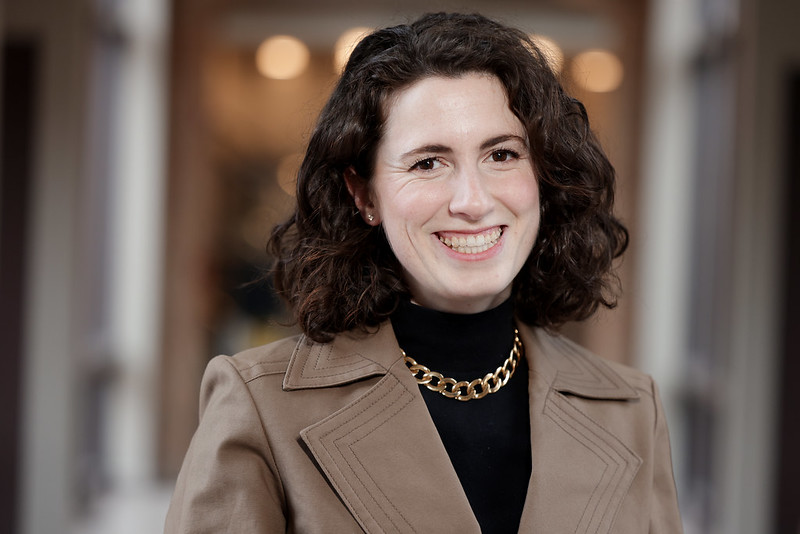
Ruby Miller obtained her PhD in Chemistry from the University of Michigan in 2023 and is presently serving as an Innovation Fellow at the Biointerfaces Institute. She has a passion for translational research, science communication, and science policy. She enjoys conducting in-depth investigative work in her field and then writing about her findings. Her free time is spent reading contemporary and literary fiction and playing with her two dogs. Connect with her on LinkedIn here!

 misciwriters.com