
Written by: Nina Aitas
Edited by: Lauren Heinzinger
This piece was written in collaboration with the 2025 ComSciCon-MI Write-A-Thon.
What is your body made of? You could say it is made up of different organs like your heart, lungs, and muscles. But what if you were to zoom in on your organs? What are they made of?
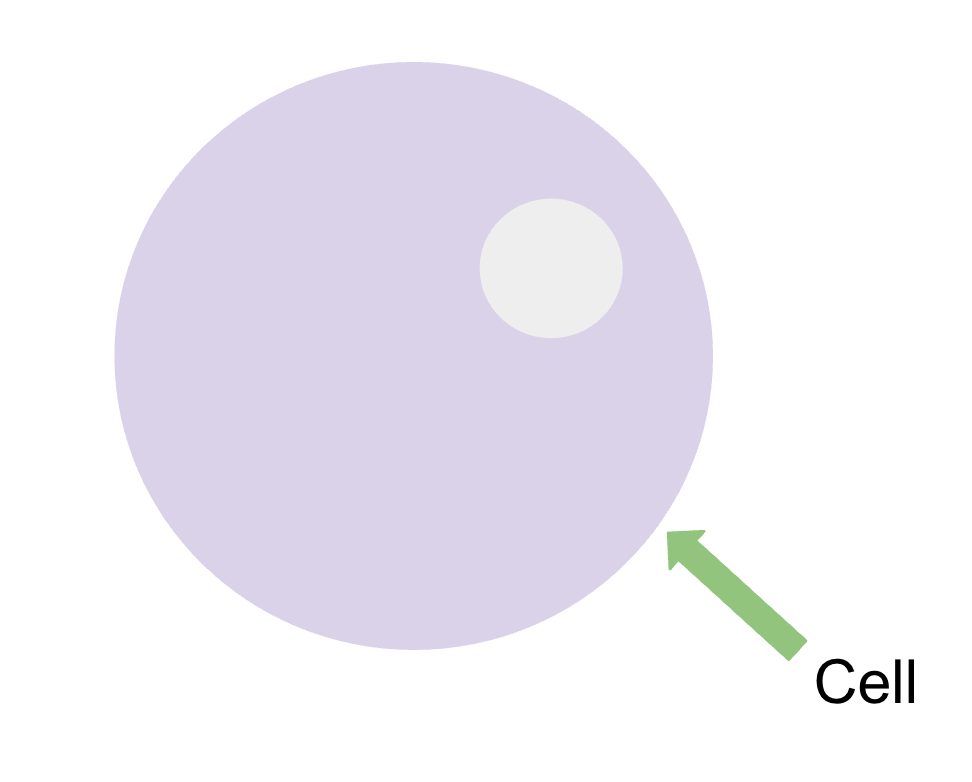
Your organs are made up of millions of cells!
Cells are too small to see without a microscope. They make up every single part of your body and hold the tools needed to carry out everything your body does. Your muscle cells contract so you can pick up a book. Your brain cells form your thoughts about how you want to become a lawyer one day. Your skin cells come together to heal your paper cut.
The thing is, no single, tiny cell can do all this heavy lifting on its own. It takes thousands of cells working together to make a real difference. So, how do your muscle cells know how to move all at once? How do your brain cells send your thoughts back and forth? How do your skin cells know to meet each other at your cut?
Here is the secret: cells are extremely talkative! They are always communicating. It’s through these conversations that cells can act more like dancers performing beautifully in time with each other and less like little kids running around at the playground.
Of course, cells can’t actually talk with words.
Instead, they send each other chemicals called signaling molecules. These signaling molecules are messages that tell a cell how to behave like how your coach tells you how to play a sport. There are many types that carry different messages for what the cell should do next. For example, some signaling molecules tell a cell to grow, while others tell the cell to move.
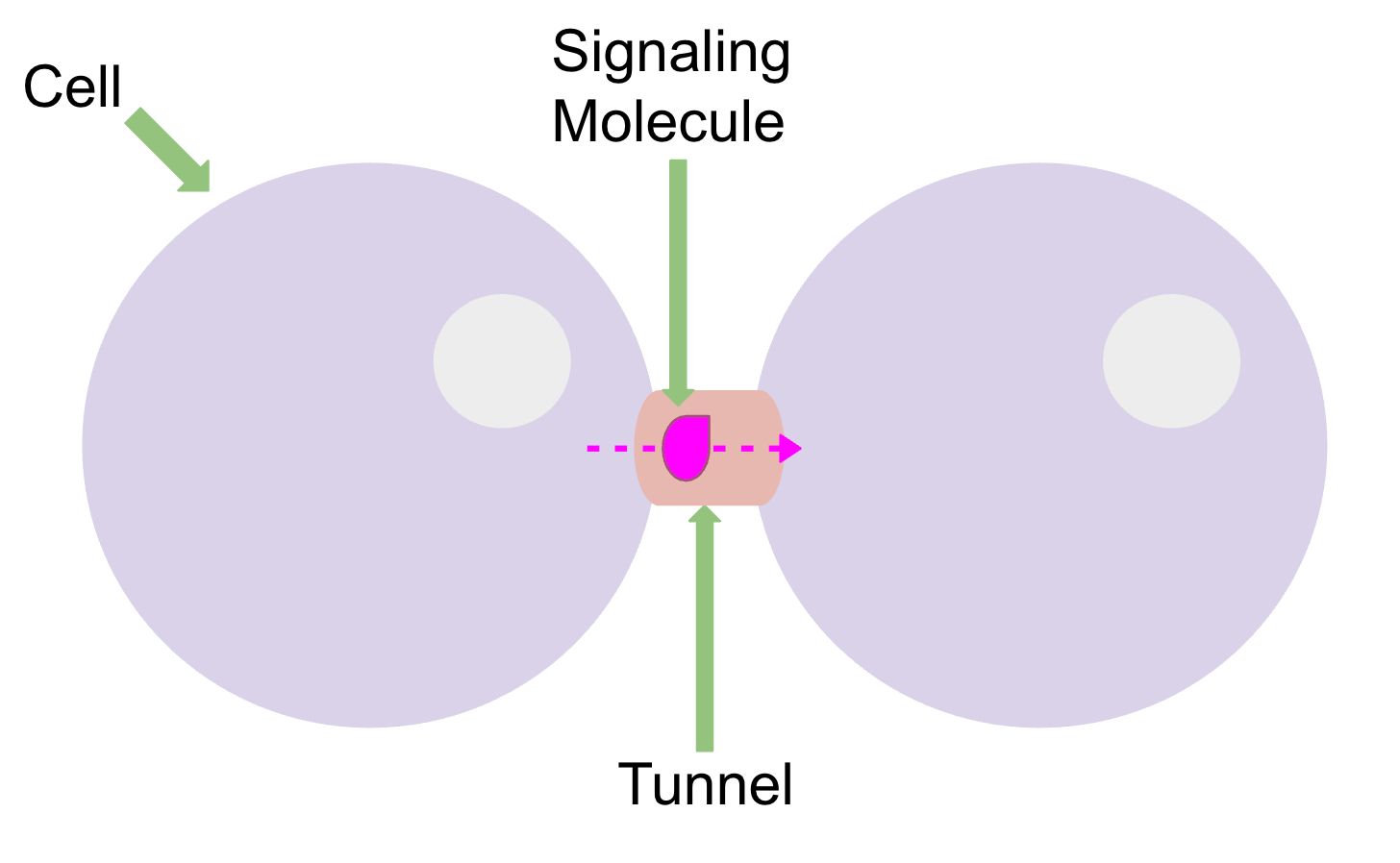
There are many ways that cells can send these signaling molecules to one another. One way is by direct signaling, which happens between cells that are right next to each other. Next-door cells have small tunnels that connect them. In direct signaling, one cell passes a signaling molecule to the other through one of these tunnels. Only the cell on the other end of the tunnel can get this message. This is much like leaning over to your best friend in class, whispering a joke that only they can hear.
Direct Signaling
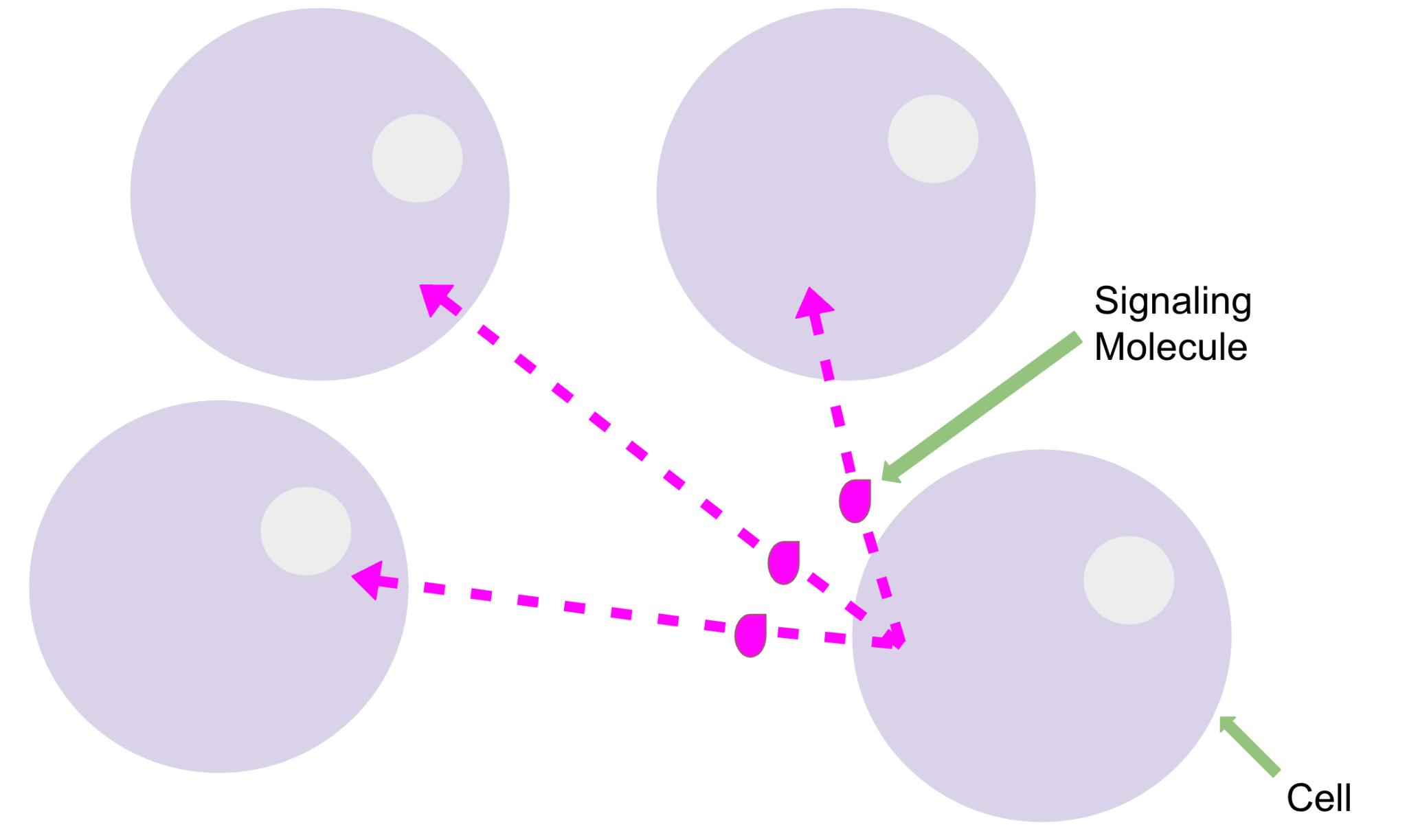
Cells that are a bit farther away from each other use paracrine (peh-ruh-kreen) signaling to talk. One cell releases a few signaling molecules into the space between multiple cells. After traveling a short distance, a few nearby cells take in the signaling molecule and get its message. This is similar to when you are telling a story to a few friends sitting at your table at lunch.
Paracrine Signaling
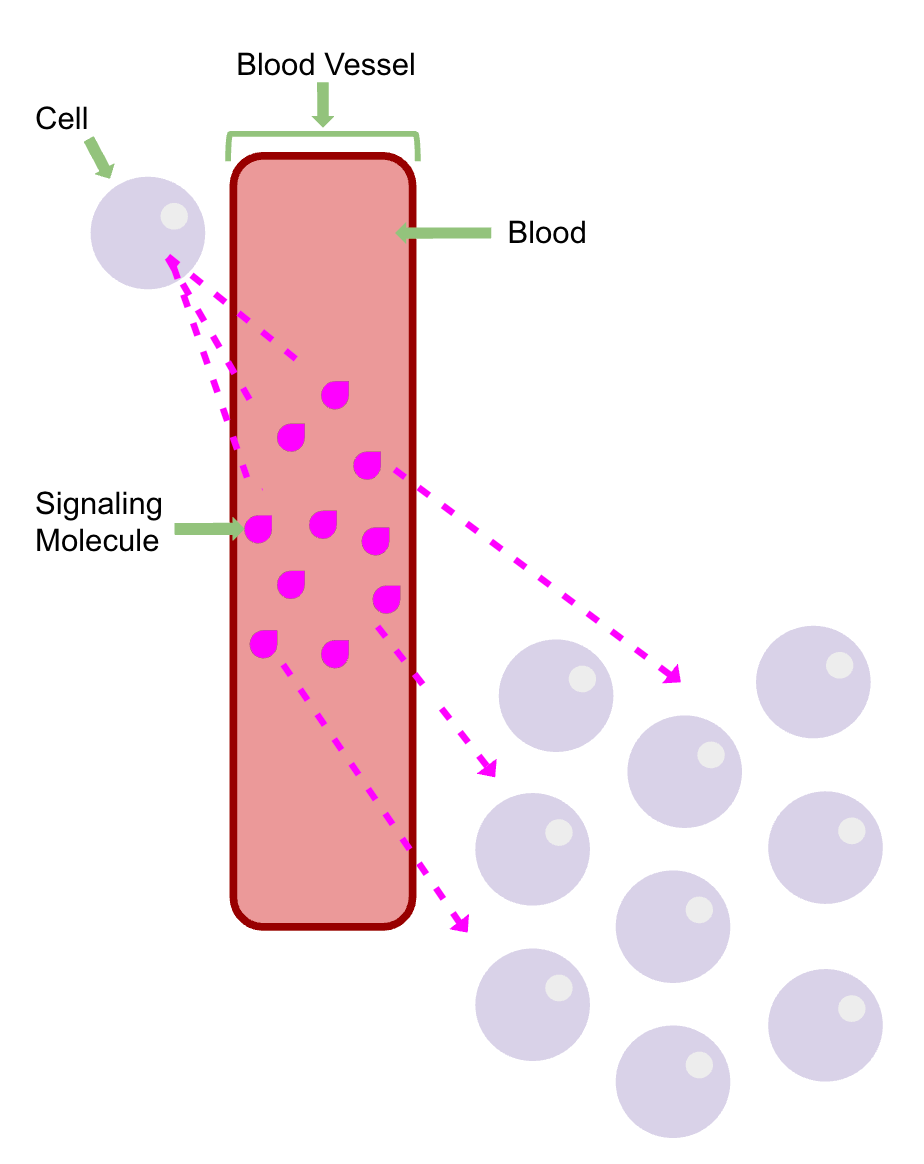
Even cells that are on completely opposite sides of your body have things to talk about. This is where endocrine (en-duh-kruhn) signaling comes in. One cell puts a bunch of signaling molecules into your blood. Your blood acts as a delivery system as it travels all around your body, carrying the signaling molecules with it. Eventually, your blood releases the signaling molecules to far-away cells. This is like sending a text in a group chat with lots of friends from across the country.
Endocrine Signaling
Once a cell gets a signaling molecule, it starts acting the way the signal told it to. This means working with other cells all at once to do things like moving your muscles, taking a deep breath, or singing a song. It is because of this constant cellular talking that you are able to do all of the things that make you alive.
You are constantly communicating with other people as you go through your daily activities. Your cells are also always talking to each other as they do their jobs.
Both you and your cells go about talking in unique ways in different situations. No matter how your cells decide to communicate, the messages they send to each other are important in making sure that your body works correctly to keep you healthy.
So what is your body made of? Very talkative cells!


