
Written by: Faith Connors
Edited by: Charukesi Sivakumar, Mithcell Witt, Jeremy Chen, Ryan Schildcrout
Illustrated by: Courtney Myers
Diabetes is one of the most prevalent chronic diseases in the U.S. and is ranked as the 7th leading cause of death. The National Diabetes Statistics Report from the CDC estimates that 12% of the U.S. population has diabetes, with the majority of these cases being type 2 diabetes. This disease is often a lifelong illness that can be a huge financial burden for patients and can negatively affect their quality of life. For example, in 2017, the CDC found that the average annual out-of-pocket cost for diabetes-related expenses was $4,600, and it was the most common cause of non-traumatic limb amputation. Diabetes is characterized by chronic high blood glucose levels. In 2005, a new class of drugs called glucagon-like peptide 1 receptor agonists (GLP-1 RAs) was approved by the FDA for treating diabetes. GLP-1 RAs have gotten a lot of attention in the media as being a new standout treatment for diabetes. They are not only more effective at controlling blood sugar than previous drugs on the market, but they also have wide-ranging benefits for metabolic health that have made them a new cornerstone treatment for patients. Here we will focus on the underlying pathological mechanisms of type 2 diabetes, and what GLP-1 RAs do differently than other diabetes drugs that have made them standout.
After eating a meal, glucose is absorbed by the small intestine into the bloodstream. When blood glucose levels rise, cells in the pancreas secrete the hormone insulin into the bloodstream where it makes its way to cells throughout the body. When insulin binds to an insulin receptor on a cell’s surface, it triggers the translocation of glucose transporters to that cell’s surface. These transporters allow cells to internalize glucose from the bloodstream where it can be converted into energy. Additionally, insulin binding in specific metabolic cells decreases expression of genes involved in releasing stored glucose from the liver into the bloodstream, further lowering blood sugar levels.
The chronic high blood glucose levels that characterize diabetes are called hyperglycemia, and diabetes can be categorized based on the underlying cause of hyperglycemia. In type 1 diabetes, the pancreas becomes impaired at making the insulin hormone. This can be managed through injecting insulin prior to glucose consumption. In type 2 diabetes, the cells that typically respond to insulin become less sensitive to the hormone over time, a concept called insulin resistance. This can happen when cells either fail to make enough of the insulin receptor or fail to localize glucose transporters to the cell surface, resulting in a reduced ability to internalize glucose from the bloodstream. As glucose removal from the bloodstream is impaired, it takes more time to lower blood sugar levels after consuming glucose, leading to hyperglycemia. Additionally, if cells in the liver also become insulin resistant, insulin is unable to downregulate genes involved in releasing stored glucose, causing secretion of glucose from the liver into the bloodstream.
Over time, higher and higher amounts of insulin are required in type 2 diabetes to transport glucose from the bloodstream into cells. This is problematic, as hyperglycemia is toxic to blood vessels, and cells that rely on insulin to uptake glucose experience glucose deprivation. There are also several cell types that constantly uptake glucose independently of insulin, exposing them to toxic glucose levels under hyperglycemia. This mechanism of glucose uptake is especially important for cells with high metabolic demands like neurons and cardiomyocytes in the heart.
Diabetes has a variety of symptoms that can be directly linked to the damage caused by hyperglycemia. For example, high blood glucose levels make blood vessels more susceptible to plaque buildup, which is why people with diabetes have more than double the risk of developing heart disease. Blood vessel damage in the eyes can also cause fluid leakage leading to blurry vision. Severe blood vessel damage in the limbs from advanced diabetes can increase the risk of severe infections that require amputation. Additionally, the constant barrage of glucose to neurons causes nerve damage, which is why some diabetic patients experience pain and tingling, also known as diabetic neuropathy. Finally, insulin resistance can cause neural circuits in the brain to signal feelings of excessive hunger. As signaling molecules from fat storage, or adipose tissue, is a major driver of insulin resistance, overeating leading to obesity can be a vicious feed-forward loop.
In previous years, various therapies on the market target different aspects of the disease’s pathology. A drug class called sulfonylureas increases insulin secretion; although the mechanism of action uncouples insulin release from glucose consumption, which increases risk of low blood glucose or hypoglycemia. Another approach is to inhibit the liver from secreting stored glucose into the bloodstream. This is how a commonly used drug called metformin treats hyperglycemia. Metformin also helps to resensitize insulin resistant cells to the insulin hormone; however, metformin fails to increase release of insulin, especially in response to glucose. While these drugs are useful in treating diabetes, each drug alone fails to target the whole picture of metabolic dysfunction that drives diabetes.
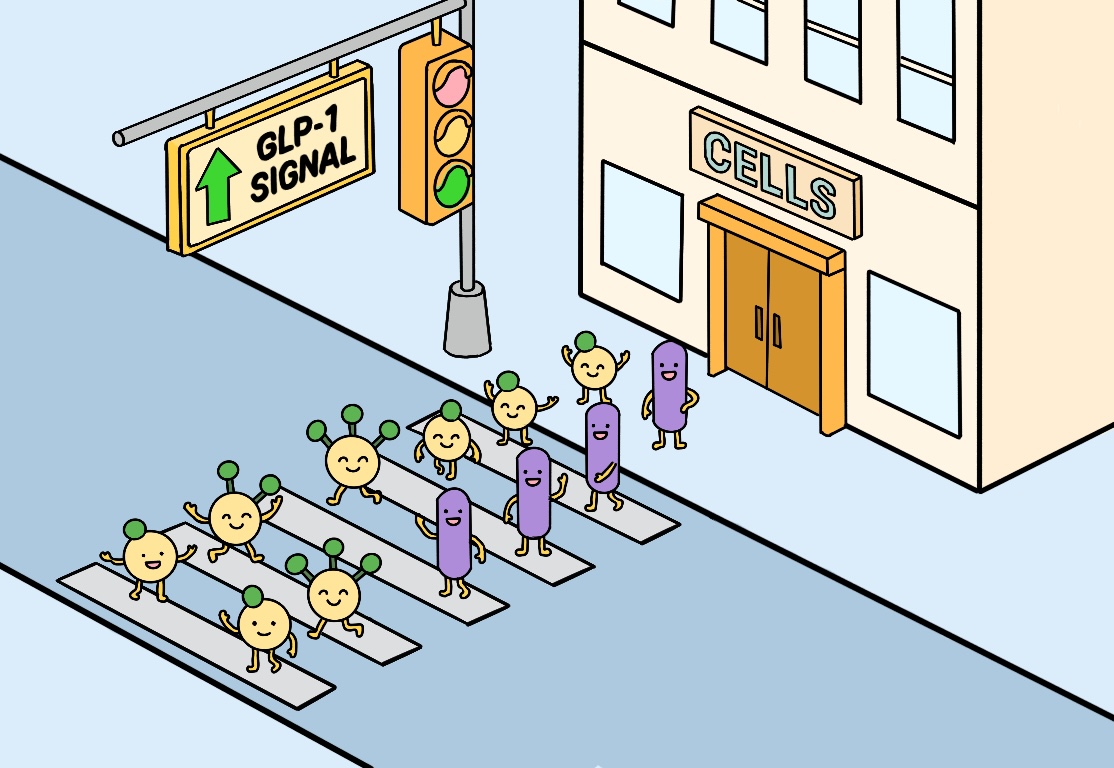
GLP-1 is a peptide made in the intestine that is secreted after glucose consumption that triggers insulin release, blocks the liver from releasing glucose stores, and targets digestion to decrease appetite. GLP-1 is typically stable for 1-2 minutes in the bloodstream. GLP-1 RAs on the market are chemically modified versions of the GLP-1 peptide engineered to persist in the bloodstream for 7 days. GLP-1 RAs stand out as they target several aspects of the metabolic dysfunction that drive diabetes. For example, GLP-1 RAs increase insulin secretion, especially in response to consuming glucose. These drugs also inhibit the release of glucose stores from the liver, similar to what metformin does. GLP-1 RAs also slow digestion, allowing for slower absorption of sugar over time. One of the major factors that make this drug stand out is that patients often experience weight loss due to appetite suppression. Signaling molecules from adipose tissue is a major driver of insulin resistance so reducing adipose tissue reduces signals that drive insulin resistance. In clinical trials, GLP-1 RAs show more efficacy in lowering blood glucose levels, aiding in appetite control and weight loss, and protecting against heart disease and cardiac events compared to other classes of drugs.
While GLP-1 RAs represent a major advancement in the treatment of type 2 diabetes, they are not without limitations. Gastrointestinal side effects are common, and high costs limit access for underinsured patients. These medications manage disease progression but do not eliminate the underlying metabolic dysfunction entirely. Nonetheless, GLP-1-based therapies mark a shift in how we approach diabetes; from a simple disease of blood sugar regulation to a complex metabolic disorder that requires multifaceted treatment strategies.

Faith Connors is a PhD candidate in Cell and Molecular Biology at the University of Michigan. Her research focuses on aging biology and stress response pathways. She is passionate about translating complex scientific concepts into clear, engaging content for diverse audiences.


