
Written by: Francisco Torres-Torres
Edited by: Juan Mato, Deanna Cannizzaro
Illustrated by: Rebecca Taubitz
Dun-dun. Dun-dun. Dun-dun.
Benches shook. Monitors clattered off uneven tables. Reagents jangled and tumbled, spilling down the giant’s mile long limb. The scientists, so enthralled in their thoughts and experiments, had forgotten how high up they really were! They buzzed around the ivory towers encrusted like pale honeycomb along the giant’s monstrous shoulders.
Where is Uncle Sam going now… one scientist wondered, looking over the foggy mountain range. Villagers stirred like ants as the giant lumbered closer. Some admonished the giant, some welcomed the intrusion. Others went along with their day.
The giant was the greatest of them all; the strongest, with the best view, and dandruff the shape of dollar bills. Generations of scientists had labored there, proud of their commitment, even as the often fruitless hours dwindled away. There was a comfort there — intellectual stimulation and moral exemption. Science from a shaky shoulder beat science on trampled ground, after all.
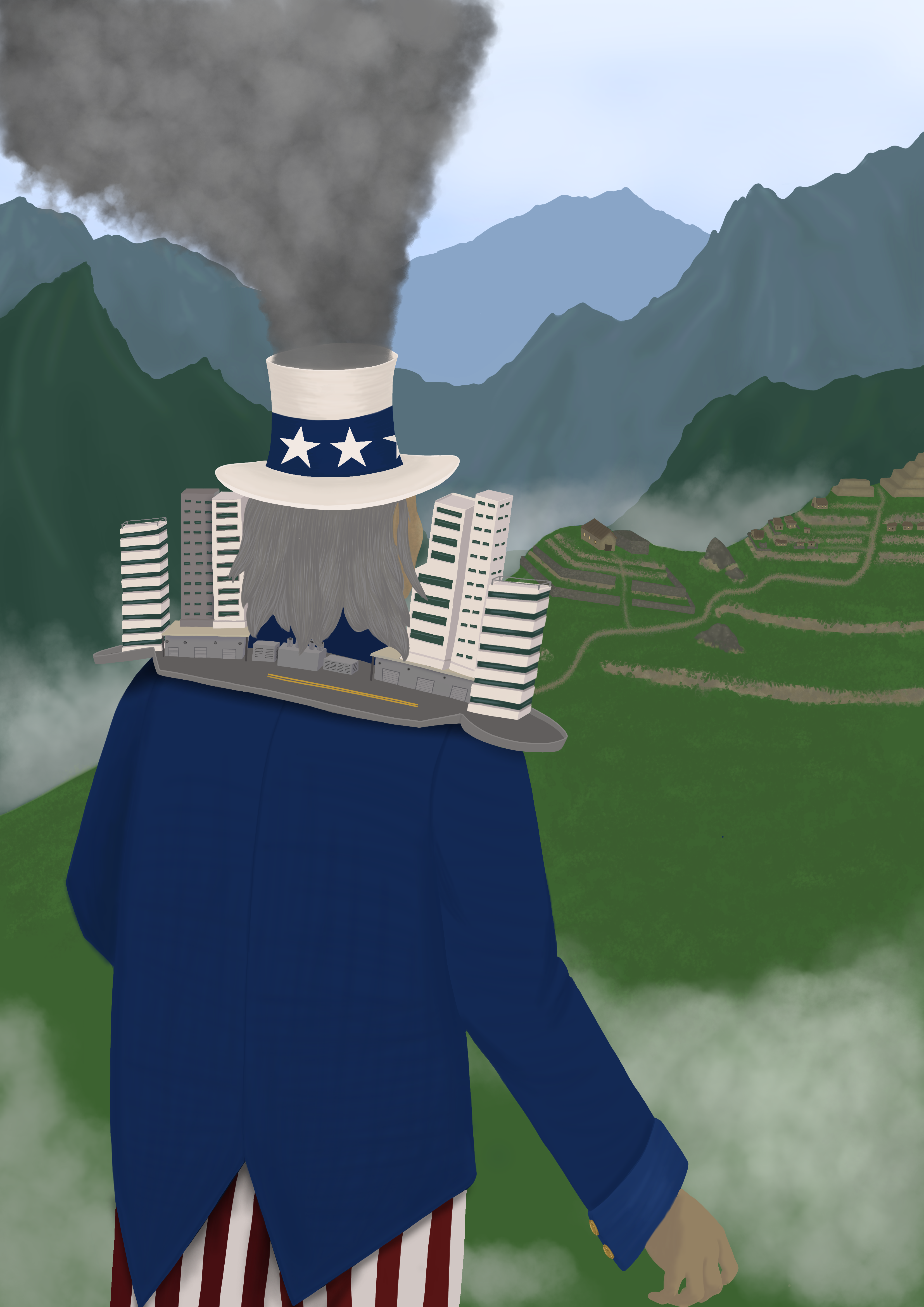
Dun-dun. Dun-dun. Crack.
A shiver rattled the ecologist’s spine, afraid to face the trail left behind. Poisoned bootprints stamping precious nests, mangroves, and estuaries. The ghosts of birds left unnamed. Oceans blackened in its wake. The giant’s stare remained on autopilot.
If only I were in Uncle Sam’s head, directing its movements, the scientists collectively shrugged, turning to their expensive potions and magical machines. Within the ivory towers, centuries of knowledge accumulated. It was a position of honor and merit — saving lives through the intellectual pursuit they called academia.
The scientists had to focus. Just, focus. Otherwise their academic rivals would outdo them, and that wouldn’t do. Many swarmed about, experimenting, gathering the crumbs that fell from the giant’s gaping mouth. Though isolated from Gaia and her people, the scientists could at least share some facts that reached the giant’s ear, even as some went out the other.
Dun-dun. Dun-dun.
The Gaians’ screams followed them across sundered deserts and fragmented islands; the giant carried on, oblivious. Suffocated in a miasma of smoke, buried under an avalanche of plastic, drowned by a tsunami of chemical waste — Gaia and her people had long reached a boiling point. A missile peppered the giant’s eyebrow and a swarm of armored flies descended in response.
Pop-pop-pop.
Annihilation in every flavor; now available by drone, joked the anthropologist. Gallows humor became a tonic to down the constant frustration. Research had been touted as a noble act, but the view from above complicated their belief. Once the doors of knowing were opened, they could be crossed in either direction. What did the drone and syringe have in common? Each could deliver life as easily as death. It was no wonder some of the Gaians’ insults were hurled at the scientists, and not the giant that carried them.
Dun-dun. Dun-dun.
Psyches fragmented like discarded glass, the psychologist shook with fear and anger. Enough was enough. A meeting of the likeminded, across all fields, was called. Miraculously, the community agreed — It would be the last time the giant would drag them into a wailing conflict. The methodology of their resistance was simple, though it went against their every instinct. The scientists stopped working. It wasn’t long before the giant’s steps paused, its smokestack hat no longer spewing. Only the forest’s murmurs filled the air. Now the scientists could be heard.
Think of the environment! roared the ecologist.
And the erosion of ethics! cried the anthropologist.
Don’t you feel the world’s pain? asked the psychologist.
Quiet!
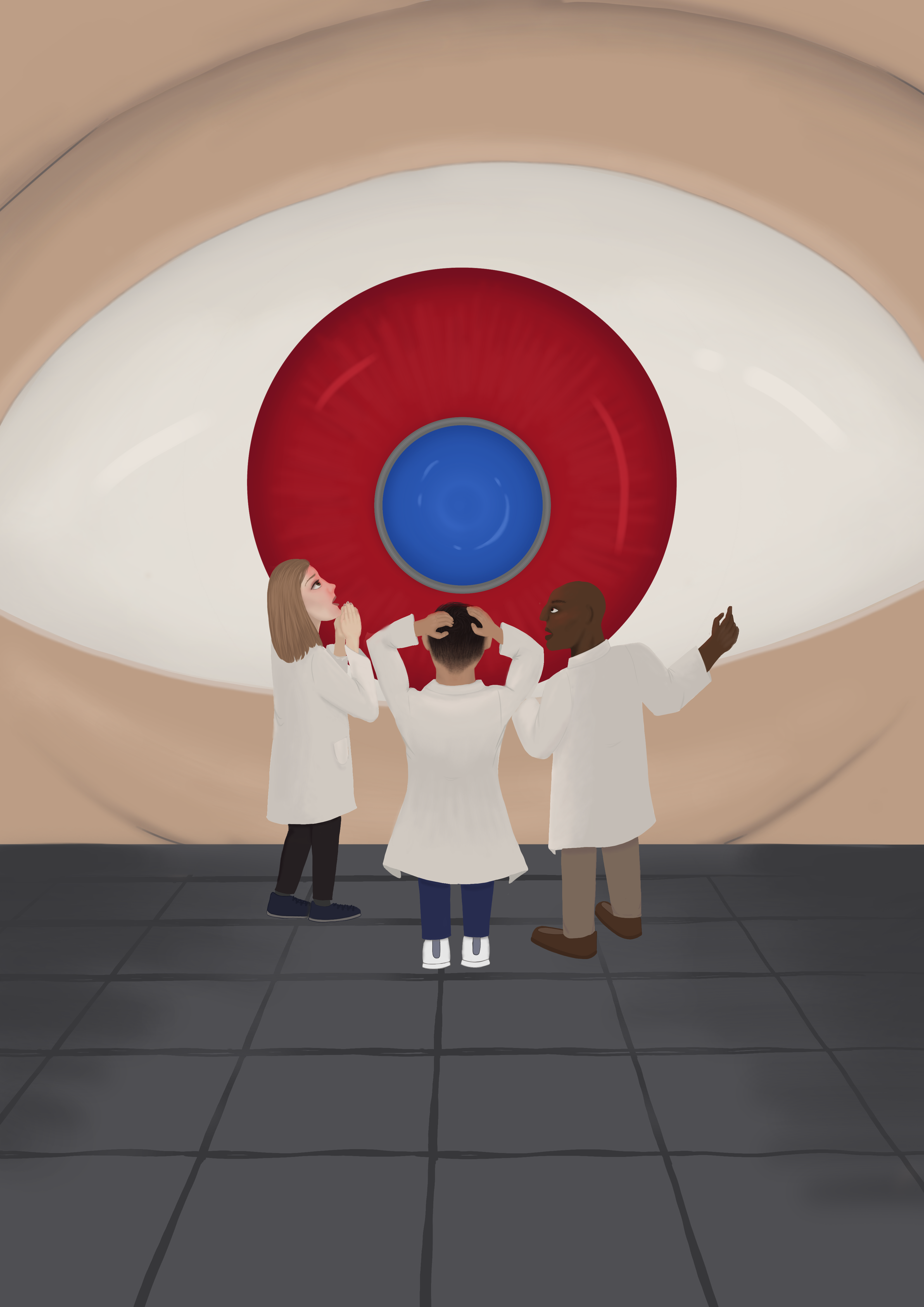
The word split the sky like a divine whip. A huge red iris narrowed towards its shoulder. The rebels looked around, suddenly afraid, and found that while some meekly returned to their work, others straightened and nodded in agreement. Cruel eyes could never change the truth.
Pain… pondered the giant. The scientists were smart, but the giant was shrewd. It had heard of a theory of evolution, another of behavioral conditioning. If it punished the gnats at its shoulder, they would learn to never complain, or condescend, or rebel. Where had it heard the theory before? It didn’t matter. Until then, the giant swatted at its shoulder.
Splat. Splat. Splat.
The giant stumbled along, having hurt itself in its frenzy. Its hypothesis was half-right. Nature abhorred the void — the rebels’ absence would be filled. Troubleshooting, pivoting, thinking critically. Given time, science would find a cure for the giant’s malignant heart. Until then, the remaining scientists went about grasping at dandruff the shape of dollar bills, just out of reach.
Dun-dun. Dun-dun.
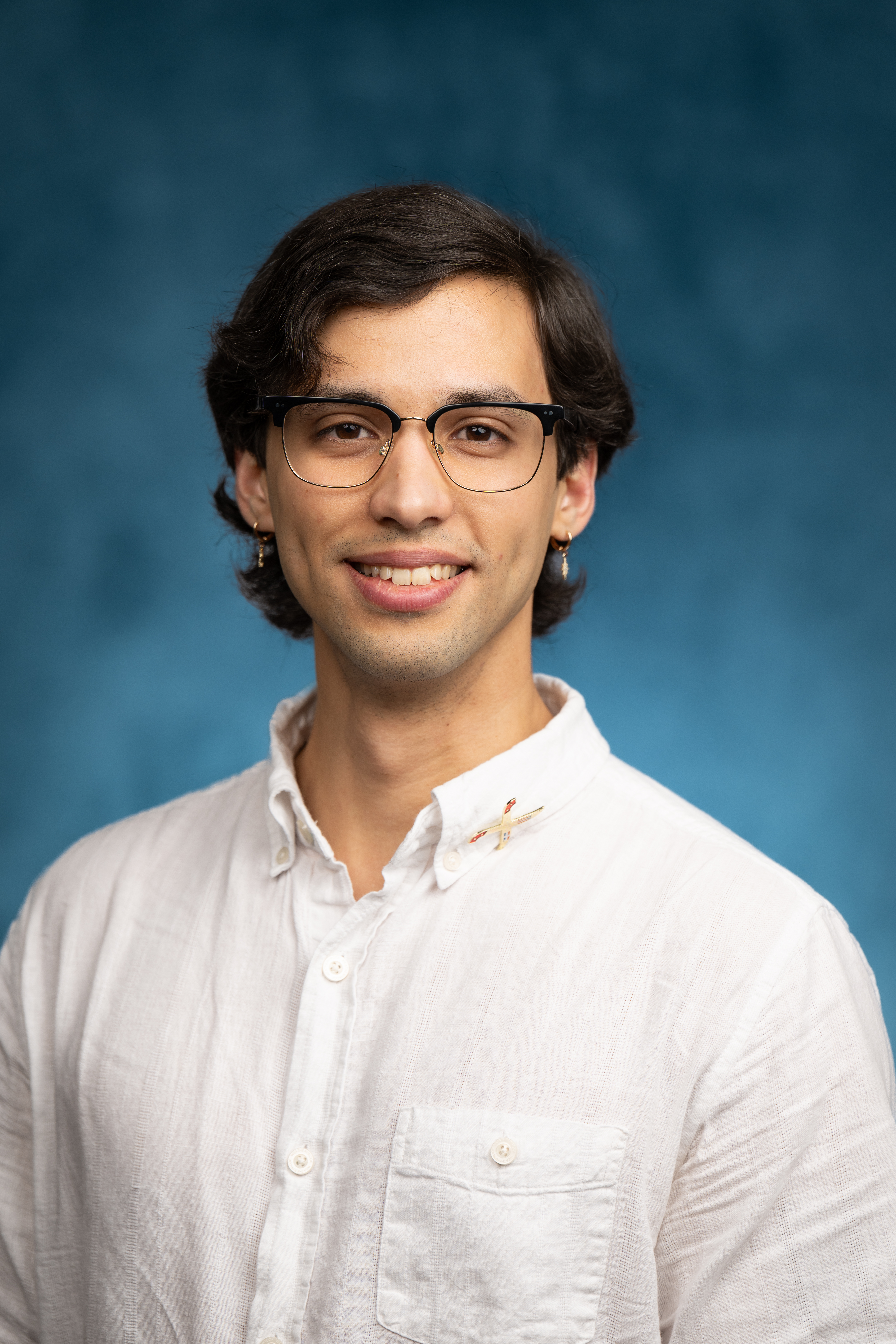
Francisco is a Neuroscience PhD student and serial daydreamer. In the lab, he studies how mitochondria (the powerhouse of the cell) influence inflammation after stroke. In his free time (ha!), Francisco enjoys writing sci-fi, visiting art museums, listening to live music, and plotting the downfall of the bourgeoisie with his cat Piculin.


