
Written by: Kaitrin Freeland
Edited by: Emily Januck, Lauren Heinzinger
Illustrated by: Paola Medina-Cabrera
Today feels wrong, but I don’t know why. All day long the air has been heavy, suffocating. I feel like I can’t breathe. Something is looming, the tension keeps building, and I swear my heart rate keeps increasing.
The phone rings, my father answers, and I can hear my grandpa’s voice on the other side. Did my heart just stop? My father lifts his eyes to us, and we know – he doesn’t have to say what has happened. He hangs up as tears roll down his face and his head drops into his hands.
The struggle is finally over. Dementia claimed my beloved grandmother.
Maybe my story about my grandmother sounds familiar to you. If it does, you aren’t alone. Dementia is a common set of conditions that many families endure. Neurodegenerative diseases that cause neurological decline in old age lead to a range of symptoms classified under the umbrella term “dementia.” These symptoms primarily impact cognitive skills, like short-term memory or reasoning, and eventually impair independent function and behavior. It is estimated that 42% of Americans eventually develop dementia, accounting for more than 100,000 deaths each year, or about 11 deaths every hour, in the United States.
Despite the high number of cases, researchers and doctors still do not fully understand these conditions. The unfortunate reality about these diseases is that dementia symptoms look different in every patient, making diagnosis and treatment difficult. The progression of these conditions in our loved ones can be so slow that a drastic decline in their quality of life is required for friends and family to notice. Currently, all that can be done for dementia patients is to treat the symptoms since there is no cure.
However, there is a new hope for dementia patients. That hope begins with an organelle that has previously been overlooked: the lysosome. While many of its mysteries remain unsolved, researchers understand so much more since this organelle’s discovery, leading to potential therapeutic options for patients. The lysosome is now understood to be directly linked to neurodegenerative diseases, such as Parkinson’s Disease and Alzheimer’s.
Christian de Duve began unraveling these mysteries when he officially discovered the lysosome 71 years ago. In 1955, de Duve and his team identified something that had never been seen before: “small acidic sacs” within the cell – organelles, containing acidic environments. This was groundbreaking because researchers at the time weren’t looking for such small organelles in cells. His team was instead mostly focused on things like mitochondria and other cellular components.
Originally, de Duve was interested in studying carbohydrate metabolism, which is the breakdown of sugars to be used as energy in our bodies. His team wanted to examine the enzymes responsible for this mechanism in cells, particularly where those enzymes are located. To do so, his team used cellular fractionation, a technique that rapidly spins samples to separate cellular components by their densities and isolate specific biomolecules. The team’s technique was novel compared to other procedures because it was gentle on cellular samples, allowing them to separate small biomolecules. By doing so, they found that these “sacs” contained enzymes responsible for breaking down, or “lysing”, cellular components. Thus, de Duve aptly named his newly discovered organelle the ‘lysosome’, which he would go on to dedicate his life’s research to, setting the stage for the lysosome field that is known today. His discovery won him the Nobel Prize for Physiology or Medicine in 1974.
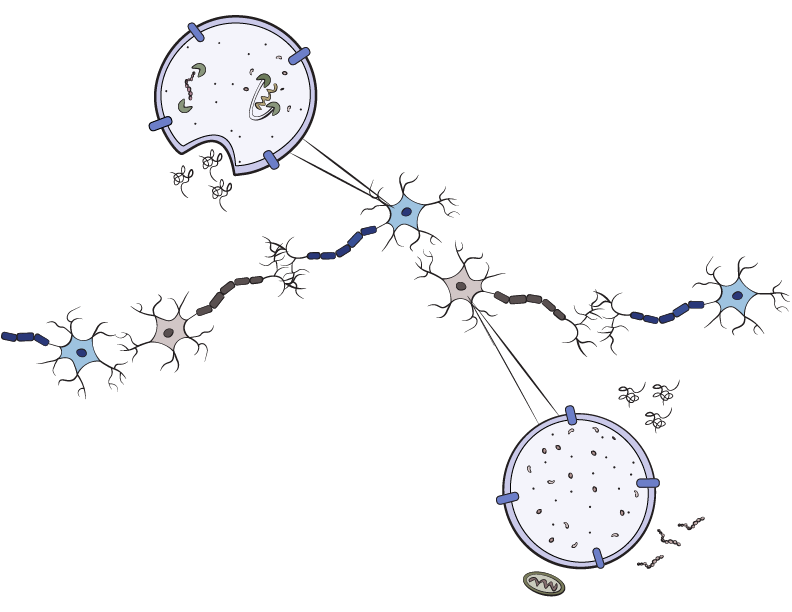
Between the 1960s and 70s excitement around this organelle led to the identification of several genetic diseases that are directly related to the integrity of lysosomes, such as Niemann Pick disease and Fabry disease. By the 1980s, the focus of lysosomal research began to shift – scientists expanded their studies to cellular pathways that involved the lysosome for cellular digestion. Technology at the time wasn’t advanced enough to uncover further information about the lysosome itself. However, de Duve still had a vision for its therapeutic potential and remarked that there was more to be appreciated about this organelle. The early 2000s saw a resurgence of interest in the lysosome itself and a lot more is now understood about this organelle and its implications in neurodegeneration. So, de Duve was correct in his hypothesis that the lysosome is far more important than meets the eye. Researchers continue to work diligently to uncover its secrets.
To understand how lysosomes connect to dementia, it’s important to appreciate their function inside cells. Simplistically, think of the lysosome as the “stomach” of your cells. When you eat, your stomach digests food into smaller parts that can be used by your cells. Anything that cannot be used is converted to waste and is removed from your body. Nutrients arrive at your cells and are used to carry out important functions like powering your muscles to walk or stand. During this process, your cells create things they need to thrive and naturally identify anything that’s old or damaged. This is where lysosomes come in. Lysosomes break down and digest old cellular components, such as damaged organelles or long-lived proteins, like your stomach digests food. Once digested, some parts can be reused by the cell or excreted as waste. This makes the lysosome a major metabolic hub of your cells and integral to cellular and overall human health.
Researchers are learning more about the importance of lysosome stability and its implications in the health of the human brain. My grandmother suffered from Lewy Body dementia, which is a term that describes dementia symptoms caused by Parkinson’s disease and accumulation of Lewy Bodies in the brain. Both are characterized by the presence of dense protein deposits in neuronal cells, mainly composed of a protein called alpha synuclein (ɑSyn), which can be thought of as a sticky ball inside cells. This is often attributed to a specific gene or set of genes no longer being able to maintain lysosomal health in old age. Lysosomes are key for removing these proteins that are dysfunctional in neurodegenerative diseases. In this case, ɑSyn aggregates instead of being degraded properly. These sticky masses with ɑSyn can trap other proteins and even grow and spread to other neurons, damaging lysosomes themselves, leading to cell death. As a result, not only are cells malfunctioning because of these aggregates, but they are also becoming sick and dying. Thus, the brain slowly degrades, leading to the impairment of motor function and memory, and eventual death of the patient.
Lewy Body dementia and Parkinson’s disease are not the only neurodegenerative diseases impacted by dysfunctional lysosomes in neuronal cells. Defects in lysosomes and their associated pathways are also implicated in frontotemporal dementia (FTD), which is the most common cause of dementia, as well as amyotrophic lateral sclerosis (ALS or Lou Gehrig’s disease). What’s scary for researchers is that lysosome disruption can occur at many different stages in the cycle of lysosomal function, like waste degradation or how acidic they become. One underlying similarity in these neurological diseases is that the central nervous system is especially sensitive to lysosomal malfunction. This is why understanding basic principles about lysosomal function and maintenance, especially in neurons, is so important for medicinal applications.
Since its discovery, researchers have considered using the lysosome as a candidate for therapeutic targeting and application. Several genes involved in lysosomal function, including C9orf72, TBK1, OPTN, and p62, are currently considered targets in therapies for diseases like FTD and ALS. There are also ongoing clinical trials investigating therapeutics that would target specific types of Parkinson’s disease. As novel technologies are developed to study lysosomes, additional biomarkers have been identified that can be targeted with therapies in the future. Currently, there are several therapeutic options for Parkinson’s disease such as targeting dysfunctional lysosomal genes and reducing the production, aggregation, and spread of ɑSyn. Some of these technologies and therapeutic approaches involve increasing lysosomal activity to target and degrade ɑSyn. Additionally, small molecule drugs can be used to block the aggregation of these protein deposits to stop their growth. There are also therapies that work to target genes that are involved in maintaining lysosomal health.
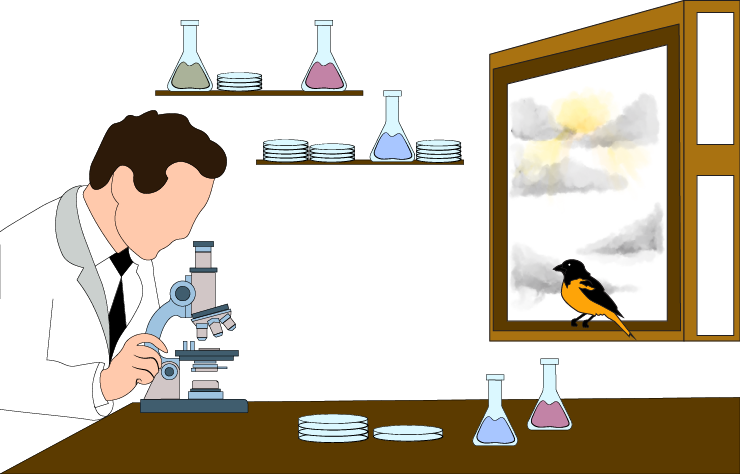
While we hold onto each other on the couch, something in the world shifts. The somber clouds part, and we look outside. There on the bird feeder sits an oriole, my grandmother’s favorite bird.
In my heart I feel her saying, “I’m free, I’m not hurting anymore.”
We all smile and look at each other. No words pass, just the collective knowledge that she is finally at peace. Meanwhile, the lysosome’s function is being studied in labs across the world, where researchers work tirelessly to understand why these diseases occur in people like her in order to develop new treatments to save lives.

My name is Kaitrin and I am from Kalamazoo, Michigan. I am a 3rd year PhD student in the Biological Chemistry department. In the lab, I use fluorescence microscopy to study lysosomal repair mechanisms. Outside the lab I enjoy the outdoors, reading, and spending time with family and friends.


