
Written by: K Wilson
Edited by: Daniela Pereira, Kaitrin Freeland
Illustrated by: Satabdi Mohanty
The first question I ever thought to ask of the Universe was not how it came into being, not when it decided to be, nor even why it wanted to become. No, my questions were concerned with my own how, when, and why: ‘How did it come to be that I existed only in the liminal spaces?’ ‘Why was I relegated to them?’ and ‘When, if ever, could I escape into permanence and stability?’ In other words, my original motivations for studying the Universe were selfish. It seemed to me the source from which I could draw meaningful truths about my existence uncorrupted by mankind’s falsehoods it tried to project onto me.
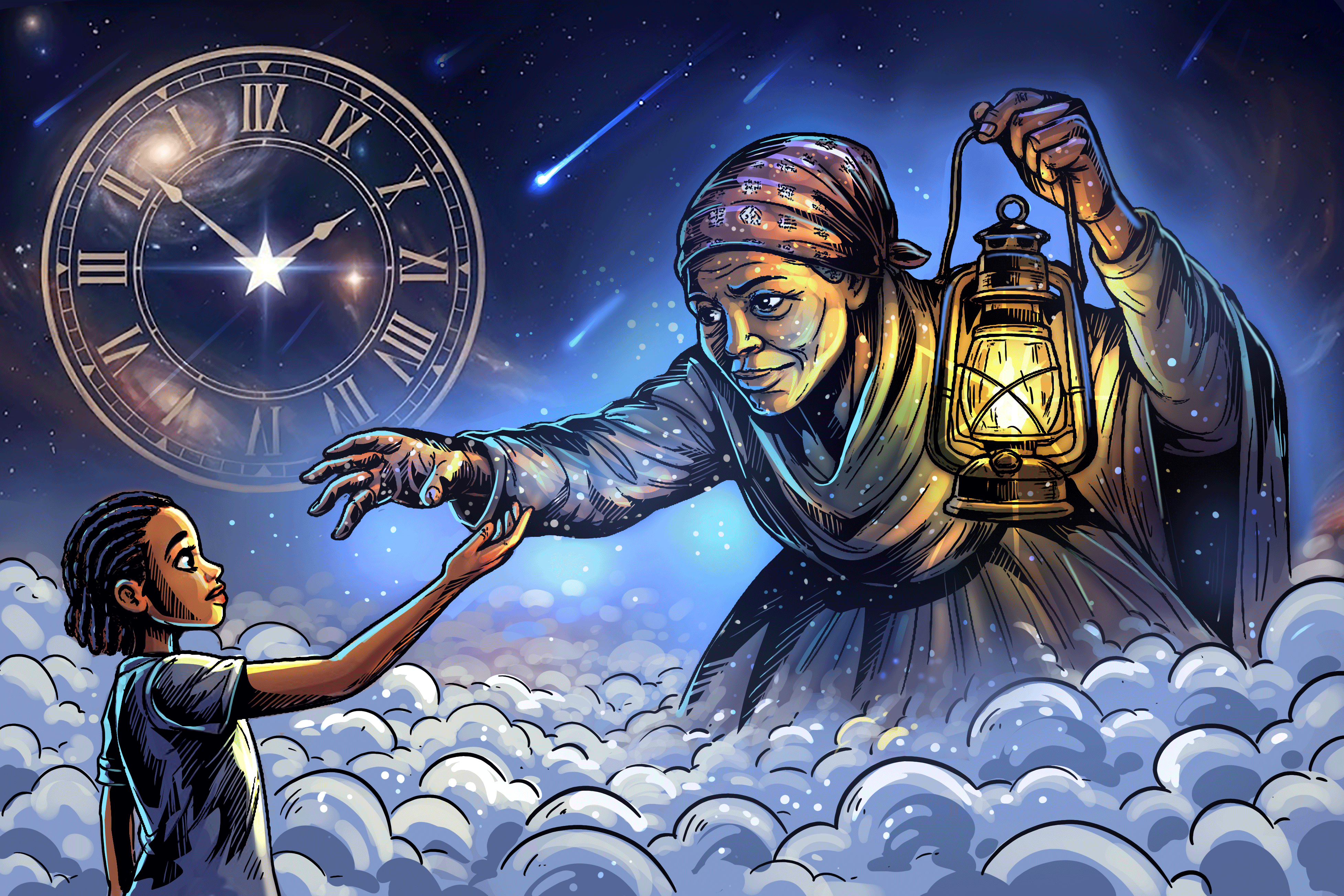
Soon, it was just the Universe and me, and we were marked from the beginning to be tried and tested – just for existing. Not that I knew the full extent of this the day in fifth grade I picked up a book on the founding fathers of astronomy and resolved to continue their legacy. Galileo, Copernicus, Kepler. None of those men had anything on a lil Black girl from the hood. My family and neighbors were being brought before the court for ‘heresy’ every hour – the heresy of existing while poor and Black. My ancestors had been lynched and burned at the stake for centuries, their genius suppressed, their ideas and knowledge usurped; their bodies brutalized in the name of science and medicine. It seemed all those old, dead, venerated white men of science had endured nothing unfamiliar to me in their quest to uncover cosmological truths, so what had I to be afraid of? Considering the circumstances I was born into, with a world stacked against me, what had I to lose in daring to dream so astronomically?
To put it in other words:
The Universe became my escape.
Little did I know that somewhere in space,
separated by a mere century and three-quarters of time,
a great ancestor of mine
was using these exact same stars I gazed upon
to plot her own freedom.

Araminta “Minty” Ross, alias Harriet Tubman, is best known for her work as a fierce abolitionist, leading approximately 70 enslaved people to freedom through the Underground Railroad over 13 dangerous trips from Maryland to Pennsylvania. Her scientific merits, however, are significantly less recognized. Her lived experience growing up enslaved in the Chesapeake Bay region instilled within her an expertise of land, sea and sky to run an arduous mission of freeing the enslaved. In fact, her successful rescue of dozens of enslaved people and evasion of capture by enslavers for decades was a direct result of her mastery of several sciences. As an enslaved child, she was often leased out to farmers to set underwater muskrat traps, which made her adept at swamp diving. She also worked alongside her father – a respected lumberjack and forester – in timber fields. This knowledge served her well later during her trips, where, with dozens of lives in her care and their freedom on the line, she expertly led her brigade through dense swamps, forests, and muddy terrain; hiding in potato holes by day and wading through marshes under the star-studded night sky. She was, without a doubt, an adroit geographer.
Her trips took roughly three weeks of traveling on foot at night and taking cover during the day. So her knowledge of plants, including which were poisonous and which were safe to eat, was a matter of life and death which prevented both herself and her posse from starving. She was rehearsed in making natural remedies from roots and herbs to heal wounds and illnesses from her Civil War days curing Union soldiers of dysentery. She was familiar with local animal calls like the owl hoot, and used them to discreetly signal her group when to hide to avoid capture and when it was safe to come out. Her ability to live off and blend in with the land not only served her abolitionist work, but it also made her a botanist and naturalist.
Furthermore, Harriet came from a maritime community of Black sailors and mariners who read the night sky for navigation and taught her how to use the constellations and the North Star. She utilized this know-how to guide herself and others to freedom, which of course makes her an astronomer, too. Writing to her in an 1868 letter, Frederick Douglass says of Harriet, “The midnight sky and silent stars have been the witnesses of your devotion to freedom and your heroism.”
—
Harriet Tubman’s scientific knowledge and mastery of several disciplines enabled her to create powerful movements of freedom, autonomy and self-realization for a people who had the entire world against them. And for those she could not lead herself, an integral component of her abolitionist work was also sharing and passing on information to help others survive their own journeys to freedom. She built a community around sharing crucial knowledge of the Earth and sky to uplift those around her. Dr. Chanda Prescod-Weinstein, a cosmologist, activist, and professor of physics and women’s and gender studies, writes, “As a conductor on the Underground Railroad and general expert on the social technology of liberation, [Harriet Tubman] understood and used this cosmos that includes Black people and freedom. This knowledge makes her one of the greatest astronomers in American history.”
So why isn’t Harriet remembered among the ranks of Hubble, Sagan, Rubin, and Leavitt? Why isn’t she regarded as the geographer, botanist, and naturalist she was? The answer, in short: epistemic apartheid. Or, the devaluation of knowledge, art, and work from marginalized individuals and communities – especially from Black people and Black women. This, of course, has been a critical component of the colonization framework for centuries. It is the reason that Black scientists are othered, their work rewritten or relegated to the margins of history. It is why, for instance, we remember Benjamin Franklin as a renaissance man, but we recognize Benjamin Banneker much less so; it is why every physicist can name the giants of the quantum revolution–Heisenberg, Schrödinger, Bohr, Born, but not Imes. Frantz Fanon details in his Black Skin, White Masks that the way the colonized are dispossessed of their ability to name the world is by forcing them to speak the oppressors’ language. Indian literary critic Gayatri Spivak extrapolates this idea beyond literal language to include all the ways one can ‘name the world’ – i.e. via scholarship and the creation of new knowledge, particularly in the suppression of the colonized’s ability to engage in such scholarship and knowledge creation. She calls this suppression “epistemic violence”.
With this philosophical framework, it becomes apparent that it was no accident that Harriet Tubman is not remembered as the scientist she was – that this reality was in fact necessitated by the very foundations upon which the modern academy and scientific establishment were built; namely, white supremacy, elitism, exclusion, and yes, even the weaponization of knowledge and science by a select few to impose violence against those deemed inferior. Modern science is predicated upon white, Western epistemologies, where extraction and exploitation are a justified means toward knowledge generation and scientific discovery. One composed of a hegemonic oligarchy that gets to decide who is considered worthy enough to be a scientist, who gets to contribute to the system of knowledge creation, whose scientific work is remembered, whose scholarly merit is recognized at all. One that leaves no space for the likes of Harriet, or even myself, centuries later still.
—
As a Black lesbian woman pursuing a PhD in cosmological physics, in a society in which Black women make up less than half a percent of physics PhDs, I must carefully navigate academia while often being told one way or another that I don’t belong. In my own journey toward academic freedom, Harriet’s story is a powerful reminder that there is a deeply rooted history and intimate relationship between my people, the Earth, and the Universe. I am a science communicator who is deeply passionate about sharing knowledge and resources in an effort to uplift marginalized communities in science. Even while I am accused of engaging in “identity politics”, I find immense beauty, joy, and comfort knowing that through this work, I am continuing a legacy of passing on my knowledge of the cosmos, just as Harriet passed on hers to guide others to freedom.
So, if denying us the ability to name the world is an epistemic injustice, then remembering and retelling the stories of our ancestors, like Benjamin Banneker, Elmer Imes, and Harriet Tubman, is epistemic justice. If the struggles I have endured in my brief tenure as a scientist thus far have been a continuation of the epistemic apartheid waged on my ancestors for centuries, then my very existence in the conference halls and auditoriums of academia is my cosmic reparations. And if Harriet Tubman was being disobedient by taking her freedom by force, with guidance from the Universe, then by physics-ing while Black, I am continuing her legacy in being epistemically disobedient via my pursuit of cosmological truth.
About the Author:
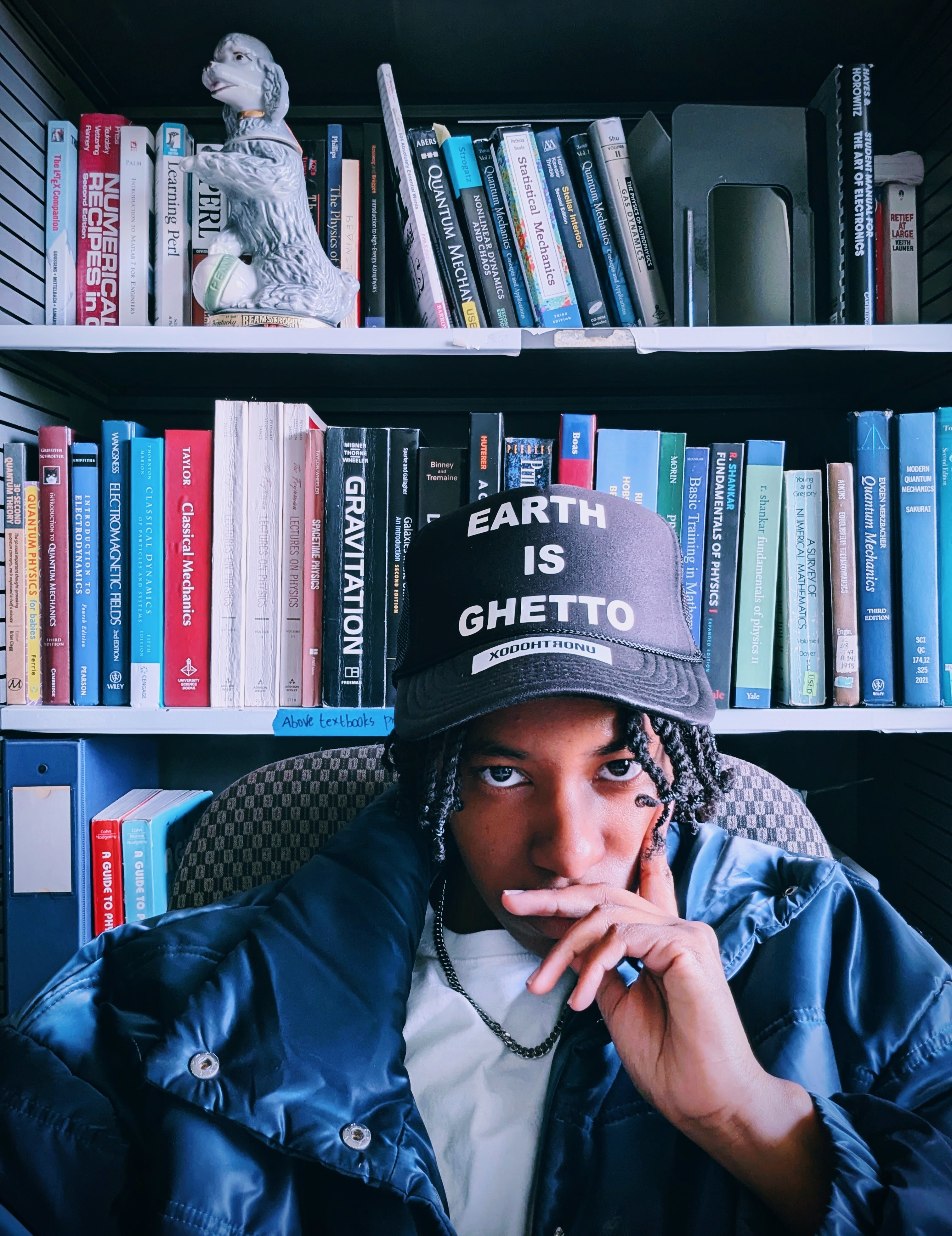
K Wilson (she/her) is an astrophysicist, science communicator, writer and public speaker whose mission is to uplift and inspire individuals of all backgrounds who are interested in STEM, especially those of marginalized identities. With an ethos grounded in unapologetic representation, she uses her presence, voice, and passion for storytelling to make the wonders of the Universe more accessible to all. Social justice and political advocacy are an integral practice in her science communication and outreach efforts as she works to empower a diverse and global community of scientists, scholars and academics. She is currently pursuing a PhD in cosmological physics at the University of Michigan.


