Why “cute” matters

By Irene Park

Life can be exciting sometimes, but it can also just be downright stressful. The dinner event that took me two weeks to plan is attended by only a quarter of the people on the guest list, my to-do list never gets shorter, my car suffers yet another bump in the parking lot, and so on.   

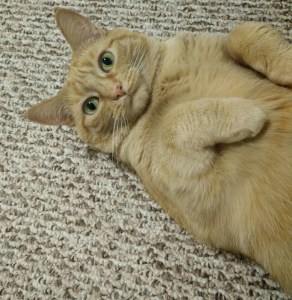
There are many ways that I deal with stress—such as exercising, listening to music, and hanging out with friends. But I have one secret way to de-stress that I usually don’t talk about at work: watching videos or looking at pictures of cute animals, like this one or this one, that melt my heart and force me to let out a huge “awwwww.”
Continue reading “Why “cute” matters”

Evolvability: The race against extinction

By Belle Moyers

It’s easy to think that evolution only works over long periods of time.  As much as 4.1 billion years ago, life began on Earth.  Some 420 million years ago, animals found their way onto land. Around 65 million years ago, an asteroid wiped out most dinosaurs. Two million years ago, our genus, Homo, emerged.  It almost seems like evolution is a strictly theoretical field.  After all, evolution doesn’t affect things in our lifetime…  right?

Continue reading “Evolvability: The race against extinction”

It’s a zoo out there: Breaking down communication barriers

By Alisha John

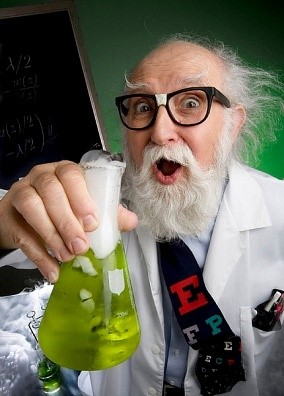
Despite countless trips to zoos across the country, there is one elusive species I have never encountered: Scientia normalis. This species is more often referred to by their common name, scientists. Scientists are not normally seen in public, often preferring to remain in their native habitat of the laboratory. Because of this, stereotypes dominate the perception of the entire species and are often reinforced in popular culture and the media. These stereotypes depict a species of mostly older males with unruly hair, glasses, a white lab coat, and a vial of brightly colored liquid. (*cough* Albert Einstein *cough*) Recently, however, there has been an effort to remove some of the mystery surrounding this species and correct the outdated stereotypes.

scientist
Scientia normalis archetype. Image source

Continue reading “It’s a zoo out there: Breaking down communication barriers”

What the nose wants: Why the scent of gasoline is irresistible to some

By Shweta Ramdas

A month or so ago, I casually mentioned to my labmates that I can’t get enough of the smell of gasoline, and that I had stolen a whiteboard marker from our lab to sniff when I was particularly frustrated with research. This had two results: my labmates now tease me mercilessly, and I realize that not everybody is as enamored by these smells as I am.

The latter was quite an epiphany: I had imagined that everyone finds the smell of gasoline ambrosial. So why isn’t it true? Being a geneticist, of course my first thought was that it must be all in the genes.

Continue reading “What the nose wants: Why the scent of gasoline is irresistible to some”

X: A reason calico cats xist.

By Shirley Lee


1465090968977 (1)
Samantha. Image credit: Shirley Lee

Last year, I decided to add a new member to my family, which at the time consisted of simply yours truly (well, other members of the family do exist but live hundreds of miles from Ann Arbor). After some searching, I brought an orange tabby cat back to my apartment and named her Samantha (pictured at the top). Samantha is a domestic shorthair, with faint mackerel markings along the sides of her body. Her forehead bears the classic “M” pattern characterizing a tabby cat. She also has four stripy legs, pink paw pads, and an orange stripy tail. When I introduced her to my family back home, she wasted no time in conquering everyone with that fuzzy face!

Continue reading “X: A reason calico cats xist.”