EquilibriUM Edition 4 – Editorial Team

Co-Editors in Chief

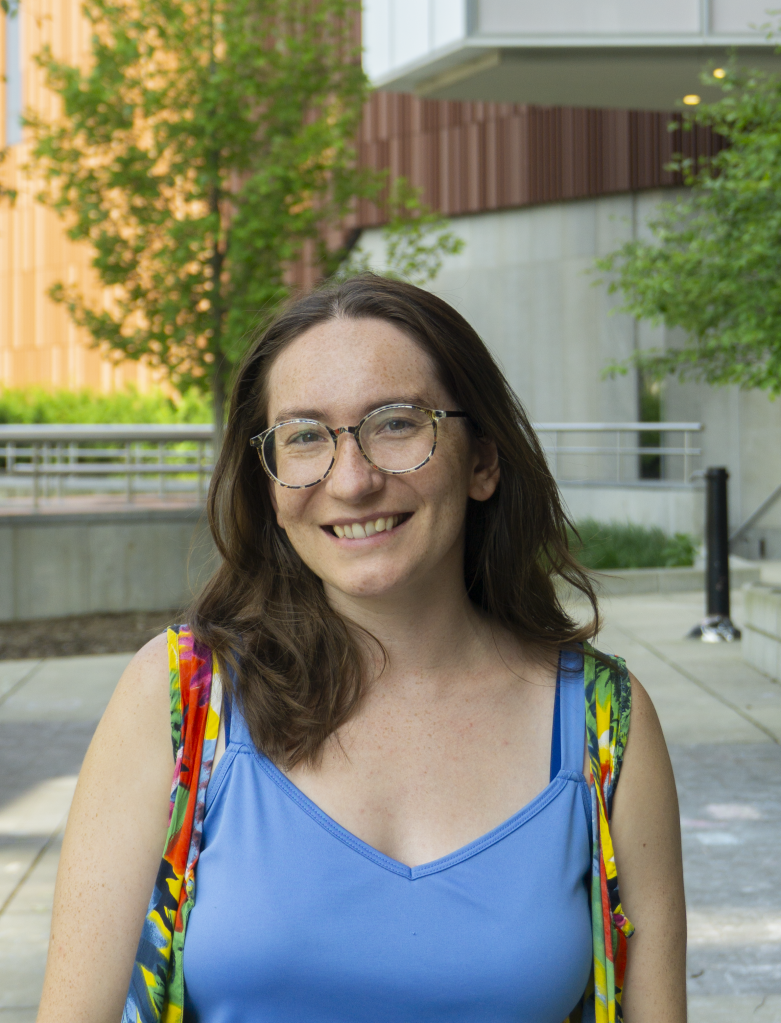
Among other things, Kate Giffin is a PhD candidate in neuroscience. In the lab, she studies how severe infections can lead to long-term brain issues like dementia. She is passionate about telling scientific stories through unexpected genres, particularly poetry, to expand the way people think about science and the world. When Kate is not marveling at the everyday wonder of the brain, she is probably outside marveling at some strange plant.

Claire Shudde is a Ph.D. candidate in pharmacology studying the everyday wonder of the immune system and how it can fight cancer and autoimmune disease. Outside of the lab, she enjoys dancing, reading, and editing a friend’s novel. She hopes people leave this magazine with more awe for the world around them.

Nick Jänne is a PhD student in Robotics, researching how robots can improve their scope of capabilities in the real world by learning from humans. He also hopes to one day build human habitats on the Moon and Mars using a team of robots and humans. Nick received his Bachelors of Computer Engineering degree from the University of Michigan in 2023, and has a passion for reading and writing on the next generation of artificial intelligence.

Layout Designer
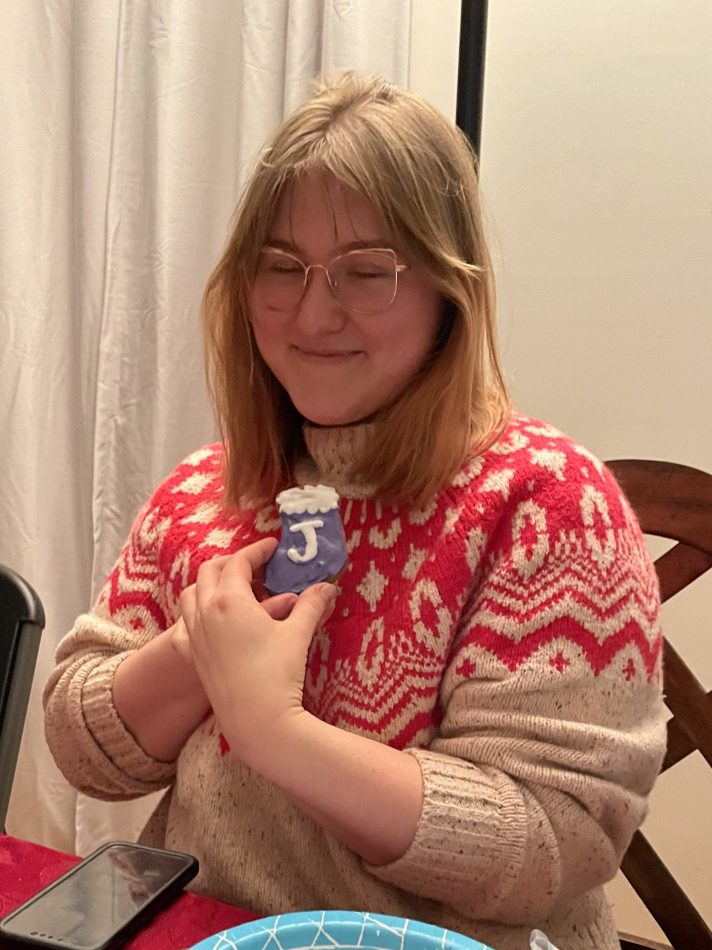
Julia Kravchenko is a neuroscience graduate student studying the relationship between sleep and Alzheimer’s disease. She is passionate about making academia accessible
to the general public. Outside the lab she can be found reading fantasy novels amidst her growing collection of gnomes.

Editors

Emily Januck is a PhD candidate in the Neuroscience Graduate Program at the University of Michigan, where she studies neurodegeneration. Outside the lab, she enjoys attending trivia, playing Euchre, and traveling with her friends. Connect with her on LinkedIn.
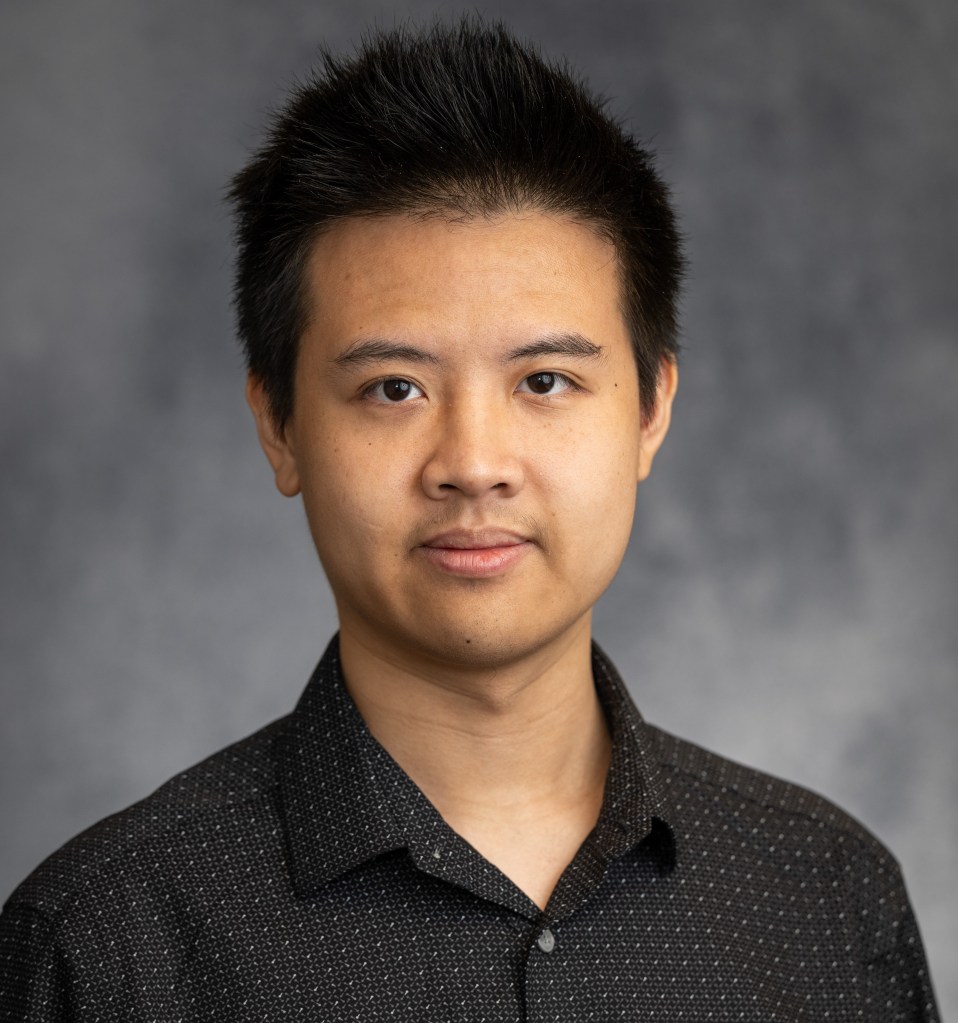
Ye Han (Jeremy) Chen is a PhD candidate in Bioinformatics at the University of Michigan. Jeremy has a primary research interest in quantitative methods for precision medicine. Outside the lab, he enjoys cooking new recipes,cheering on Philadelphia sports teams, and learning about East Asian languages and history. Connect with him on LinkedIn.
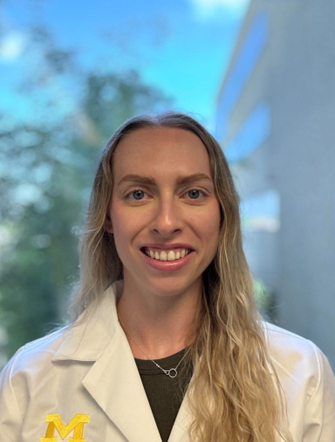
Dana Messinger is a PhD candidate in the Cancer Biology graduate program at the University of Michigan, where she studies epigenetic dysregulation in high-grade pediatric brain tumors. When she’s not doing science, Dana is a big fan of spending time outdoors, reading, and going to concerts. Connect with her on Linkedin.

Amanda Bekkala is a PhD candidate in the Immunology graduate program at the University of Michigan, where she studies how microRNAs alter the tumor-immune microenvironment in high-grade ovarian cancer tumors. When she’s not doing science, Amanda loves exploring the outdoors in all ways possible, whether it be running, mountain biking, or skiing/snowboarding. Additionally, she enjoys getting creative by drawing or painting when she finds the time. Connect with her on LinkedIn.

Paris Riggle is a PhD student in the Neuroscience Graduate Program at the University of Michigan, where she studies the molecular mechanisms of brain development in the context of neurodevelopmental disorders and evolution. Outside the lab, Paris likes to play cello, experiment with recipes in the kitchen, and spend time in nature. She also enjoys creative arts and writing. It was a joy to work with everyone on the magazine and see the ideas come to life! Connect with her on LinkedIn.

Alex Ford is a student and neuroscientist who researches how the brain processes sensory information in the visual system. He has a tendency to seek out the absurd, and frequently attempts to create art. In his free time, he is with friends, family, or a good book under a tree.

Deanna Cannizzaro is an avid reader, writer, and tap dancer. As a neuroscientist, she studies how sensory neurons detect and influence the glands that produce saliva. When Deanna is not daydreaming about fantastical worlds and cool science, she’s going on adventures with her husband and two pups.

Illustrators
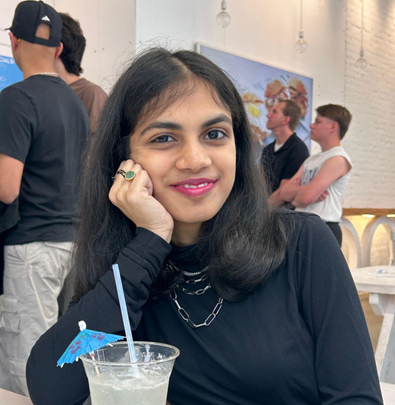
Satabdi Mohanty is an international Master’s candidate in Human Genetics, proudly hailing from India. Outside the lab, you’ll find her smashing ping pong balls, sketching in dramatic shades, scribbling in her journal, or diving into audiobooks and horoscopes (because the stars deserve some attention too).Her creative streak in digital illustration was sparked by her brother, Sambit Mohanty—a professional concept artist—who also introduced her to the magic of Adobe Illustrator and Photoshop. She believes art is a better way to scream your thoughts without disturbing your neighbours. Connect with her on LinkedIn.

Adriana Brown is a 3rd year PhD candidate in the Earth department studying ancient climates of North America through the chemistry of fossil sea shells. She can often be found biking, reading all sorts of fiction/fantasy, and trying out new recipes with her friends.

Jessica (Jess) Li is a Ph.D. candidate in the Department of Microbiology & Immunology at the University of Michigan. In Dr. Xiaoxia (Nina) Lin’s lab, they are developing novel microfluidic methods to grow biofilms and test them for properties of interest. They aim to use these tools to better understand how community membership influences disinfection resistance in drinking water biofilms. Outside of lab, they enjoy multiple artistic hobbies including digital art, crochet, knitting, and cross stitch. They also love video games and board games. You can find them on LinkedIn as well as various social media platforms.

Danny Cruz is a PhD student in the Cellular and Molecular Biology graduate program at the University of Michigan, where he studies blood development through CRISPR genetic screens in the Khoriaty lab. Outside of the lab, he enjoys eating out with friends, going on long walks, and trying out new pens in his sketchbook. His interest in illustration was inspired by a childhood love of Pokemon.

Naomi Raicu is a third-year Applied Physics Ph.D. candidate at UM, where, as a member of the Z Laboratory in the Nuclear Engineering and Radiological Sciences Department, she studies the transport properties of high-entropy liquids through atomic-scale simulations. When she’s not in lab or out on a walk, you’ll likely find Naomi in a boba shop downtown.

When you move, I move: How parents can influence children’s physical activity and motor skill development

Written and Illustrated by: Stephanie Palmer

Edited by: Chloe Rybicki-Kler, Emily L. Eberhardt, Sarah Bassiouni, and Jennifer Baker

Hey there, reader! This is the second blog post in a two part series about children’s physical activity decisions and behaviors. This post explores practical steps caregivers can take to influence children’s fundamental motor skill development and physical activity behaviors. To learn more about developmental factors that influence children’s physical activity decisions, read part 1 here

I want you to reminisce about your childhood physical activity experiences. Did you have a place to play in your house or backyard? Did you play in the driveway or on the street? Did your parents encourage you to play outside, or occupy you with a TV show? Did you rush home for dinner on your bike after playing at the park with friends, or was it unsafe to play outside in your neighborhood? Your recollections, similar or different, positive or negative, reflect the influence of your home environment on physical activity. The home environment for physical activity plays an important role in supporting children’s physical activity decisions and behaviors, and the development of motor skills for physical activity.  

Continue reading “When you move, I move: How parents can influence children’s physical activity and motor skill development”

When you move, I move: Exploring the science behind childhood physical activity

Written by: Stephanie Palmer

Edited by: Chloe Rybicki-Kler, Emily L. Eberhardt, Sarah Bassiouni, and Jennifer Baker

Hey there, reader! This is the first blog post in a two-part series about factors influencing children’s physical activity decisions and behaviors. This post will explore the developmental factors that influence children’s physical activity decisions. To learn more about practical steps caregivers can take to support children’s physical activity behaviors, read part 2 here

As I write, my three year old niece and five year old nephew are outside madly chasing chickens while wearing cardboard boxes that they have fashioned into robot armor. The vigor and stamina on display–by both the children and the chickens–are impressive and remind me of my childhood escapades. Once, I hosed down my family’s garage with two inches of water to make a more difficult (i.e., dangerous) rollerblade obstacle course for myself and my siblings. Another time, my sister and I duct-taped large exercise balls to our bodies so that we could run into each other repeatedly. 

Continue reading “When you move, I move: Exploring the science behind childhood physical activity”

The neuroscientific study of consciousness: How did we get here?

Written by: Rachel Wahlberg

Edited by: Olivia Pifer Alge, Austin Shannon, Andrés Rivera Ruiz, and Jennifer Baker 

Illustrated by: Hana Paz Harbman 

This blog post is part 1 of a multi-piece series on the neuroscientific study of consciousness. Stay tuned for parts 2 and 3 coming soon! 

If I were to walk up to you on the street and ask you if you were conscious, what would you say? My guess is you would answer with a “well, yes?” – and if you’re anything like me, with a nervous laugh added, wondering what sort of conversation you’ve just walked into.

Continue reading “The neuroscientific study of consciousness: How did we get here?”

How can bioplastics help curb our dependency on lab plastics?

Author: Devon Hucek

Editors: Ryan Schildcrout, Sarah Bassiouni, & Will Dana

Illustrator: Saaj Chattopadhyay

New research papers are published daily, reporting advances in every scientific field. However, science can’t happen without proper equipment and materials, many of which are made out of plastic. Why? Plastic is often the cheapest available material and is safer than glassware, which has a much higher likelihood of breakage. A study done at the University of California-Santa Barbara found that 80% of laboratory plastic waste at MIT consisted of pipette tip boxes alone. A microbiology lab in Edinburgh, UK found that in a four week span, they had produced 97 kg (213.8 lbs) of plastic waste. Using plastic is not inherently bad, especially since there are many available resources and regulations (both local and state) for recycling and reusing plastic waste. However, the volume of unrecyclable plastic waste generated in labs across the globe is massive, and seems like an impossible problem to tackle. Enter, bioplastics.

Continue reading “How can bioplastics help curb our dependency on lab plastics?”

Science Communication: A Duty of the Next-Generation Scientist

Author: Jessica Y. Chen (@BluntDrJChen)

Editors: Charles Lu, Ellyn Schinke, and Shweta Ramdas

The only thing necessary for the triumph of evil is for good men to do nothing.” Edmund Burke

It’s frustrating, as a scientist, to watch from afar as the claims of anti-vaxxers are given credence in many parts of the country, despite ample evidence suggesting that they’re not correct.

Why and how can so many people be misled?

Continue reading “Science Communication: A Duty of the Next-Generation Scientist”

So You Want to be a Scientist

Author: Kristina Lenn

Editors: Alex Taylor, Zena Lapp, and Scott Barolo

People say that “love” is probably the most abused word in the English language. I disagree. I think the word that is most misused is “genius.”

I taught engineering at Wayne State University for three years, and the class I taught that was most frustrating for the students was programming. Many of my students would come to me and say how discouraged they were; how they seemed to be behind everyone else; and how they thought they should already know how to do everything. My response was, “If you already knew how to do it, why would you need the class? It’s required for a reason.” In fact, many of them would look at me and say, “You hardly even think about the answer. You just start typing the code and it magically works.” I had to remind them that I’d been teaching for years and programming for almost a decade.

Continue reading “So You Want to be a Scientist”

Health Benefits of High-intensity Interval Training: Helping you HIIT the Gym

Author: Alison Ludzki

Editors: Zena Lapp, Alex Taylor, and Sarah Kearns

Gyms are riding out their busiest season, as patrons hang on to their New Year’s resolution exercise programs. But will it last? It seems inevitable that exercise participation wanes from January through December, except for maybe a blip prior to “beach body” season.  High-intensity interval training (HIIT) is one newer exercise option that could help your resolution stick.

Continue reading “Health Benefits of High-intensity Interval Training: Helping you HIIT the Gym”

Are Omega-3 fatty acids healthy?

Author: Attabey Rodríguez-Benítez

Editors: Jimmy Brancho, Andrew McAllister, and Noah Steinfeld

When I got sick as a child, my great-grandmother used to treat me with unpleasant fish oil. She would say, “bébete esto para que te pongas mejor y tengas un corazón fuerte” (“drink this so you can get better and have a strong heart”). Both of my parents also swore by fish oil, taking these enormous yellow pills, which I did not take myself because I was afraid to choke on them. These large fish oil pills were full of omega-3 fatty acids. My family explained that the supplements helped with high blood pressure, but never explained why they worked. As it turns out, there is still quite a lot of debate in the scientific community as to how omega-3s impact human health.

Continue reading “Are Omega-3 fatty acids healthy?”

Microscopic Diversity: How and Why One Gene Creates Many Unique Proteins

Author: Jessica Cote

Editors: Zena Lapp, Christina Vallianatos, and Whit Froehlich

The Human Genome Project is one of the greatest scientific accomplishments in recent history— this international collaboration identified almost all of the ~20,500 genes in the human body, known collectively as the genome. Now that scientists know the details of these genes, they are better able to understand and treat human diseases associated with genetic factors. However, despite the immense effort put forth by over 30 research labs for 13 years (1990-2003), the information we gained from this project is limited. Genes serve as guidebooks for cells in the body to build proteins; genes themselves don’t perform the necessary cellular functions—proteins do. So, while scientists have now known the nitty-gritty of thousands of human genes for a while, the details of their protein products, known collectively as the proteome, are still quite puzzling.

Continue reading “Microscopic Diversity: How and Why One Gene Creates Many Unique Proteins”