Placebos: Tricking the Brain, Targeting the Body

Author: Shweta Ramdas
Editors: Charles Lu, Whit Froehlich, and Scott Barolo
Screen Shot 2017-07-13 at 2.16.39 PM
Placebo or Nocebo?

Last year, when I pooh-poohed my mother’s alternative medicine regimen, she said, “But these actually work well for me, because I believe in them!” My mother had just outsmarted me with science.

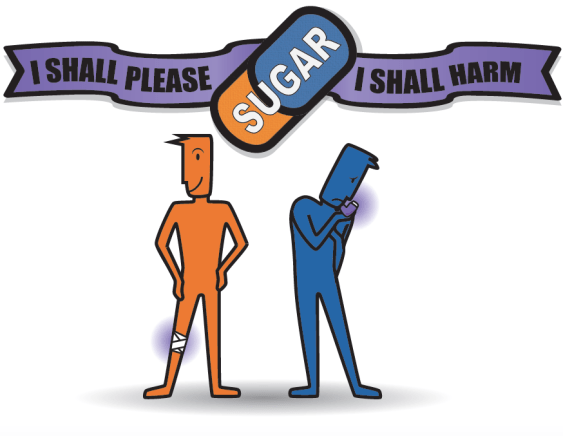
The placebo effect is one of the most remarkable yet least understood phenomena in science. It is a favorable response of our body to a medically neutral treatment (sugar pills, anybody?): in other words, a placebo is a fake treatment that produces a very real response. This is attributed to a physical reaction stemming from a psychological response to the administration of therapy. You could say that a patient sometimes gets better anyway—how many times have we waited out the common cold—and you would be right. This natural return to the baseline which can happen is not considered the placebo effect, which is an improvement in response to a treatment.

Continue reading “Placebos: Tricking the Brain, Targeting the Body”

How Gecko Feet Will Make Your Next Move Easier

Author: Andrew McAllister

Editors: Ana Vasquez, Molly Kozminsky, and Kevin Boehnke

One of the most frustrating parts of moving is dealing with furniture. Most pieces need to be taken apart to fit through doors or into your moving van. Even if you’re lucky enough to have buff friends to help, one lost or stripped screw is enough to make you question your choice to cart everything miles away.

If only things could be simpler. Instead of screws, why not a super strong, reusable, and easy-to-detach piece of tape to hold your furniture together? Sounds like a tall order, but scientists inspired by a gravity-defying lizard, the gecko, are trying to make it a reality.

Continue reading “How Gecko Feet Will Make Your Next Move Easier”

#Scijack: Co-opting Twitter for Science Communication

Author: Ada Hagan

Editors: Whit Froehlich, Scott Barolo, and Irene Park

I doubt Dr. Shaena Montanari ever thought that a single Twitter conversation would earn her 3,000 new followers (1,000 within two hours) and help launch a new hashtag. But that’s what happened when she replied to a political tweet that mentioned velociraptors.

fig1 - scijackSource

Continue reading “#Scijack: Co-opting Twitter for Science Communication”

The Science of What Keeps Us Apart

Author: Kaitlin Weskamp

Editors: Shweta Ramdas, Alex Taylor, and Kevin Boehnke

“… in diversity there is beauty and there is strength.” 
             ― Maya Angelou

Over time, there has been a general trend towards acceptance and inclusivity in the civil rights laws of the United States. From the abolition of slavery in 1865, to granting women the right to vote in 1920, to the legalization of gay marriage in 2015, we are making torturously-slow-but-steady progress towards the promise that “all men [and women] are created equal.”

Today, the majority of people in the U.S. agree with Maya Angelou that diversity lends strength to our community. However, racism, sexism, and homophobia remain enormous societal issues. Is there a neurological basis for these ideas? If so, how can we combat it?

Continue reading “The Science of What Keeps Us Apart”

Introverts & Extroverts: It’s Not as Simple as Shy or Outgoing (Part 2)

Author: Ellyn Schinke

Editors: Whit Froehlich, Nayiri Kaissarian, and Irene Park

In my last post, I wrote about the social differences between introverts and extroverts and the misconceptions surrounding the two personalities. This post will focus on the underlying brain biology that contributes to whether a person is an extrovert or an introvert.

The more I read about these personalities, the more I wondered—are there ways in which the biology can explain the social differences? It turns out that there are several known, key differences in the brain biology between introverts and extroverts.

Continue reading “Introverts & Extroverts: It’s Not as Simple as Shy or Outgoing (Part 2)”

Introverts & Extroverts: It’s Not as Simple as Shy or Outgoing (Part 1)

Author: Ellyn Schinke

Editors: Whit Froehlich, Nayiri Kaissarian, and Irene Park

Seemingly every Friday night, I’m curled up on my couch with a glass of wine and a good movie. Yet, it amazes me how many people scoff or flat-out laugh when I tell them that I’m an introvert. I am! In social situations, my mood can change very suddenly. It’s as if my social batteries have run out, flipping my social switch from on to off. Such changes are confusing for my friends, which might be based on the big misconception surrounding introversion and extroversion in society.

Continue reading “Introverts & Extroverts: It’s Not as Simple as Shy or Outgoing (Part 1)”

Camouflaged: Finding cephalopods

Written by: Irene Park

Edited by: Ada Hagan, Alisha John, Belle Moyers, Kevin Boehnke

When I was watching Finding Dory, one character caught my eye: Hank the octopus (or septopus since he’s missing a tentacle). Throughout the movie, Hank uses his camouflage ability to blend into his surroundings, a very useful skill for Dory’s quest to reunite with her family without getting noticed by humans.  

I could not help but think how helpful Hank’s camouflage ability would be for different professions: hunters, nature photographers, and perhaps even people in the military. Unsurprisingly, researchers are already taking notes from cephalopods — which include octopuses like Hank, as well as squids and cuttlefishes — to develop better camouflage technology.

Continue reading “Camouflaged: Finding cephalopods”