Blog

Invasive species: An alien attack from out-of-place!

By Alisha John

BREAKING:Planet Earth is under attack by alien species from out-of-place. They may be lurking in your backyard right now. These invasive species take many forms – from plants to fish to mammals. But one thing is certain: they threaten the delicate balance of our native ecosystems.

Invasive species threaten native ecosystems and wildlife

As defined by Executive Order 13112 signed by President Clinton in 1999, an invasive species is an alien species which causes harm or is likely to cause harm to the environment, economy, or human health. Continue reading “Invasive species: An alien attack from out-of-place!”

Induced stem cell power: The power to reset a cell’s career path

By Shirley Lee

Featured image: Induced pluripotent stem cells stained red, their nuclei are stained blue. Source.

When I was first taught the process of embryonic development in biology class back in high school, I was amazed by the complexity of the process. Each one of us was derived from a single cell (the result of the joining of an egg and a sperm), which then went through countless cell divisions. It amazes me that something so small is packed with so much biological potential!

Naturally, scientists set out to get to the bottom of this phenomenon. In the 1990s, people discovered how to extract these cells (called stem cells) from developing human embryos in order to study the process underlying stem cell development in research laboratories. Continue reading “Induced stem cell power: The power to reset a cell’s career path”

Science behind-the-scenes: (Almost) Everything grade school taught you about science is wrong

By Belle Moyers

Do you remember being taught the “Scientific Method” in school? There were always slight variations, but it went something like:

  1. Ask a question
  2. Do background research
  3. Form an educated guess (hypothesis)
  4. Test your hypothesis by doing an experiment
  5. Analyze your data and draw a conclusion
  6. If your hypothesis is wrong, return to step 3 with a new hypothesis.
  7. Communicate your results

These steps seem like a great tool to introduce students to science.  They’re simple and easy to understand once the teacher explains words like “hypothesis” and “experiment”.  If you’re like me, perhaps you remember it seeming straightforward—scientists follow a linear set of steps that produce powerful results. Teachers drilled that method into us grade after grade.  If only they weren’t completely wrong.

Continue reading “Science behind-the-scenes: (Almost) Everything grade school taught you about science is wrong”

The fecal frontier

By Kevin Boehnke

Written for the prompt: What is the most important fundamental mystery in biology today that, if unlocked by basic research, would yield the greatest dividends for human health?

Poop. For good reason (it harbors deadly pathogens), this ubiquitous, noxious substance provokes an instinctive reaction of disgust. Despite the near-universality of poop and fart jokes, humans have spent much time, energy, and money to avoid contact with feces. Yet poop has great potential to improve human health through medical treatments,prevent disease through microbiome maintenance, and mitigate effects of antibiotic resistance. A better understanding of poop could improve millions of lives and save billions of dollars per year in healthcare costs. Continue reading “The fecal frontier”

Coffee: To drink or not to drink, that is the question

My morning usually goes like this: I wake up, shower, eat breakfast, and drink coffee before stepping out of my apartment to face the day.

Depending on how much time I have in the morning, I may skip some of those steps. Next time you see me, ask me how hungry I am and whether my socks actually match. But there is something that I never skip: coffee. And I’m not alone in this ritual—54% of Americans older than 18 drink coffee every day. Continue reading “Coffee: To drink or not to drink, that is the question”

Escaping the bunker mentality, part II…

By Kirsti Ashworth

Last week, I introduced the process of transdisciplinary research: an iterative, co-operative approach that brings communities and researchers together to collaborate at all stages of the research process. But given the difficulties of finding funding for traditional scientific research, can this kind of research become a reality? There are plenty of examples out there that suggest it can.

There are already signs of change: many scientists are starting to consider the practical implications and applications of their research, looking beyond the narrow confines of their discipline, and engaging with local stakeholders. International institutes, science co-ordinators, and funding agencies are actively promoting inter- and transdisciplinary research. The field of sustainability is a prime example. Continue reading “Escaping the bunker mentality, part II…”

Escaping the bunker mentality

By Kirsti Ashworth

Save the date! 2016 is the Year of the Future.

A future that’s bright, a future that’s transdisciplinary…

kirsti1.jpg
Image credit: Arnaud Bouissou/MEDDE/SG COP21

On December 13th 2015, the world’s leaders reached a rare consensus and ratified an historic accord designed to limit climate change to 2°C. January 1st 2016 marked the official launch of the UN’s Sustainable Development Goals and the start of the next Assessment Report for the IPCC. These events have shifted the emphasis from investigating and reporting the physical science behind the unprecedented changes we’re seeing on our planet to identifying and implementing strategies to avoid further change (mitigation) or to minimize their impacts (adaptation).

Continue reading “Escaping the bunker mentality”

Water splitting part II: Research at University of Michigan

By Jimmy Brancho

You know what they say: “You can’t store solar energy without cracking a few water molecules.”

Or, at least, many scientists around the world are working to make that so. As was discussed earlier on this blog, solar water splitting could enable a cleaner energy future by storing energy from the sun’s rays in a stable chemical fuel like hydrogen that can be used on-demand. Ideally, the only inputs needed would be water and sunlight, and the only waste product oxygen. However, the current state of technology is a long way off. Bart Bartlett, Charles McCrory, and Neil Dasgupta are among several faculty here at the University of Michigan that are working to make solar water splitting devices a reality. Each of them approaches the  problem from a diverse angle.

Continue reading “Water splitting part II: Research at University of Michigan”

Coding in the classroom: The next generation of computer literacy

By Hillary Miller

Remember when “computers skills” meant you could type a certain number of words per minute while keeping your hands on the home row? Back in the early 2000’s, I took a keyboarding class where they taught us how to type and said, “You’re good!”. Looking back, though, there was so much more to learn.  I don’t believe my teachers were intentionally withholding information about computers and all their uses, but additional training would have been useful later in life.

Continue reading “Coding in the classroom: The next generation of computer literacy”

It’s a zoo out there: Breaking down communication barriers

By Alisha John

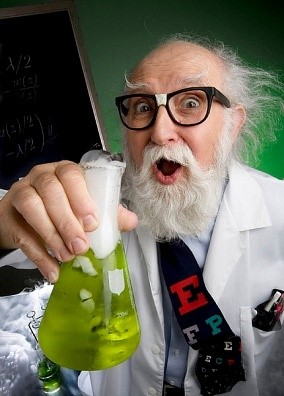
Despite countless trips to zoos across the country, there is one elusive species I have never encountered: Scientia normalis. This species is more often referred to by their common name, scientists. Scientists are not normally seen in public, often preferring to remain in their native habitat of the laboratory. Because of this, stereotypes dominate the perception of the entire species and are often reinforced in popular culture and the media. These stereotypes depict a species of mostly older males with unruly hair, glasses, a white lab coat, and a vial of brightly colored liquid. (*cough* Albert Einstein *cough*) Recently, however, there has been an effort to remove some of the mystery surrounding this species and correct the outdated stereotypes.

scientist
Scientia normalis archetype. Image source

Continue reading “It’s a zoo out there: Breaking down communication barriers”