Induced stem cell power: The power to reset a cell’s career path

By Shirley Lee

Featured image: Induced pluripotent stem cells stained red, their nuclei are stained blue. Source.

When I was first taught the process of embryonic development in biology class back in high school, I was amazed by the complexity of the process. Each one of us was derived from a single cell (the result of the joining of an egg and a sperm), which then went through countless cell divisions. It amazes me that something so small is packed with so much biological potential!

Naturally, scientists set out to get to the bottom of this phenomenon. In the 1990s, people discovered how to extract these cells (called stem cells) from developing human embryos in order to study the process underlying stem cell development in research laboratories. Continue reading “Induced stem cell power: The power to reset a cell’s career path”
The fecal frontier

By Kevin Boehnke

Written for the prompt: What is the most important fundamental mystery in biology today that, if unlocked by basic research, would yield the greatest dividends for human health?

Poop. For good reason (it harbors deadly pathogens), this ubiquitous, noxious substance provokes an instinctive reaction of disgust. Despite the near-universality of poop and fart jokes, humans have spent much time, energy, and money to avoid contact with feces. Yet poop has great potential to improve human health through medical treatments,prevent disease through microbiome maintenance, and mitigate effects of antibiotic resistance. A better understanding of poop could improve millions of lives and save billions of dollars per year in healthcare costs. Continue reading “The fecal frontier”

Coffee: To drink or not to drink, that is the question

My morning usually goes like this: I wake up, shower, eat breakfast, and drink coffee before stepping out of my apartment to face the day.

Depending on how much time I have in the morning, I may skip some of those steps. Next time you see me, ask me how hungry I am and whether my socks actually match. But there is something that I never skip: coffee. And I’m not alone in this ritual—54% of Americans older than 18 drink coffee every day. Continue reading “Coffee: To drink or not to drink, that is the question”

Should auld classrooms be forgot? Reshaping the classroom to fight childhood obesity

By Alison Ludzki

While many adults are making resolutions to get back into shape in the New Year, what about our kids? With our children trading tee-ball for tablets, 12.7 million children and youth in the United States are obese. Could the classroom be a good place to start combating childhood obesity?

Continue reading “Should auld classrooms be forgot? Reshaping the classroom to fight childhood obesity”

Peanuts and probiotics

By Ada Hagan

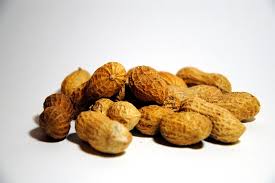
Image Credit: https://pixabay.com/en/peanuts-nuts-food-peanut-healthy-316608/
Image Source

George Washington Carver, probably without realizing it, was one of the first proponents of plant probiotics. Carver was a faculty member at the Tuskegee Institute in the early 1900’s and re-introduced the concept of crop rotation with peanuts, soy, and other legumes to U.S. agriculture. By alternating corn and cotton crops with peanuts, farmers could replenish the nutrients in the soil but continue harvesting a cash crop. Legumes are an intriguing type of plant since they rely on bacteria, such as Rhizobia, that grow in specialized nodules on their roots to provide them with nutrients, like nitrogen. In return, the plants supply the bacteria with sugars and oxygen for growth, a symbiotic exchange for nutrients the legumes cannot produce themselves.

Continue reading “Peanuts and probiotics”

The budding brain: How yeast give rise to treatments for neurodegenerative diseases

By Sara Wong

What do humans and baker’s yeast have in common? Surprisingly, they share a massive amount of genetic information and are governed by many of the same cellular processes. Although yeast do not have organs or limbs, they work like human cells and can be used to study a wide range of human diseases. Yeast are cheap, grow quickly, and are easily manipulated. These qualities allow scientists who study yeast to discover new genes and pathways relatively easily compared to other model organisms, like mice. One area of yeast research focuses on understanding neurodegenerative diseases, such as Parkinson’s and Alzheimer’s disease.

Continue reading “The budding brain: How yeast give rise to treatments for neurodegenerative diseases”

The how and why of a universal flu vaccine

By Shauna Bennett

A new school year has started, crispness is returning to the night air, the maple leaves are reddening, and everything is pumpkin spiced. This can only mean… flu season is coming.

The influenza (flu) virus is associated with thousands of deaths and hundreds of thousands of hospitalizations each year, and flu season has become synonymous with the winter months. The best way to combat flu infections is the vaccine offered each fall. The seasonal flu vaccine has its limitations, however, due to its extensive development process.

What would it take to make a vaccine that doesn’t need to be revamped every year? Scientists are getting close to an answer, but it’s easier said than done.

Continue reading “The how and why of a universal flu vaccine”

The brain game

By Ellyn Schinke

What if you could play a game to improve your memory or rehabilitate after a stroke? And I don’t mean Sudoku or crossword puzzles either. I’m talking video games!

It’s no secret that gaming systems that involve whole body movement like Wii and Microsoft Kinect could be used as a tool to battle obesity in children in the United States. But many people have legitimate fears that video games could lead to addiction, social isolation, or excessive violence. Despite these concerns, research has shown that video games may be beneficial for reasons other than weight loss or hand-eye coordination. This research has suggested that there are neurological benefits of video games that could vastly outweigh the cons!

Continue reading “The brain game”

What the nose wants: Why the scent of gasoline is irresistible to some

By Shweta Ramdas

A month or so ago, I casually mentioned to my labmates that I can’t get enough of the smell of gasoline, and that I had stolen a whiteboard marker from our lab to sniff when I was particularly frustrated with research. This had two results: my labmates now tease me mercilessly, and I realize that not everybody is as enamored by these smells as I am.

The latter was quite an epiphany: I had imagined that everyone finds the smell of gasoline ambrosial. So why isn’t it true? Being a geneticist, of course my first thought was that it must be all in the genes.

Continue reading “What the nose wants: Why the scent of gasoline is irresistible to some”