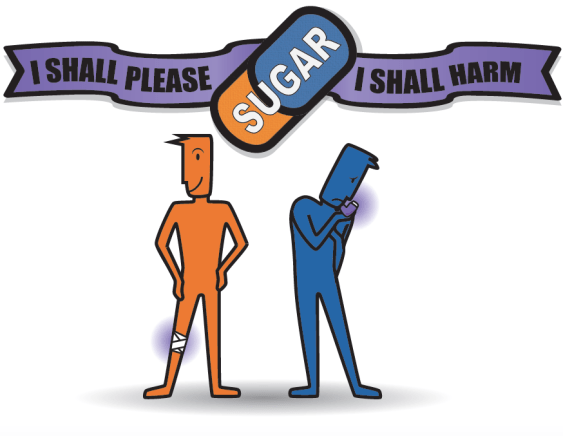
Trash Talk

Author: Sara Wong

Editors: Sarah Kearns, Ellyn Schinke, and Shweta Ramdas

Taking out the trash is a despised chore. It’s smelly and heavy, and you have to get off the comfortable couch, put on shoes, and take it all the way to the curb. Yet, we do it because we understand that it is important for the health of our homes and neighborhood, and taking out the trash is better than leaving it in the house.

What you might not realize is that your cells also have to take out the trash. In fact, defects in this process often lead to disease. One example is Niemann-Pick disease, which in severe cases causes death in early childhood. Neimann-Pick disease is caused by defective lysosomes, the trash bins of the cell. In order to understand diseases like Niemann-Pick disease, we must first understand lysosomes.

Continue reading “Trash Talk”

Can Patients with Early-Stage Breast Cancer Skip Chemotherapy?

Author: Lei Wan

Editors: Whit Froehlich and Shweta Ramdas

My mom was diagnosed with cancer two years ago. She had early-stage breast cancer: tumor size of less than five centimeters, fewer than three cancer-positive lymph nodes in the armpit region, and no cancer-positive lymph nodes nearby. But hers was also an aggressive type of cancer. At the time, I was a graduate student in the States and my parents lived in China, so we talked on the phone every two days about the progress of her treatment. She received surgery, radiation, a tailored drug treatment, and chemotherapy. My mom is tough and stubborn. Most of the time she just mentioned the good news that the cancer had been eliminated. Occasionally, she would say that her life was changed by the cancer treatment: for example, she had to quit her job.

I was shocked by my mom’s diagnosis. She is always physically active and mostly eats vegetables. I barely recognized her after the chemotherapy. She had lost 30 pounds and all of her hair, her skin was pale, and her nails were purple. Her face was unrecognizable because of the weight and hair loss, and she looked almost 20 years older.

My mom is cancer-free now, but she is not the same person that she was. Her appetite is half of what it was before, and she cannot lift heavy things. As a graduate student studying cancer biology, I had learned that chemotherapy would cause side effects like the ones I saw in my mom, including hair loss, vomiting, and nail loss. However, until my mom’s physical appearance and life were transformed by chemotherapy, I didn’t realize the magnitude of its impact on patients. Looking at my mom, I wish that we had better options for patients with early-stage breast cancer so they don’t have to suffer these devastating side effects.

Continue reading “Can Patients with Early-Stage Breast Cancer Skip Chemotherapy?”

Science March – One Week Later

From the MiSciWriters Editorial Board

Saturday, April 22nd, 2017- Thousands of scientists and citizens came together in celebration of scientific achievement and its influence upon public health and environmental safety, but also in protest of proposed budget cuts and spread of “alternative facts.” Not only was this march staged in Washington D.C., but there were 610 satellite events all around the world including Ann Arbor.

Along with the primary goal to increase public understanding of science, the March for Science was also intended to prove science’s political worth to remain within the budget. Now, a week after the event, we ask ourselves: Did the March meet these goals? What further actions need to be taken?
Continue reading “Science March – One Week Later”

Did Big Data Win the Election for Trump?

Author: Katie Wozniak

Editors: Jessica Cote, Noah Steinfeld, and Shweta Ramdas

Five months after the 2016 U.S. Presidential election, many remain confused about how Donald Trump made it into the White House despite leading a seemingly disorganized and unconventional campaign against a more experienced candidate. To understand how this happened, experts have taken a closer look at the campaign strategies employed by Trump, and one major theory is that Trump won the presidency thanks to big data analysis by an analytics company called Cambridge Analytica.

But is there really enough evidence to support that big data won Trump the election?

Continue reading “Did Big Data Win the Election for Trump?”

Opinion: The #Resistance Wears Lab Coats

Author: Ben Isaacoff

Editors: Irene Park, Ada Hagan, and Scott Barolo

President Donald J. Trump is wildly inconsistent on many issues. Under different circumstances, it might be amusing how often he contradicts himself. But one issue he has unfortunately been very consistent about is a dismissal of science and outright attacks on the scientific enterprise. The Trump campaign, his transition and appointees, and now his nascent administration, have deeply scared many of us who care about science.

Continue reading “Opinion: The #Resistance Wears Lab Coats”

Where Do Genes Come From? Part 2: De novo Genes

Author: Belle Moyers

Editors: Theresa Mau, Alex Taylor, and Kevin Boehnke

“The probability that a functional protein would appear de novo by random association of amino acids is practically zero.” ~ Francois Jacob, 1977

If you’ve ever gotten into arguments about evolution, you may have heard the argument that goes something like this: A new gene randomly forming is as improbable as a tornado blowing through a junkyard and assembling a working 747. The above quote by Francois Jacob shows that scientists have been pretty skeptical about this idea, too.

But something seeming unlikely doesn’t mean that it doesn’t happen. As we learned last time, most mutations are harmful, and most gene duplications are lost—but the rare times when they are beneficial, a new gene can have a huge effect on species survival.

So, is it possible that a protein-coding gene might form randomly?

Continue reading “Where Do Genes Come From? Part 2: De novo Genes”

Of Sporks and Scorpions: Where Do Genes Come From? (Part 1)

Author: Belle Moyers

Editors: Theresa Mau, Alex Taylor, and Kevin Boehnke

What exactly separates us from other animals?  For that matter, what makes any species or group of species special?  How is life so diverse?  How can cephalopods camouflage themselves so well, and how did platypuses become so bizarre?

Part of the answer is in genes.  Genes are sections of DNA that perform a specific function, usually after being translated into proteins by special cellular machinery.  Every species has genes that code for proteins, but different species have different numbers of genes. Humans have around 20,000, fruit flies have around 18,000, and the tiny water-flea has around 31,000 genes. Different sets of genes produce animals with different structures and functions.

Continue reading “Of Sporks and Scorpions: Where Do Genes Come From? (Part 1)”

What Does Smoking Do to Your DNA?

Authors: Shweta Ramdas

Editors: Irene Park and Kevin Boehnke

Smoking 1
Figure 1. Smoking is known to cause at least 14 different types of cancers, although it is not clear how or why.


We have known tobacco to be a cause of many cancers for decades now. It is associated with it least 14 types of cancers (see Figure 1). Less understood is how tobacco causes cancer. The short answer—it causes mutations. Tobacco smoke is a mixture of many chemicals, including at least 60 carcinogens (cancer-causing chemicals).

A trans-national team of researchers has begun unearthing the distinct types of mutations caused by tobacco smoke to better understand the biological pathways leading to tobacco-induced cancer. They found that tobacco causes specific types of DNA damage in organs directly exposed to smoke (like the lungs) and that smoking tobacco generally leads to higher rates of mutation in all tissues. Understanding how the chemicals in tobacco smoke cause mutations can help scientists identify new and emerging mutagens and design better treatment strategies.

Continue reading “What Does Smoking Do to Your DNA?”

Computing Levinthal’s Paradox: Protein Folding, Part 2

Author: Sarah Kearns

Editors: David Mertz, Zuleirys Santana Rodriguez, and Scott Barolo

In a previous post, we discussed how proteins fold into unique shapes that allow them to perform their biological functions. Through many physical and chemical properties, like hydrogen bonding and hydrophobicity, proteins are able to fold correctly. However, proteins can fold improperly, and sometimes these malformed peptides aggregate, leading to diseases like Alzheimer’s.

How can we figure out when the folding process goes wrong? Can we use computers to figure out the folding/misfolding process and develop methods to prevent or undo the damage done by protein aggregates?

Continue reading “Computing Levinthal’s Paradox: Protein Folding, Part 2”

Homework: a Necessity or an Age-Old Brain Drain?

Author: Amira Aker

Editors: Shweta Ramdas, Zena Lapp, and David Mertz

Untitled

Everyone hates homework. It’s boring, annoying, and takes you away from a million other things you’d rather be doing. But I always thought it was a necessary part of learning. How else could you learn without effort and a little struggle? As a Ph.D. student (so, somewhat academically inclined) and a mother of two, I was distraught by the growing phenomenon of schools banning homework. But the logical part of me thinks that there must be more to this than just pandering to student laziness and teacher burnout.

Continue reading “Homework: a Necessity or an Age-Old Brain Drain?”