Are Omega-3 fatty acids healthy?

Author: Attabey Rodríguez-Benítez

Editors: Jimmy Brancho, Andrew McAllister, and Noah Steinfeld

When I got sick as a child, my great-grandmother used to treat me with unpleasant fish oil. She would say, “bébete esto para que te pongas mejor y tengas un corazón fuerte” (“drink this so you can get better and have a strong heart”). Both of my parents also swore by fish oil, taking these enormous yellow pills, which I did not take myself because I was afraid to choke on them. These large fish oil pills were full of omega-3 fatty acids. My family explained that the supplements helped with high blood pressure, but never explained why they worked. As it turns out, there is still quite a lot of debate in the scientific community as to how omega-3s impact human health.
Continue reading “Are Omega-3 fatty acids healthy?”

Microscopic Diversity: How and Why One Gene Creates Many Unique Proteins

Author: Jessica Cote

Editors: Zena Lapp, Christina Vallianatos, and Whit Froehlich

The Human Genome Project is one of the greatest scientific accomplishments in recent history— this international collaboration identified almost all of the ~20,500 genes in the human body, known collectively as the genome. Now that scientists know the details of these genes, they are better able to understand and treat human diseases associated with genetic factors. However, despite the immense effort put forth by over 30 research labs for 13 years (1990-2003), the information we gained from this project is limited. Genes serve as guidebooks for cells in the body to build proteins; genes themselves don’t perform the necessary cellular functions—proteins do. So, while scientists have now known the nitty-gritty of thousands of human genes for a while, the details of their protein products, known collectively as the proteome, are still quite puzzling.

Continue reading “Microscopic Diversity: How and Why One Gene Creates Many Unique Proteins”

The Amazing Space Odyssey of a Hydrogen Atom

Author: Ryan Farber

Editors: Alex Taylor, Jessica Cote, and Sarah Kearns

Where do you come from? Somewhere on Earth, you say. But how did life begin? How did the Earth begin? How did the Sun begin? … How did the universe begin? These questions of origins have fascinated humanity for millennia. And though we can answer neither the first question nor the last, nor many in between, modern astronomical theory places a handle on the origins of one structure of particular importance for our existence: the Sun.

Continue reading “The Amazing Space Odyssey of a Hydrogen Atom”

Methylated Memory

Author: Sarah Kearns

Editors: Nayiri Kaissarian, Patricia Garay, and Shweta Ramdas

If you saw a hippo on campus, you would remember it. But, would you expect that seeing such a pachyderm roaming on a university would alter the expression of your DNA? A recent study found that rats placed in an environment that tested their memory had alterations to their DNA, or epigenetic changes.

For a long while, we have generally known that neurons within the hippocampus of our brains are responsible for memory. The current model for memory storage is due to the plasticity of neuronal connections, but researchers have recently found that it also involves active changes at the genetic level. These changes come from external factors and are linked to retaining long-term memories, which has implications in stress-related learning and memory disorders.

Continue reading “Methylated Memory”

The After-Hours Life of a Protein

Author: Sarah Kearns

Editors: Zena Lapp, Jimmy Brancho, Noah Steinfeld

After you get home from work, perhaps after eating dinner, you may start working on other projects or hobbies. Humans aren’t the only ones that have a life after hours. Recently it’s been discovered that many proteins have roles in the cell outside of their main functions. This peculiar behavior led to the name ‘moonlighting,’ referencing individuals who have multiple jobs. A useful analogy might be a werewolf’s behavior under a full moon: being a person during the day, but a wolf at night.

Continue reading “The After-Hours Life of a Protein”

To Complete or Not Complete (The Full Course of Antibiotics)

Author: Katie Wozniak

Editors: Tricia Garay, Charles Lu, and Shweta Ramdas

You may recall going to your doctor and being told to “complete the full course” of antibiotics that were prescribed to you. Over the last 70 years antibiotics have been used to treat bacterial infections. The CDC, FDA, and WHO have pointed out that some bacteria could remain in your system if you stop taking the prescribed antibiotics before completing the full course, even if you feel better. This remaining population consists of bacteria that could survive the antibiotics the best; this select group of resistant bacteria is then allowed to grow and re-infect you with a vengeance. However, a recently published article in one of the oldest medical journals questioned these age-old instructions and suggested alternatives. In the era of antibiotic overuse and resistant infections, should we still complete the full course of antibiotics?
Continue reading “To Complete or Not Complete (The Full Course of Antibiotics)”

Shining a Light in the Dark (Universe): Cosmology Results From the Dark Energy Survey

Author: Stephanie Hamilton

Editors: Noah Steinfeld, Sarah Kearns, Zuleirys Santana-Rodriguez, Whit Froehlich

There is a lot we don’t know about our universe. In fact, all of our laws of physics describe only the ordinary matter and energy that surrounds us, a mere 5% of the total matter and energy in the universe. Little is known about the remaining 95%, comprised of dark matter and dark energy. Setting aside their unbearably creative names, dark matter and dark energy are two of the biggest mysteries in cosmology today. What are they made of? How do they interact with the regular matter we’re already familiar with?

Continue reading “Shining a Light in the Dark (Universe): Cosmology Results From the Dark Energy Survey”

Organ Transplantation from Pigs to Humans Could Be Possible, Thanks to Gene Editing

Author: Attabey Rodríguez Benítez

Editors: Sarah Kearns, Jimmy Brancho, and Whit Froehlich

Can you imagine a future where humans could receive organs from animals instead of having to wait for a donor? Well, this could be possible thanks to evidence from an international collaboration between labs in Harvard and China which resulted in a publication in the prestigious journal Science.

Continue reading “Organ Transplantation from Pigs to Humans Could Be Possible, Thanks to Gene Editing”

Semen’s Lesser-known Roles in Reproduction

Author: Brooke Wolford

Editors: Andrew McAllister, Molly Kozminsky, and Whit Froehlich

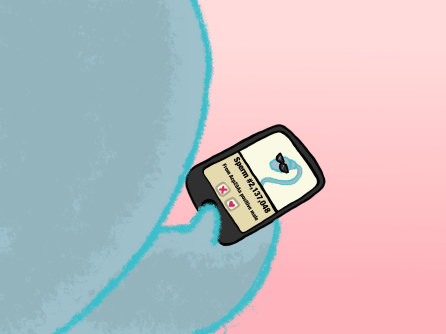
tinder_sperm
Image by Sierra Nishizaki

If you’re a millennial who thinks dating in the age of Tinder is difficult, you may find parallels between your dating life and the complexities of reproduction. The process of a sperm meeting an egg to create a cell that successfully implants in the uterine wall and subsequently creates a human is incredibly intricate. Similar to the world of dating, two have to meet, decide they like each other, and then invest time and energy to grow together as a couple. From finding a mate to the biological processes behind pregnancy, reproduction may seem downright impossible. Luckily mother nature has devised sneaky and fascinating ways to improve the chances of a successful pregnancy. Evolution favors those who pass their DNA on to as many offspring as possible, and natural selection has worked for years to optimize reproduction. If only Tinder were that good at getting you a date!

Continue reading “Semen’s Lesser-known Roles in Reproduction”

PIBS GRE Town Hall Meeting Recap

From the MiSciWriters Editorial Board

What qualifications does one need to demonstrate in order to get into a PhD program?  

In the United States, there are a few requirements that most PhD programs use to select their students: statement of purpose, recommendation letters, Grade Point Average (GPA), and results from a standardized test. One widely used standardized test is the general Graduate Record Examination (GRE), which is divided into three sections: verbal, quantitative, and writing. The test compares your performance to other test-takers, showing your performance for each section by percentile rank.

Although GREs are required by many PhD programs across the nation, some PhD programs, like the one at Cold Spring Harbor Laboratory, do not require the GRE (although sending your GRE score is highly recommended).

Since this spring, the community at the Program in Biomedical Sciences (PIBS) at the University of Michigan brought up the possibility of making the general GRE optional. PIBS director Dr. Scott Barolo initiated the idea of having a public discourse about whether to drop the GRE in the list of requirements for PhD admissions. Several PIBS faculty and staff contributed to a white paper presenting their arguments for either keeping or removing the requirement to submit the GRE. On August 3rd, PIBS hosted a town hall meeting to discuss both sides of the argument and get input from other members of the community.

Continue reading “PIBS GRE Town Hall Meeting Recap”