The Amazing Space Odyssey of a Hydrogen Atom

Author: Ryan Farber

Editors: Alex Taylor, Jessica Cote, and Sarah Kearns

Where do you come from? Somewhere on Earth, you say. But how did life begin? How did the Earth begin? How did the Sun begin? … How did the universe begin? These questions of origins have fascinated humanity for millennia. And though we can answer neither the first question nor the last, nor many in between, modern astronomical theory places a handle on the origins of one structure of particular importance for our existence: the Sun.

Continue reading “The Amazing Space Odyssey of a Hydrogen Atom”
Methylated Memory

Author: Sarah Kearns

Editors: Nayiri Kaissarian, Patricia Garay, and Shweta Ramdas

If you saw a hippo on campus, you would remember it. But, would you expect that seeing such a pachyderm roaming on a university would alter the expression of your DNA? A recent study found that rats placed in an environment that tested their memory had alterations to their DNA, or epigenetic changes.

For a long while, we have generally known that neurons within the hippocampus of our brains are responsible for memory. The current model for memory storage is due to the plasticity of neuronal connections, but researchers have recently found that it also involves active changes at the genetic level. These changes come from external factors and are linked to retaining long-term memories, which has implications in stress-related learning and memory disorders.

Continue reading “Methylated Memory”

The After-Hours Life of a Protein

Author: Sarah Kearns

Editors: Zena Lapp, Jimmy Brancho, Noah Steinfeld

After you get home from work, perhaps after eating dinner, you may start working on other projects or hobbies. Humans aren’t the only ones that have a life after hours. Recently it’s been discovered that many proteins have roles in the cell outside of their main functions. This peculiar behavior led to the name ‘moonlighting,’ referencing individuals who have multiple jobs. A useful analogy might be a werewolf’s behavior under a full moon: being a person during the day, but a wolf at night.

Continue reading “The After-Hours Life of a Protein”

Trasplante de Órganos de Cerdos a Humanos Podría Ser Posible en el Futuro Gracias a la Ingeniera Genética

Escrita por Attabey Rodríguez Benitez y editado por Cristina Maria Rios.

¿Te imaginas un futuro en el que los humanos podamos recibir órganos de animales en lugar de esperar por un donante? Esto podría ser posible gracias a una investigación llevada a cabo por una colaboración internacional entre laboratorios de Harvard y China que resultó en una publicación en la revista científica Science.

Continue reading “Trasplante de Órganos de Cerdos a Humanos Podría Ser Posible en el Futuro Gracias a la Ingeniera Genética”

To Complete or Not Complete (The Full Course of Antibiotics)

Author: Katie Wozniak

Editors: Tricia Garay, Charles Lu, and Shweta Ramdas

You may recall going to your doctor and being told to “complete the full course” of antibiotics that were prescribed to you. Over the last 70 years antibiotics have been used to treat bacterial infections. The CDC, FDA, and WHO have pointed out that some bacteria could remain in your system if you stop taking the prescribed antibiotics before completing the full course, even if you feel better. This remaining population consists of bacteria that could survive the antibiotics the best; this select group of resistant bacteria is then allowed to grow and re-infect you with a vengeance. However, a recently published article in one of the oldest medical journals questioned these age-old instructions and suggested alternatives. In the era of antibiotic overuse and resistant infections, should we still complete the full course of antibiotics?
Continue reading “To Complete or Not Complete (The Full Course of Antibiotics)”

Shining a Light in the Dark (Universe): Cosmology Results From the Dark Energy Survey

Author: Stephanie Hamilton

Editors: Noah Steinfeld, Sarah Kearns, Zuleirys Santana-Rodriguez, Whit Froehlich

There is a lot we don’t know about our universe. In fact, all of our laws of physics describe only the ordinary matter and energy that surrounds us, a mere 5% of the total matter and energy in the universe. Little is known about the remaining 95%, comprised of dark matter and dark energy. Setting aside their unbearably creative names, dark matter and dark energy are two of the biggest mysteries in cosmology today. What are they made of? How do they interact with the regular matter we’re already familiar with?

Continue reading “Shining a Light in the Dark (Universe): Cosmology Results From the Dark Energy Survey”

Ciencia y redes sociales: Como el “compartir de más” está ayudando al campo de la genética humana

Versión original en inglés escrita por Christina Vallianatos, traducida al español por Adrian Melo Carrillo y editado por Jean Carlos Rodriguez Diaz.

Vivimos en una época en la cual compartimos de más.  Desde tu mejor amigo compartiendo sus fotos artísticas de comida (#boozybrunch), hasta tu colega tuiteando en tiempo real su experiencia de parto (“¡Cesárea en 20 minutos!”), parece que constantemente nos enteramos de detalles íntimos de todo el mundo.

¿Qué pasaría si alguno de esos momentos en que compartimos demasiada información no fueran necesariamente “demasiada información”? ¿Y si estos momentos estuvieran de hecho ayudando a resolver una de los mayores dilemas en el campo de la genética humana: la identificación de genes causantes de enfermedades?

Continue reading “Ciencia y redes sociales: Como el “compartir de más” está ayudando al campo de la genética humana”

Organ Transplantation from Pigs to Humans Could Be Possible, Thanks to Gene Editing

Author: Attabey Rodríguez Benítez

Editors: Sarah Kearns, Jimmy Brancho, and Whit Froehlich

Can you imagine a future where humans could receive organs from animals instead of having to wait for a donor? Well, this could be possible thanks to evidence from an international collaboration between labs in Harvard and China which resulted in a publication in the prestigious journal Science.

Continue reading “Organ Transplantation from Pigs to Humans Could Be Possible, Thanks to Gene Editing”

Semen’s Lesser-known Roles in Reproduction

Author: Brooke Wolford

Editors: Andrew McAllister, Molly Kozminsky, and Whit Froehlich

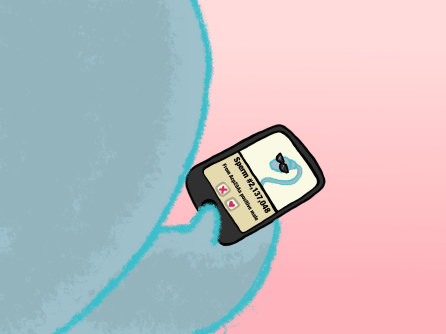
tinder_sperm
Image by Sierra Nishizaki

If you’re a millennial who thinks dating in the age of Tinder is difficult, you may find parallels between your dating life and the complexities of reproduction. The process of a sperm meeting an egg to create a cell that successfully implants in the uterine wall and subsequently creates a human is incredibly intricate. Similar to the world of dating, two have to meet, decide they like each other, and then invest time and energy to grow together as a couple. From finding a mate to the biological processes behind pregnancy, reproduction may seem downright impossible. Luckily mother nature has devised sneaky and fascinating ways to improve the chances of a successful pregnancy. Evolution favors those who pass their DNA on to as many offspring as possible, and natural selection has worked for years to optimize reproduction. If only Tinder were that good at getting you a date!

Continue reading “Semen’s Lesser-known Roles in Reproduction”

Cómo las luciérnagas iluminaron nuestro entendimiento del mundo

Versión original en inglés escrita por Noah Steinfeld, traducida al español por Thibaut R. Pardo-García y editado por Sofía A. López.

A principios de 1950 en la Universidad Johns Hopkins, William E. McElroy, profesor joven, quiso descubrir que hace que las luciérnagas resplandezcan. Él le pagaba veinticinco centavos a niños en el área de Baltimore por cada 100 luciérnagas que le trajeran. McElroy era visto como una curiosidad en la comunidad: el estereotipo de un científico excéntrico. Pero, lo que estas personas no sabían es que, como resultado de su investigación, un día McElroy crearía una herramienta que revolucionaría la forma en que los científicos ejercen las investigaciones biológicas.

Continue reading “Cómo las luciérnagas iluminaron nuestro entendimiento del mundo”