Blog

Trasplante de Órganos de Cerdos a Humanos Podría Ser Posible en el Futuro Gracias a la Ingeniera Genética

Escrita por Attabey Rodríguez Benitez y editado por Cristina Maria Rios.

¿Te imaginas un futuro en el que los humanos podamos recibir órganos de animales en lugar de esperar por un donante? Esto podría ser posible gracias a una investigación llevada a cabo por una colaboración internacional entre laboratorios de Harvard y China que resultó en una publicación en la revista científica Science.

Continue reading “Trasplante de Órganos de Cerdos a Humanos Podría Ser Posible en el Futuro Gracias a la Ingeniera Genética”

To Complete or Not Complete (The Full Course of Antibiotics)

Author: Katie Wozniak

Editors: Tricia Garay, Charles Lu, and Shweta Ramdas

You may recall going to your doctor and being told to “complete the full course” of antibiotics that were prescribed to you. Over the last 70 years antibiotics have been used to treat bacterial infections. The CDC, FDA, and WHO have pointed out that some bacteria could remain in your system if you stop taking the prescribed antibiotics before completing the full course, even if you feel better. This remaining population consists of bacteria that could survive the antibiotics the best; this select group of resistant bacteria is then allowed to grow and re-infect you with a vengeance. However, a recently published article in one of the oldest medical journals questioned these age-old instructions and suggested alternatives. In the era of antibiotic overuse and resistant infections, should we still complete the full course of antibiotics?
Continue reading “To Complete or Not Complete (The Full Course of Antibiotics)”

Shining a Light in the Dark (Universe): Cosmology Results From the Dark Energy Survey

Author: Stephanie Hamilton

Editors: Noah Steinfeld, Sarah Kearns, Zuleirys Santana-Rodriguez, Whit Froehlich

There is a lot we don’t know about our universe. In fact, all of our laws of physics describe only the ordinary matter and energy that surrounds us, a mere 5% of the total matter and energy in the universe. Little is known about the remaining 95%, comprised of dark matter and dark energy. Setting aside their unbearably creative names, dark matter and dark energy are two of the biggest mysteries in cosmology today. What are they made of? How do they interact with the regular matter we’re already familiar with?

Continue reading “Shining a Light in the Dark (Universe): Cosmology Results From the Dark Energy Survey”

Ciencia y redes sociales: Como el “compartir de más” está ayudando al campo de la genética humana

Versión original en inglés escrita por Christina Vallianatos, traducida al español por Adrian Melo Carrillo y editado por Jean Carlos Rodriguez Diaz.

Vivimos en una época en la cual compartimos de más.  Desde tu mejor amigo compartiendo sus fotos artísticas de comida (#boozybrunch), hasta tu colega tuiteando en tiempo real su experiencia de parto (“¡Cesárea en 20 minutos!”), parece que constantemente nos enteramos de detalles íntimos de todo el mundo.

¿Qué pasaría si alguno de esos momentos en que compartimos demasiada información no fueran necesariamente “demasiada información”? ¿Y si estos momentos estuvieran de hecho ayudando a resolver una de los mayores dilemas en el campo de la genética humana: la identificación de genes causantes de enfermedades?

Continue reading “Ciencia y redes sociales: Como el “compartir de más” está ayudando al campo de la genética humana”

Organ Transplantation from Pigs to Humans Could Be Possible, Thanks to Gene Editing

Author: Attabey Rodríguez Benítez

Editors: Sarah Kearns, Jimmy Brancho, and Whit Froehlich

Can you imagine a future where humans could receive organs from animals instead of having to wait for a donor? Well, this could be possible thanks to evidence from an international collaboration between labs in Harvard and China which resulted in a publication in the prestigious journal Science.

Continue reading “Organ Transplantation from Pigs to Humans Could Be Possible, Thanks to Gene Editing”

Semen’s Lesser-known Roles in Reproduction

Author: Brooke Wolford

Editors: Andrew McAllister, Molly Kozminsky, and Whit Froehlich

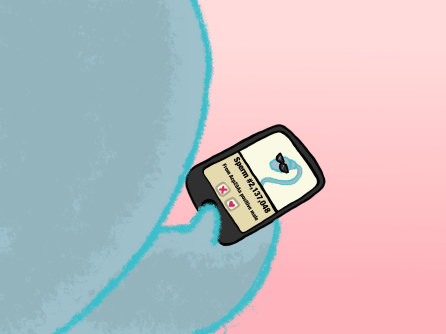
tinder_sperm
Image by Sierra Nishizaki

If you’re a millennial who thinks dating in the age of Tinder is difficult, you may find parallels between your dating life and the complexities of reproduction. The process of a sperm meeting an egg to create a cell that successfully implants in the uterine wall and subsequently creates a human is incredibly intricate. Similar to the world of dating, two have to meet, decide they like each other, and then invest time and energy to grow together as a couple. From finding a mate to the biological processes behind pregnancy, reproduction may seem downright impossible. Luckily mother nature has devised sneaky and fascinating ways to improve the chances of a successful pregnancy. Evolution favors those who pass their DNA on to as many offspring as possible, and natural selection has worked for years to optimize reproduction. If only Tinder were that good at getting you a date!

Continue reading “Semen’s Lesser-known Roles in Reproduction”

Cómo las luciérnagas iluminaron nuestro entendimiento del mundo

Versión original en inglés escrita por Noah Steinfeld, traducida al español por Thibaut R. Pardo-García y editado por Sofía A. López.

A principios de 1950 en la Universidad Johns Hopkins, William E. McElroy, profesor joven, quiso descubrir que hace que las luciérnagas resplandezcan. Él le pagaba veinticinco centavos a niños en el área de Baltimore por cada 100 luciérnagas que le trajeran. McElroy era visto como una curiosidad en la comunidad: el estereotipo de un científico excéntrico. Pero, lo que estas personas no sabían es que, como resultado de su investigación, un día McElroy crearía una herramienta que revolucionaría la forma en que los científicos ejercen las investigaciones biológicas.

Continue reading “Cómo las luciérnagas iluminaron nuestro entendimiento del mundo”

Lo que quiere la nariz: ¿Por qué el olor a gasolina es irresistible para algunos?

For the first post in our Spanish series, The Language Bank* at the University of Michigan translated a post written by Shweta Ramdas: “What the Nose Wants: Why the Scent of Gasoline is Irresistible to Some.”

Por Shweta Ramdas 

Traducido por Joan Liu*

Editado por Yanaira Alonso

Hace acerca de un mes, le comenté a mis compañeros de laboratorio que el olor a la gasolina era un tanto irresistible y que había robado un marcador de pizarra de nuestro laboratorio para olerlo cuando me sentía frustrada con mi investigación. Esto tuvo dos resultados: ahora mis colaboradores de laboratorio se burlan de mí despiadadamente, y me di cuenta de que no todos se sienten atraídos a estos olores tanto como yo.

El último resultado fue una epifanía: pensaba que para todo el mundo el olor a gasolina era agradable. Entonces, ¿Por qué esto no es cierto? Como una genetista, por supuesto mi primer pensamiento fue que los genes deciden la preferencia.

pic (2)
A mi compañero de laboratorio no le atrae el olor del marcador tanto como a mí.

Continue reading “Lo que quiere la nariz: ¿Por qué el olor a gasolina es irresistible para algunos?”

PIBS GRE Town Hall Meeting Recap

From the MiSciWriters Editorial Board

What qualifications does one need to demonstrate in order to get into a PhD program?  

In the United States, there are a few requirements that most PhD programs use to select their students: statement of purpose, recommendation letters, Grade Point Average (GPA), and results from a standardized test. One widely used standardized test is the general Graduate Record Examination (GRE), which is divided into three sections: verbal, quantitative, and writing. The test compares your performance to other test-takers, showing your performance for each section by percentile rank.

Although GREs are required by many PhD programs across the nation, some PhD programs, like the one at Cold Spring Harbor Laboratory, do not require the GRE (although sending your GRE score is highly recommended).

Since this spring, the community at the Program in Biomedical Sciences (PIBS) at the University of Michigan brought up the possibility of making the general GRE optional. PIBS director Dr. Scott Barolo initiated the idea of having a public discourse about whether to drop the GRE in the list of requirements for PhD admissions. Several PIBS faculty and staff contributed to a white paper presenting their arguments for either keeping or removing the requirement to submit the GRE. On August 3rd, PIBS hosted a town hall meeting to discuss both sides of the argument and get input from other members of the community.

Continue reading “PIBS GRE Town Hall Meeting Recap”

Recent Advances in Cervical Cancer Research

Author: Veronica Varela

Editors: Whit Froehlich, John Charpentier, and Scott Barolo

Cervical cancer has been getting much more attention as of late, partly due to the HBO adaptation of Rebecca Skloot’s book The Immortal life of Henrietta Lacks. As a survivor of the same type of cancer that took Henrietta’s life and led to the development of the HeLa cell line, I found that Skloot’s book resonated deeply with me. My diagnosis compelled me to learn more about cervical cancer, which is one of the most preventable forms of cancer.

What Is Cervical Cancer?

VV1
Figure 1. A diagram showing a stage IV cervical cancer (tumor is in blue)

Cervical cancer is an abnormal and uncontrolled growth of the cells lining the cervix, which acts like the doorway to the uterus. The cervix lining is mostly made up of two different cell types. Lining the outer cervix that faces the vagina are squamous cells, which are flat in shape, while the open passage of the cervix which leads into the uterus is lined by glandular cells, which are blockier in shape and produce mucus. Cancer can arise from either of these cell types; however, squamous cell cancers are the more frequent.

Most cervical cancers are caused by Human Papilloma Virus (HPV). HPV is commonly known as the virus that causes genital warts, but what many don’t realize is that there are over a dozen types of sexually transmitted HPVs, and only a few of them result in genital warts. The National Institutes of Health (NIH) highlight that persistent infection with certain HPV strains, especially types 16 and 18, is the major cause of most cervical cancer cases.

Continue reading “Recent Advances in Cervical Cancer Research”